


“Control the controllable things.”
A well-known saying in the world of competitive sports. It's a term coined by a person who had nothing to do with sports, but knew a few things about adversity a little more challenging than athletics. His name is Viktor Frankl, a famous Austrian psychiatrist who survived three brutal years in Nazi concentration camps during World War II.
“Forces beyond your control can take away everything you have except one thing: your freedom to choose how to respond to the situation,” Frankl explained in his famous book Man's Search for Meaning. It is a work that reflects his years in prison in a concentration camp and is required reading in many educational institutions.
The Stoic Greek philosopher Epictetus gained infinite wisdom from his years in slavery.
Source: Photo courtesy of Wikimedia Commons. Photographer unknown.
Epictetus, an ancient Greek Stoic philosopher who was born into slavery around 50 AD, also thought about what we can and cannot control in life, as he also lived under difficult circumstances. Here's what he had to say:
“Some things are in our control, others are not. Things we control are opinion, pursuit, desire, aversion, and in a word, whatever our own actions are. Things that are not under our control are body, property, reputation, command and everything that is not part of our actions. The things under our control are by nature free, unhindered and unhindered, while those not under our control are weak and servile, can be hindered and are not our property.”
By combining the wisdom of Frankl and Epictetus, you take responsibility for the controllable. As for the uncontrollable, listen to the Beatles and let it happen.
All of this has huge implications for sports, other performance endeavors and life.
Let's investigate.
What do athletes control?
Not much, and neither do the rest of us.
Let's start by identifying things athletes can't control.
Weather conditions, referee decisions, injuries, teammates, opponents and past events are beyond our control. According to Acceptance and Commitment Training (ACT) and Contextual Behavioral Science—an approach that is increasingly influential in the practice of sport psychology—athletes also have no control over their thoughts, emotions, and internal physiological experiences (fatigue, muscle soreness, etc.).
These internal things can be very disturbing and uncomfortable. It can also interfere with optimal performance and we have very limited ability to control these internal experiences.
Dwelling on things beyond our control increases frustration, anger, and fear exponentially. Particularly discouraging is ruminating about inner experiences – emotions, thoughts, physical pain, fatigue, etc.
Encountering the uncontrollable is minimally problematic if the athlete accepts it as an inevitable part of the sporting experience. A willingness to allow the uncontrollable and a focus on the job enable athletes to perform the committed actions necessary for optimal performance.
When it comes to the internal things, dwelling on them or trying to make them disappear serves to increase concentration on them, causing disturbing thoughts, emotions, physical pain, fatigue, etc. to become worse.
What can athletes and other people control? Just three things: Our actions, concentration and effort (ACE). Take responsibility and you will increase your sporting performance to the highest level.
Top performance
Consider the stressful experience of a heart or brain surgeon, perhaps the penultimate example of jobs that require intense concentration and exceptional, demanding skills.
Now imagine you are that surgeon, in the middle of a five-hour surgical procedure, mentally and physically exhausted, with the life and death of someone depending on your every decision and move. Suddenly your mind is flooded with memories and emotions revolving around a patient who died on your operating table the day before. Then, without warning, something goes terribly wrong during the current operation.
For a healthy dose of perspective-taking, compare it all to a lost game, an unwelcome referee call, or a missed putt that causes stress for athletes.
If you were the patient mentioned above, what would you expect from your surgeon if something goes wrong? Do you want them to deal with the patient who died yesterday, throw their surgical instruments on the floor in frustration, curl up in the fetal position out of self-pity, or run out of the operating room to find relief from the situation?
Sounds like behavior commonly seen in today's sports world. Athletes obsess and sulk about their lack of playing time, yesterday's poor performance, throwing their equipment, or sitting on the bench after a failed attempt.
Perhaps focusing on the necessary steps for the surgery would be the more successful approach you would want from your doctor. Sticking to the controllable things during an athletic performance creates the same magic and prevents intrusive thoughts, emotions and memories from distorting proper focus.
Critical to effective performance, whether in the operating room, on the soccer field or on the basketball court, is the ability to put all your focus and effort into the actions that need to be taken now – ACE. There is no time for excitement or worrying about anything other than the controllable things. Surgery and athletics require immediate concentration and effort to take effective action, and the ability to do so determines ultimate success.
There is a gap between what happens on the field and the performer's reaction to it. These few seconds give you the opportunity to respond effectively with what the ancient Stoics called “a rational decision.” This period can be extremely short for a surgeon or an athlete.
Whether it's a sudden cardiac arrest or a 100 mph fastball, the surgeon or the baseball bat doesn't have much time to decide what to do. Both situations are difficult enough if you concentrate fully. Dwelling on emotions, thoughts, and memories only distracts a person and prevents them from taking the right action. Notice these things, acknowledge them… and then move on to the task at hand
The conclusion
Unwanted, unpleasant and distracting thoughts, emotions and memories are an inevitable part of the sports experience. Unfortunately, the human mind is not equipped with a delete button. With surgeries, athletic competitions, and everything else we do, these internal things are likely to come out.
We can't make these inner experiences go away, and dwelling on them or trying to erase them doesn't work and usually reinforces them. Instead, learn to accept these uncontrollable things as part of the sports experience, be willing to have them, and commit to what needs to be done now to achieve optimal performance.
The game will continue with or without you. Stop letting the uncontrollable force you out of the game and stay on track with the actions, focus and effort you control to help you achieve your desired goal.
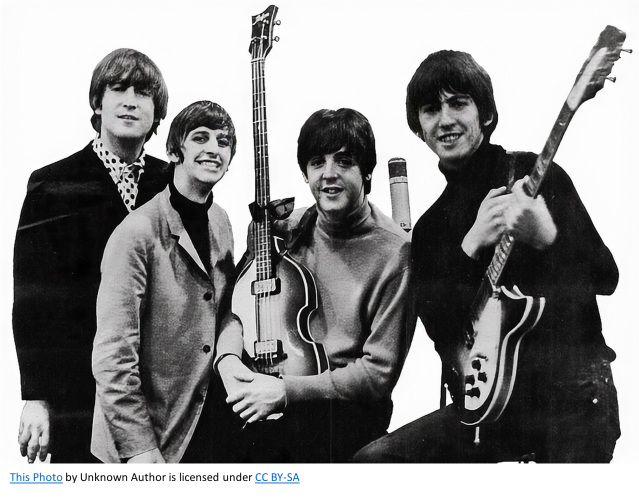
The Beatles: George, Ringo, Paul and John
Source: Photo courtesy of Wikimedia Commons
What to do with this distracting internal stuff? I repeated the Beatles' advice: “Let it be.”
Comments are closed.