


One of Bitcoin’s biggest problems is scalability and speed. Bitcoin’s underlying technology is not particularly fast and cannot process many transactions at the same time. That’s a problem for the world’s most popular cryptocurrency.
One solution is Layer 2 blockchain protocols, which effectively add another layer of processing to the original blockchain to increase capacity. The Bitcoin Liquid Sidechain is a Layer 2 protocol that aims to solve Bitcoin’s scalability and speed issues, but how does it work and how can you use it?
What is a side chain?
A sidechain is a type of Layer 2 blockchain that is linked to the main chain to help process some data on the main chain. It allows the mainnet to expand its ecosystem by processing some transactions securely and faster. In this case, the Bitcoin blockchain is Layer-1 and the Bitcoin Liquid sidechain is Layer-2. There are other differences between Layer 1 and Layer 2 blockchains as well.
It makes it safe to move digital assets like tokens between blockchains, and it improves the privacy and security of the main blockchain by reducing the trust needed to keep a network running.
Sidechains are more centralized than mainnets and responsible for their security, a trade-off for the speed they achieve. They also need their own validators or miners, but can adopt any consensus mechanism, be it proof-of-work, proof-of-stake, or even proof-of-space-time. Sidechains do not have to use the same consensus mechanism as the main chain, which can speed up processing.
For sidechains to work effectively, meaning the ability to transmit and receive digital assets from the mainnet without allowing duplication, two things are required: two-way coupling and smart contracts.
two way peg
A two-way link is a mechanism that allows the transfer of digital assets between two separate blockchains. It involves a two-way, counter-rotating process: lock down mainnet assets to the sidechains and unlock sidechain assets to the mainnet. How does the two way peg work?
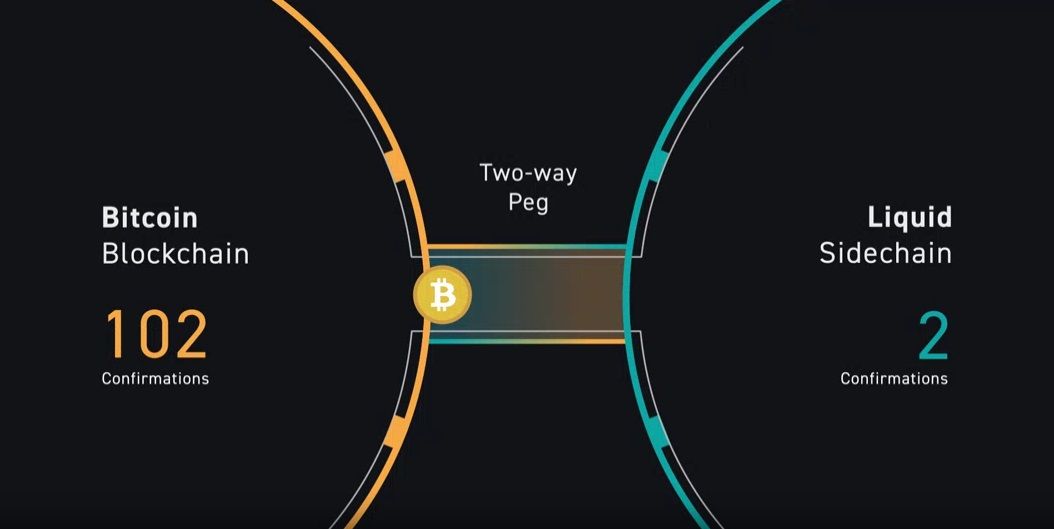
Liquid sidechain’s two-way peg allows you to peg an asset on the mainnet and then peg a corresponding amount of that asset on the sidechain. When the assets need to be transferred from the sidechain back to the mainchain, they are destroyed and the appropriate amount of assets are minted in the mainchain.
This creates a direct bridge between the two and enables interoperability. Essentially, no “transmission” takes place. This means that the “validators” involved in the operation are assumed to be acting honestly.
Smart Contract
The whole idea behind blockchain technology is to make it trustworthy. The validators in a two-way peg transaction process cannot be humans, and this is where smart contracts come in.
Smart contracts validate that the digital assets locked and unlocked on both blockchains match each other in value. They do this by enforcing validators on the sidechain, and the mainnet behaves honestly in verifying the cross-chain transactions.
When a transaction occurs in the sidechain, a smart contract essentially notifies the mainnet of the event. The transaction information is then sent to another smart contract in the sidechain to verify the transaction.
After verification, the representative digital assets in the sidechain are destroyed and the corresponding digital assets in the mainchain are released to you. This process can be done in both directions.
What is the Bitcoin Liquid Sidechain?
Bitcoin Liquid, also known as the Liquid Network, is a sidechain designed to offer solutions to the privacy and scalability limitations of the Bitcoin blockchain.
Unlike Bitcoin, where blocks are mined using the proof-of-work mechanism, Bitcoin Liquid assigns each block to specialized hardware units known as “functional nodes” that sign transactions, generate new blocks, and those linked to the mainnet secure bitcoins.
To achieve better data protection, the Liquid Network uses tokens with transaction amounts and asset types obfuscated using cryptographic techniques. These resources allow the network to support confidential transactions, resulting in greater privacy.
Meanwhile, the Liquid Network achieves scalability by supporting two-minute block times, which are significantly faster than Bitcoin’s 10-minute block time. This allows for faster trading and settlement of assets on the network.
Who Controls the Bitcoin Liquid Sidechain?
Bitcoin Liquid was founded by Blockstream, a company founded by Adam Black in 2014 to develop digital asset storage products and services.
Currently, it is governed by a federation of 63 trusted entities known as “Liquid Functionaries,” which includes financial institutions, cryptocurrency exchanges, and other Bitcoin-based businesses. These officials provide the validation and management infrastructure for the network.
How does the Bitcoin Liquid sidechain work?
Bitcoin Liquid works via a federated peg mechanism that allows bitcoins to be locked into the mainnet and released an equivalent value of the asset on the sidechain at a 1:1 ratio.
How the Liquid Network works:
- To initiate a “peg-in,” first send bitcoin to a specific address on the main chain owned by the Liquid Federation.
- Once the Bitcoin is confirmed, an equal amount of Liquid Bitcoin (L-BTC) will be sent to your Liquid Bitcoin address on the Liquid sidechain.
- You can use your L-BTC to transact on the Liquid sidechain, which is faster and more private than the main chain.
- To “peg” your L-BTC back to the main chain, send the L-BTC to a specific burn address on the Liquid sidechain, and the main chain will release the same amount of Bitcoin once the transaction reaches two confirmations.
With this system, you can conduct faster and more private bitcoin transactions without compromising the security and reliability of the bitcoin blockchain.
Advantages of the Bitcoin Liquid Sidechain

There are several benefits that the Bitcoin Liquid sidechain offers to both the Bitcoin blockchain and its users. they include
- Faster transactions: Based on block times, the sidechain can process transactions at least five times faster than the mainnet, reducing transactions to two minutes instead of ten. This relieves some of the transactional burden on the Bitcoin blockchain. Additionally, it is an ideal choice for arbitrage trading and personal investing that require faster transaction processing.
- Cheaper transactions: Typically, fees on the Bitcoin blockchain skyrocket when it gets clogged with transactions, and miners have to charge higher fees for prioritization. Because Bitcoin Liquid transactions are processed faster, fees are lower and ideal for heavy users and institutional investors.
- More privacy: The Liquid Network uses confidential transactions that allow users to protect their transaction amounts and other information from the public. So if you need a way to move bitcoin in a more private way, sidechain is a good option.
- Increased functionality: Bitcoin’s blockchain is very limited as the Script programming language is not Turing-complete, which means that the issuance of digital assets is limited. However, Liquid Network allows users to deal with assets such as tokens, stablecoins, and NFTs.
Overall, Bitcoin Liquid works well as a relief for the Bitcoin blockchain. Despite its effectiveness, however, it also has a number of disadvantages.
Disadvantages of Bitcoin Liquid Sidechain
The structural design of Bitcoin’s liquid side chain poses several problems.
- centralization: The Liquid sidechain is run by an association of 63 officials who are responsible for maintaining the ledger and adding new transactions. Of the 63-strong group, only 15 officials are active at a time. As such, a centralized system is under the control of a few parties and is not ideal for people who value decentralization.
- default risk: Bitcoin Liquid has only 15 nodes from the officials that maintain the network compared to the thousands of nodes of the Bitcoin blockchain. This means that there is a high risk of malicious attacks that would lead to outages.
Notably, the Liquid Network’s design creates the same challenges that blockchain technology was designed to solve: centralization risks.
Sidechains and Layer 2 networks help build crypto
If we want to have a Bitcoin ecosystem that billions of people can use, the idea of using sidechains to expand its scope, scalability, and dynamism is great. This means more people can transact without suffering from slow speeds.
However, the sidechains created to support the mainnet must share a common vision while remaining independent, whether they have different consensus mechanisms and governance rules or the same ones.
Sidechains play a huge role in improving cryptocurrency usage and adoption.
Learn Crypto Trading, Yield Farms, Income strategies and more at CrytoAnswers
https://nov.link/cryptoanswers
Comments are closed.