


A very frequently asked question – what is the difference between staking and farming? To answer this age-old question, we must first understand what DeFi is.
Decentralized finance, or DeFi, is a term for a variety of financial applications built on top of the blockchain and designed to replicate traditional financial systems.
DeFi brought with it a plethora of complex financial use cases, like the famous DeFi money Legos. DeFi’s composability allows protocols to be stacked like Lego sets and unleash incredible returns.
DeFi has also spawned some of the hottest trends in the crypto world – in this case, staking and farming. Both staking and farming allow investors to earn attractive returns unseen by traditional finance.
So what is staking?
Photo credit: 3commas
Staking is one of the many ways users can earn passive income in the DeFi world. Staking basically means enclosing the token in a smart contract and getting some rewards for it. It is similar to buying a bond and paying a coupon in exchange for the deposit.
Ethereum 2.0 will largely popularize staking. Ethereum 2.0 is an upgrade of the current Ethereum blockchain.
It aims to improve network efficiency, speed security and scalability. Ethereum 2.0 will see a shift from traditional proof-of-work consensus to a far more energy-efficient proof-of-stake mechanism.
There are currently over nine million $ETH staked on the Ethereum 2.0 smart contract. Staking on the smart contract helps enforce network security and this rewards stakers with tokens.
Let’s take staking on Ethereum 2.0 as an example. Similar to mining, staking ETH allows the user to validate transactions on the Proof-of-Stake blockchain. This will help secure the blockchain while also rewarding validators for keeping the chain secure.
The reward is given by the protocol and calculated using a dynamic rule. When not much ETH is staked, more rewards are distributed to incentive stakers. Conversely, when a lot of ETH is staked, fewer rewards are distributed.
What is yield farming?
Yield farming was the hottest trend of DeFi summer 2020, endless farming opportunities with insane APY were everywhere. Today, DeFi has evolved to the point where there are multiple platforms and ways to farm returns.
The traditional route to farm yield is to provide liquidity in a log. It essentially commits a cryptocurrency pair into a liquidity pool in exchange for returns. Liquidity providers can then earn a percentage of the pool reward based on the amount they have deposited into the pool.
Liquidity providers must provide the pool with an equivalent cryptocurrency pair. For example, if the liquidity provider wants to participate in the USDT-ETH pair, $100 worth of ETH and $100 worth of USDT must be deposited into the pool.
In exchange for providing liquidity to the protocol, liquidity providers earn trading fees and crypto rewards from the platform. Rewards are distributed based on the percentage of liquidity they have contributed to the pool.
What is the difference?
 Photo credit: Oobit
Both staking and yield farming are so similar that many use the term interchangeably. But it’s fundamentally different and here are some key differences that set them apart:
1. Profitability
For starters, yield farming is significantly more profitable than staking. It is not uncommon for yield farms to offer a very high APY rate to lure users to their platform.
There is a term in the financial world called risk-return tradeoff. It describes the relationship between the potential return and the associated risk. According to this principle, the potential returns increase with the level of risk.
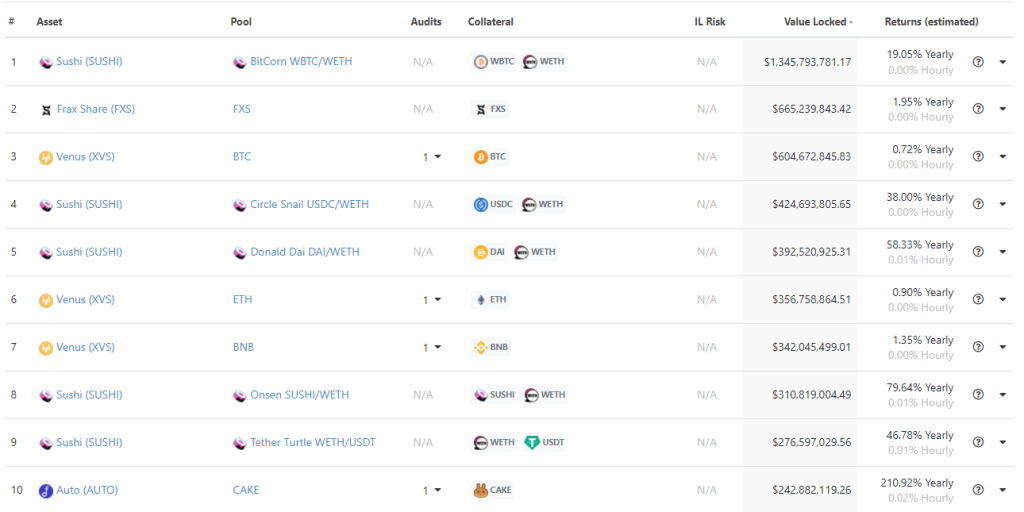 Photo credit: CoinGecko
Staking, which is significantly safer than yield farming, typically sees an APY rate in the 4% to 14% range. At the time of writing, staking Ethereum 2.0 on Lido Finance was yielding a 4.5% APY return.
On the other hand, yield farming, which is more risky, tends to result in a higher APY. If we look at CoinGecko, the listed yield farm’s APY ranges from a whopping 400% to as low as 0.19%. Newer Degen farms can see absurdly high APYs in the thousands.
2. Duration
The problem with staking is that most projects have a time lock. When the token is staked, the token is locked for a period of time, which can range from a few days to a few years. With yield farming, on the other hand, the farmer does not have to freeze the funds.
For example, those betting on Ethereum 2.0 will have their ETH locked until it connects to the mainnet Ethereum. Those who have staked since the launch of Ethereum 2.0 have seen their ETH locked up for over a year.
3. Temporary Loss
 Credit: Finematics
A temporary loss occurs due to the change in price of the deposited asset from when it was originally deposited. The larger the price change, the more exposed the investor is to volatile losses. It doesn’t matter in which direction the price changes, as long as there is a price change there will be an impermanent loss.
It is important to note that some liquidity pools are subject to more volatile losses. This is also why most operations would provide higher APY to liquidity pools with more volatile assets.
The temporary loss does not apply to staking as it is a single token stake and is not affected by price fluctuations.
4. Smart Contract Risk
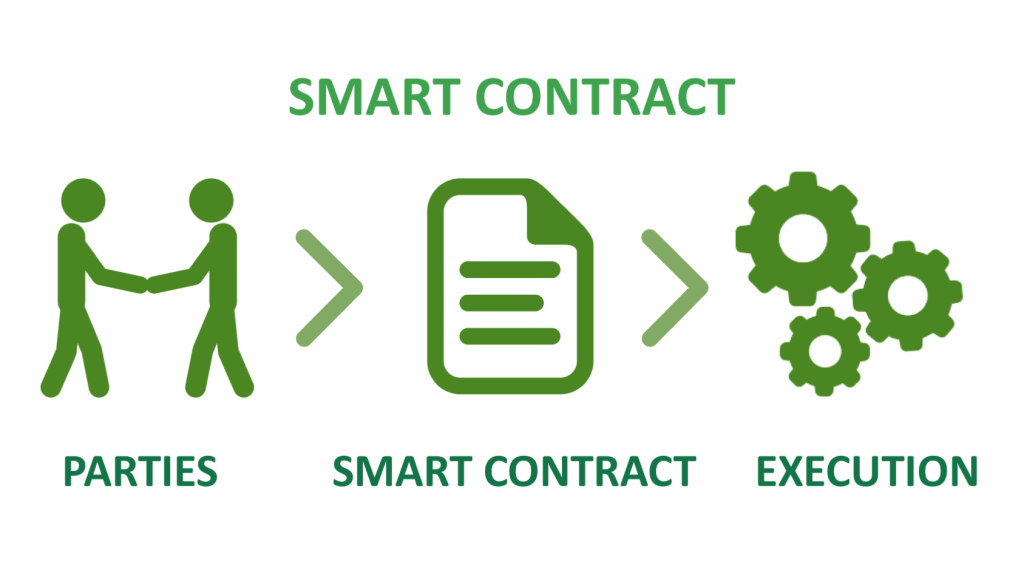 Photo credit: Shrimpy Academy
DeFi is almost all about the use of smart contracts. Without a doubt, smart contract risk is a risk that all DeFi participants must take.
The risk of smart contracts is more common in yield farming as it is usually coded by an inexperienced team. Any hole or mistake in the contract can be costly as hackers can gain access to the fund and siphon off all assets.
The risk of staking is much lower as it is usually coded by a more experienced team and the smart contract is audited by an established firm.
List of established yield farms in various chains
 Photo credit: Uniswap
ether
Uniswap is the leading decentralized exchange (DEX) on the Ethereum blockchain. Introduced in 2018, it is one of the OG DEX that is battle-hardened and has withstood the test of time.
Solana
Raydium is the number one DEX on the Solana network. Unlike other DEX, Raydium is able to fall back on another protocol, Serum, for more liquidity.
Binance SmartChain
PancakeSwap is a fork of Uniswap, but instead of Ethereum, it is based on the Binance Smart Chain. What sets PancakeSwap apart from the other DEX is the gameplay experience. There is a price prediction game and even a lottery system.
avalanche
Trader Joe is the largest DEX on Avalanche. There are over 140 listed tokens with more than 500 trading pairs. Currently in the top 10 DEX based on trading volume.
Diploma
Overall, it all boils down to investor risk tolerance and the length of the investment. For investments with a shorter time horizon, it is probably better to use yield farming as it can generate high returns and does not block the fund. A more risk-averse investor may choose to stake the token at a lower APY for greater security.
The bottom line is that staking and yield farming are very similar, and staking can even be considered a subset of yield farming. Both approaches have their own pros and cons and there is no clear answer as to which is the better approach.
[Editor’s Note: This article does not represent financial advice. Please do your own research before investing.]
Credit for select images: Chain Debriefing
Also Read: Blockchain Layer 1 vs Layer 2: Will Layer 2 Solutions Be the Next Big Thing in Crypto?
Learn Crypto Trading, Yield Farms, Income strategies and more at CrytoAnswers
https://nov.link/cryptoanswers
Comments are closed.