


If you’re someone who has recently joined the cryptocurrency space, I’m sure you’ve come across “crypto bros” conversing in a language that seems foreign. Even Merriam Webster won’t help you decipher what’s going on when two crypto brothers tackle it. Here’s a simple breakdown of the top crypto terminology you might see scrolling through social media platforms every day.
Note: Some of these terms are unique to Bitcoin, but given its dominance in the cryptocurrency space, these terms are good to know even if you don’t plan to invest in it.
Blockchain
Photo credit: Shutterstock
Think of a blockchain as connected blocks of data and information via a distributed ledger designed to record all transactions (or other data, but since we’re talking about cryptocurrency we’ll move on to transactions) that take place on a network that is decentralized , without a single central authority or point of failure.
Each block has a limit of almost two to four megabytes. So when the block’s capacity is filled with transaction data, it connects to the blocks that came before it, forming a data chain that is set in stone and cannot be changed. As new transactions come in, data is fed directly into the new block until it too reaches capacity and joins the previous block to form a chain of data in chronological order.
If a bad actor were to change the data on the blockchain for personal gain, all other computers backing the blockchain would see the change and reject it as it doesn’t agree with the rest of the majority.
Since its inception in 2009, the Bitcoin blockchain has grown by 40716 percent and stands at around 408.16 GB as of May 26, 2022.
Mining (Bitcoins)
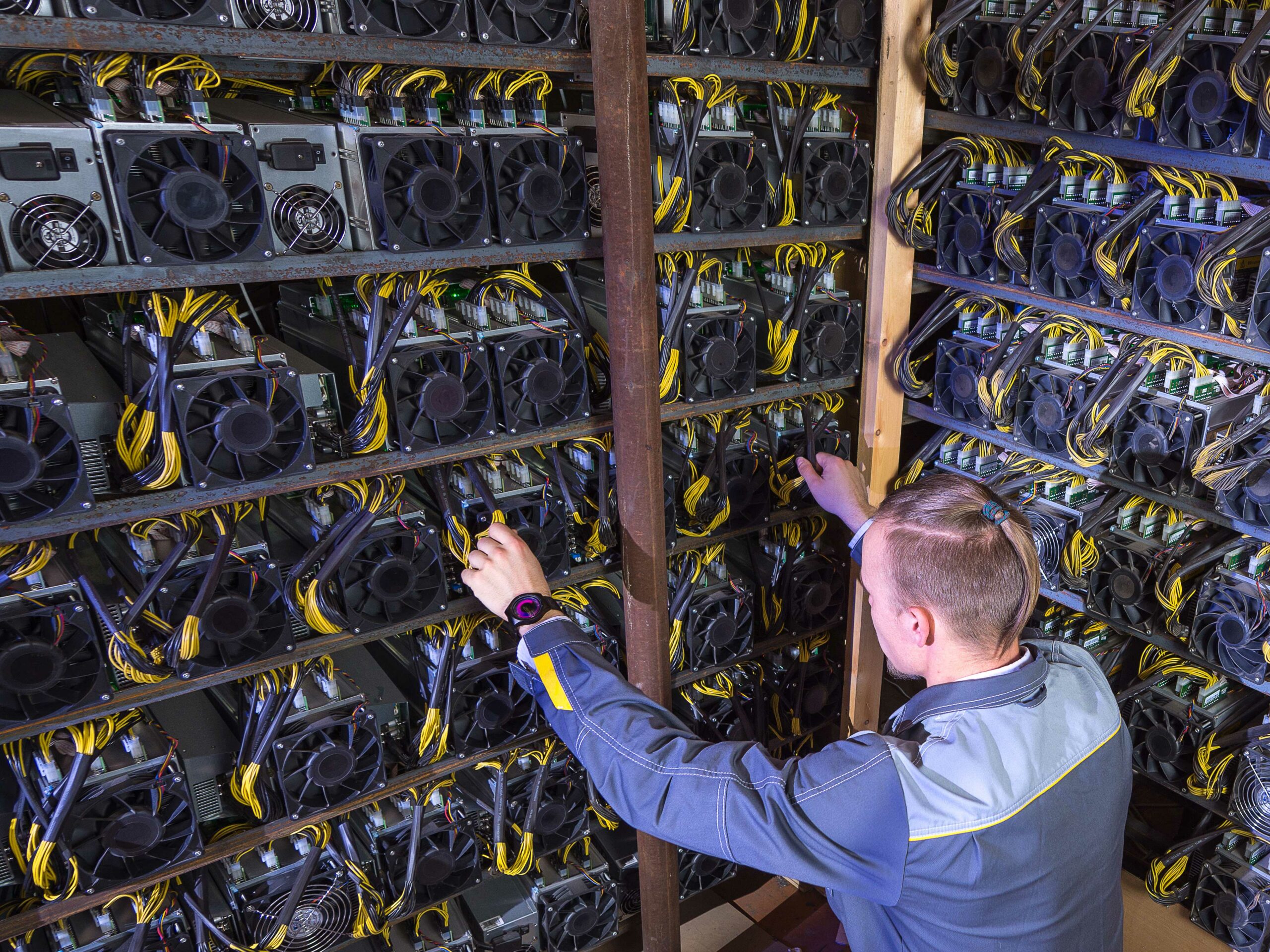
Photo credit: Shutterstock
The process of creating/finding a new bitcoin in exchange for computing power is called mining and goes hand-in-hand with the blockchain. There will only ever be 21 million bitcoin, although not all were released at once in 2009 during the birth of the digital asset. There are currently around 19 million bitcoins in circulation
Let’s say “X” is a bitcoin miner and has a few ASIC miners running. The main goal of X’s miner is to inspect and process transactions and add them to blocks (as mentioned above). As we already know, once this block reaches its storage capacity, it connects to the blocks that came before it and a new block is discovered. Each newly discovered block rewards the miners who found it with bitcoin, and so new bitcoins come into circulation.
Mining difficulty increases as more miners join the network. Currently, the reward for discovering a new block is set at 6.25 bitcoin, which has a market value of approximately CAD$228,534.39. On average, about 144 new blocks are discovered per day. A reward of 6.25 bitcoins multiplied by 144 new blocks equals 900. So 900 new bitcoins are released every day.
Halving (Bitcoin)
When halving, the rewards miners receive per block are halved. Rewards are halved roughly every 210,000 blocks discovered, which is roughly every four years. When it was launched in 2009, the reward for each new block was 50 bitcoin. This was halved to 25 in 2012, 12.5 in 2016, 6.25 in 2020 and is expected to drop to 3.125 in 2024. The halving process will continue until the last bitcoin is in circulation, which is expected to take some time in the year 2140.
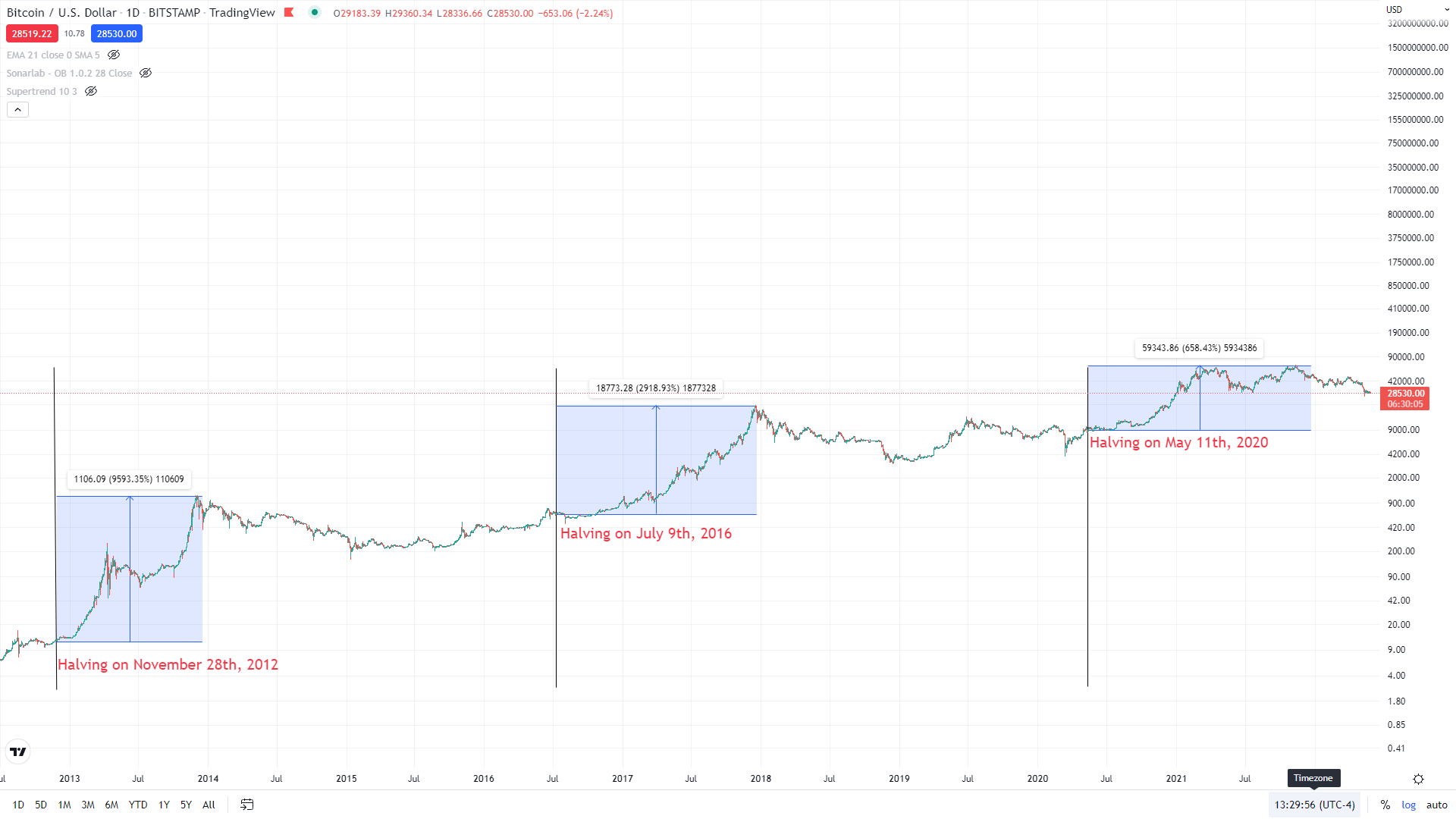
The halving has historically resulted in positive price action for Bitcoin considering it halves the inflation rate of the digital asset while reducing the rate at which new supplies are coming in. Imagine the earth is running out of gold to mine and the only new gold found is either random or extremely difficult to find. In such a case, supply would be constrained (gold shortage) while demand, as we have seen over the years, will continue to grow, leading to positive price action for the asset.
Proof of Work (POW)
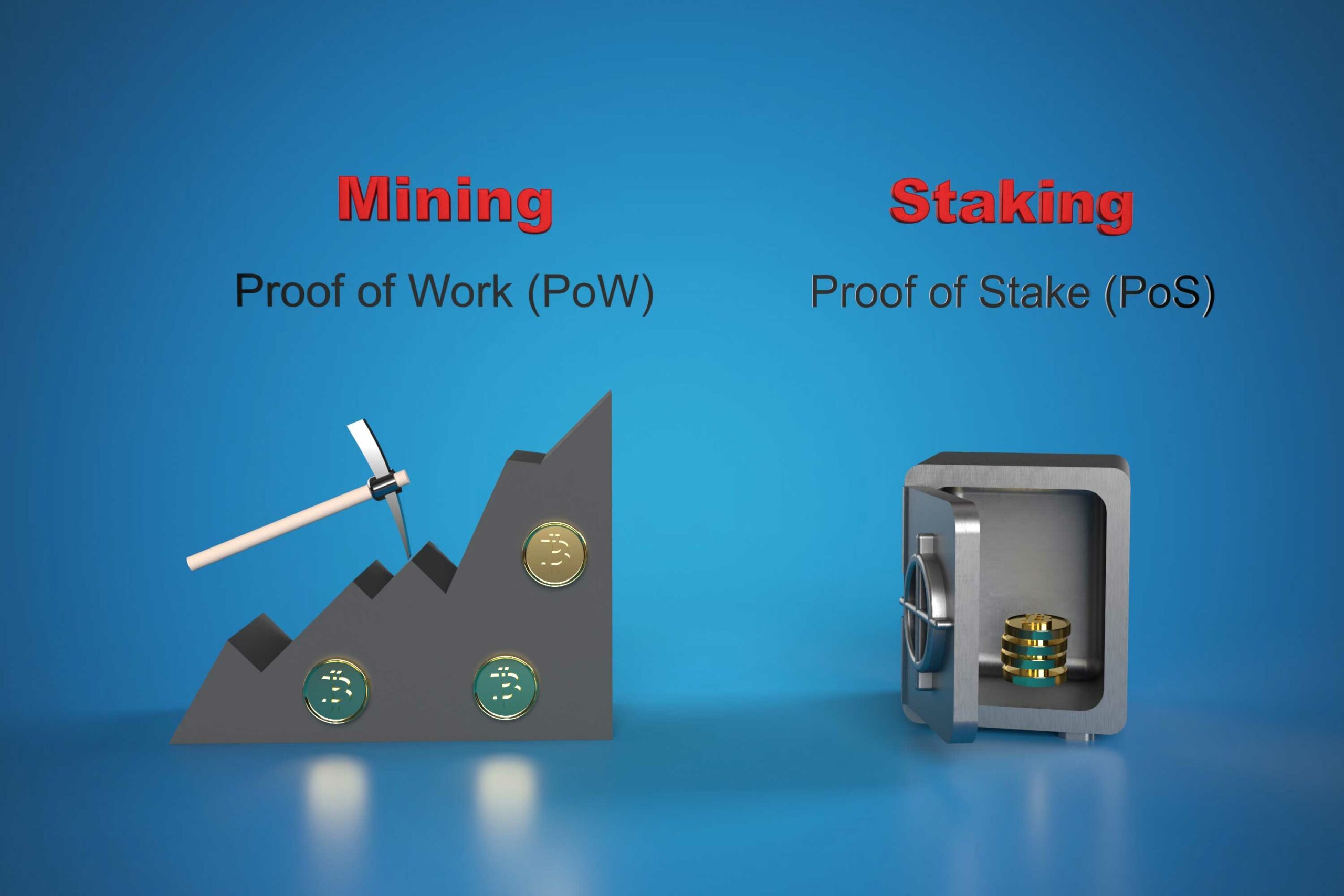
Photo credit: Shutterstock
Proof-of-Work is the consensus behind the decentralization of the Bitcoin network. “Work” in this case is the computing power behind mining new bitcoin, and required miners to indicate that they were validating and processing transactions to discover a new block. Proof-of-work consequences are very energy inefficient and have been the focus of criticism Bitcoin is receiving.
Proof of Stake (POS)
Proof-of-stake consensus, on the other hand, is less energy intensive and is used by altcoins like Solana, Fantom, Binance Smart Chain, Tezos, and many more. It performs the same function as a proof-of-work consensus by validating and processing transactions, although in a proof-of-stake consensus validators stake the asset they are validating against transaction fees rather than offering computing power as a reward a new block. The higher the amount you wager, the greater the chances that you will be chosen as a validator to validate a new block and receive transaction fees as compensation.
altcoin
Any cryptocurrency other than bitcoin is categorized as an altcoin. Some of the top 10 altcoins are ETH, BNB, XRP, ADA, SOL, DOT and more.
HODL
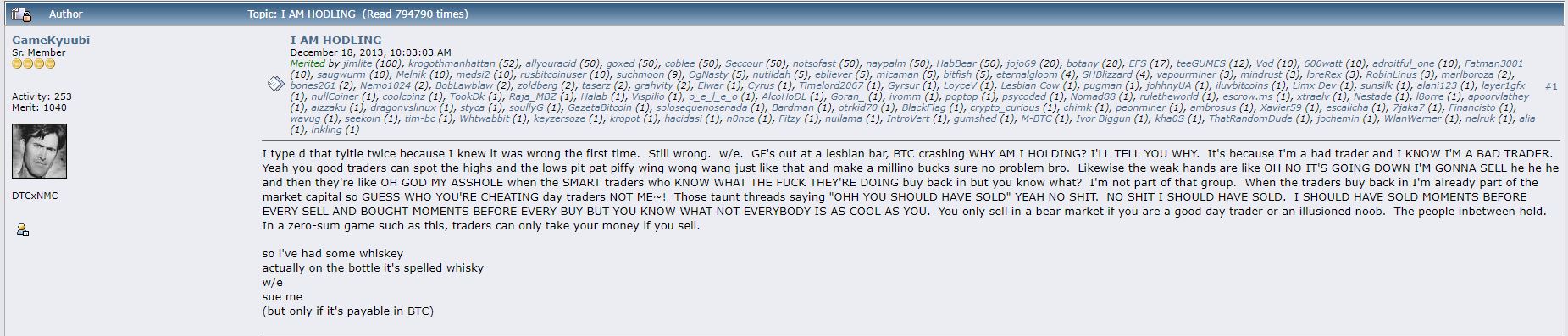
Photo credit: bitcointalk.org
HODL is an acronym for the term “Hold on for Dear Life,” which came about as a result of a typo (“hold” is the correct spelling) on a BitcoinTalk forum page in 2013. Considering that cryptocurrency markets are volatile (both up and down). Early adopters chose to “hold” the assets they bought during wild price swings in the hope that they would appreciate in value in the future, rather than continuously buying and selling, which is a trait of a day trader.
The typo soon became a community meme, and people still use the term to this day to indicate that they will weather the storm and hold on to their crypto assets rather than sell them.
FOMO
FOMO stands for Fear of Missing Out and is characterized by people being afraid of others having fun while missing out. In relation to the cryptocurrency market, it refers to buying a digital asset after the price has already increased. The person who is FOMO-ing-in looks at other people making money from a particular digital asset and doesn’t want to be left behind, and buys the said asset after it has already gone up in price.
Entering FOMO without a clear trade invalidation plan can almost always result in losses.
DYOR
DYOR stands for Do Your Own Research and is typically used by social media influencers to let their followers know that the views they are expressing on cryptocurrencies are not financial advice and that new investors should always do research on specific digital assets invest in it before trying this.
Exchanges and wallets

Photo credit: Shutterstock
As with traditional stock markets, buying and selling cryptocurrencies is made easier through crypto exchanges. Broadly speaking, there are two types of exchanges: Centralized (CEX), which uses market makers like Binance, Wealthsimple, Coinbase, BitFinex, and Decentralized (DEX), which doesn’t use an intermediary and instead uses liquidity pools to create a peer-to- Peer exchanges, like Uniswap, PancakeSwap, dYdX, Curve Finance and more.
On such exchanges, each user has a private wallet that is used to store, send, or receive cryptocurrency, just like you would with PayPal, for example.
Photo credit: Shutterstock
Learn Crypto Trading, Yield Farms, Income strategies and more at CrytoAnswers
https://nov.link/cryptoanswers
Comments are closed.