
The Amazon Effect Fuels a Wave of Robotics Investments, Acquisitions, and Maybe an IPO – TechCrunch


Amazon’s drive to get as many products to customers as quickly as possible, combined with a decade of technological breakthroughs, a labor shortage, and rapid e-commerce growth have aligned to create ideal conditions for warehouse robotics startups.
This fruitful convergence has led to acquisitions, large funding rounds, and at least one robotics IPO over the next year. And the growth seems limitless, according to TC Sessions: Robotics panelist Rick Faulk, CEO of Locus Robotics, Jessica Moran, SVP of Berkshire Gray, and Melonee Wise, founder of Fetch and now VP of Robotics Automation at Zebra Technologies.
“Amazon has really started to rock the boat, hasn’t it?” Moran said during the panel on warehouse robots. “The Amazon effect of getting as many SKUs as possible to as many people as possible, as quickly as possible, really has everyone – even pre-COVID – able to say, ‘Hey, I need to figure out how to automate this can do things faster.’”
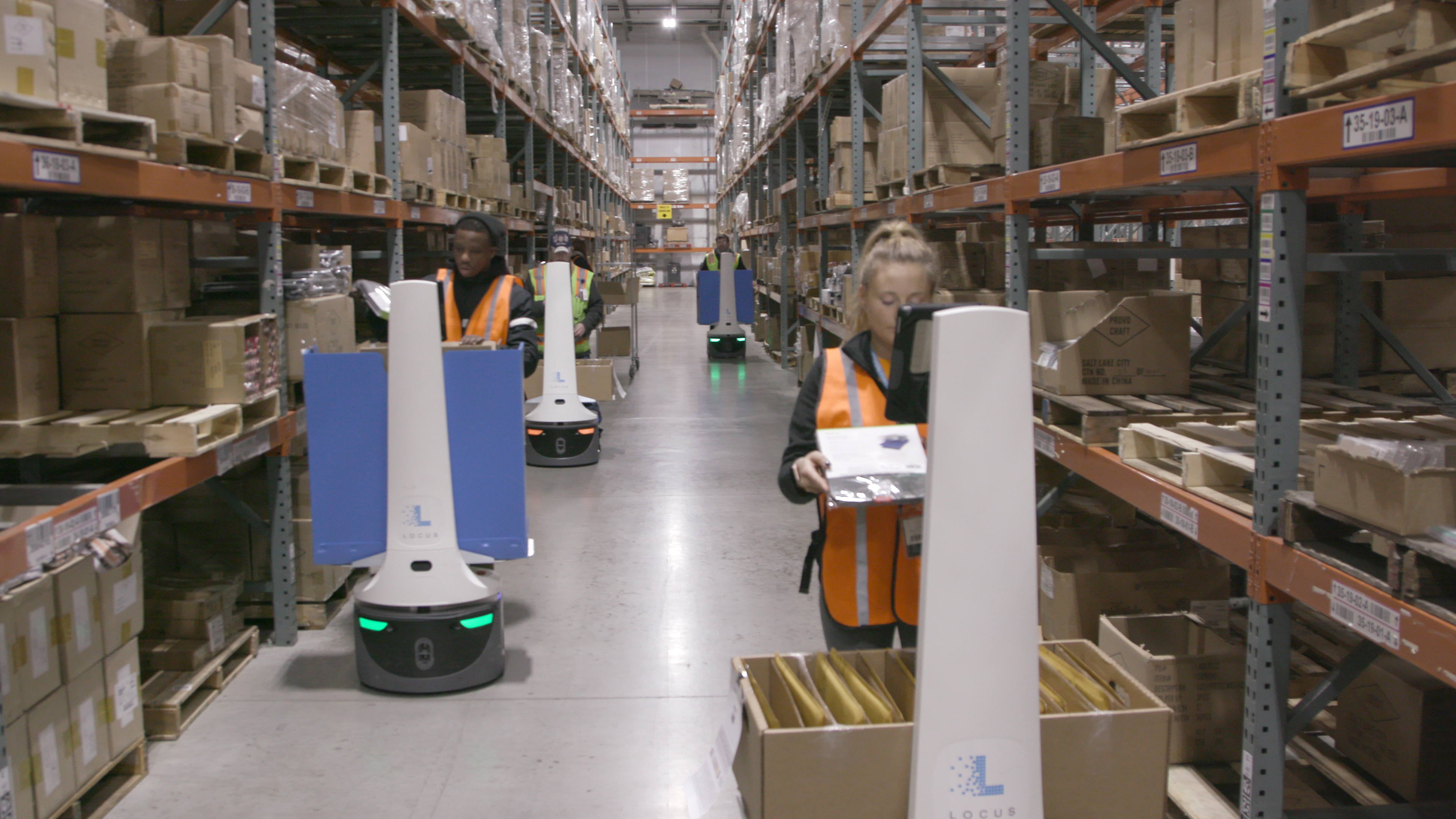
Photo credit: Locus Robotics
“We think of Amazon as probably the best arm of marketing in the robotics business today,” Faulk said. “They have set SLAs that everyone has to meet. And we consider them a great part of our marketing team.”
Faulk sees no upper limit for growth.
“If you look at the current level of robot and automation penetration of warehouses, it’s 5% at most. There’s about 150,000 buildings around the world, billions of square feet of space, so over the next four or five years, another 6 or 7 billion square feet of warehouse space will be built, it’ll all be automated.”
Warehouse build coupled with labor, rising demand for e-commerce and challenges around seasonal peaks will drive growth, he said.
That optimistic view is driving Locus to an IPO in the next year to 18 months, Faulk said.
Wise predicts that this will also lead to a wave of consolidation, in which a logistics company could look to add automation to its product offering. That’s exactly what happened when Wise’s startup Fetch was acquired in 2021 by Zebra Technologies, a company already deeply entrenched in the logistics space by providing printers, barcode scanners and mobile computers.
“I think you’re going to see that more over the next few years, and more of what you might call consolidation of alignment of products and product families and portfolios that help create a bigger story around the end-to-end ecosystem to tell fulfillment or manufacturing solution,” said Wise. “Robot automation is a kind of extension of this logistics portfolio.”
Comments are closed.