
The US economy is likely to face a recession by the end of the year as growth continues to slow, the report said


Former Fannie Mae manager Tim Rood gives an overview of the housing market after builder sentiment plummeted during August’s Cavuto: Coast to Coast.
The US economy is cooling off significantly and is likely to slip into recession before the end of the year, The Conference Board warned this week.
The nonprofit business organization said Thursday that its leading economic index – which tracks 10 indicators measuring the health of the economy – fell 0.4% in July, on top of a 0.7% drop in June.
The gauge has now fallen for five straight months, “suggesting recession risks are rising in the near term,” said Ataman Ozyildirim, senior director of economics at the Conference Board.
“Consumer pessimism and stock market volatility, along with slowing labor markets, housing construction and manufacturing orders, suggest that economic weakness will deepen and spread more broadly across the US economy,” Ozyildirim said. “The Conference Board believes the US economy will not grow in the third quarter and could dip into a brief but mild recession by the end of the year or early 2023.”
IS THE UNITED STATES GOING INTO A RECESSION?
Gas prices at a gas station in Los Angeles on July 19, 2022. (FREDERIC J. BROWN/AFP via Getty Images/Getty Images)
The index forecasts economic development by around seven months.
Gross domestic product (GDP), the broadest measure of goods and services produced in the country, also fell for two straight quarters, with the economy contracting 1.6% in January-March and another 0.9% in April-June % declined .
Technically defined as two consecutive quarters of negative economic growth, recessions are characterized by high unemployment, low or negative GDP growth, falling incomes and declining retail sales, according to the National Bureau of Economic Research (NBER), which tracks downturns.
The decline in economic growth in the second quarter meets the technical but unofficial criteria for a recession, which requires a “significant contraction in economic activity that is sweeping across the economy and lasts longer than a few months.” Still, the NBER – the semi-official referee – might not confirm this immediately, as they typically wait up to a year to call them.
The NBER has also stressed that it relies on more data than GDP to determine if there is a recession, such as unemployment and consumer spending, which remained strong through the first six months of the year. It also takes into account the depth of any contraction in economic activity.

The Federal Reserve approved a second rate hike of 75 basis points in July – triple the usual size – and has indicated another outsized rate hike in September is on the table. (Al Drago/Bloomberg via Getty Images/Getty Images)
There are conflicting signs of the health of the economy, fueling debate over the state of the economy: the number of Americans filing for unemployment benefits has started to rise, companies have announced layoffs or hiring freezes, and the housing market is faltering.
At the same time, unemployment fell to a near-historic low of 3.5% in July and consumers are still spending heavily despite scorching inflation.
Economists remain divided on whether or not the economy is officially in recession, but they largely agree that avoiding a downturn in the near future will be nearly impossible as the Federal Reserve attempts to tame inflation by cooling the economy control consumer demand. Policymakers approved a second rate hike of 75 basis points in July – triple the usual size – and have indicated that another outsized rate hike in September is on the table, depending on forthcoming economic data.
Rising interest rates tend to result in higher borrowing rates for consumers and businesses, slowing the economy by forcing employers to cut spending. Mortgage rates have nearly doubled in a year, while some credit card issuers have hiked rates to 20%.
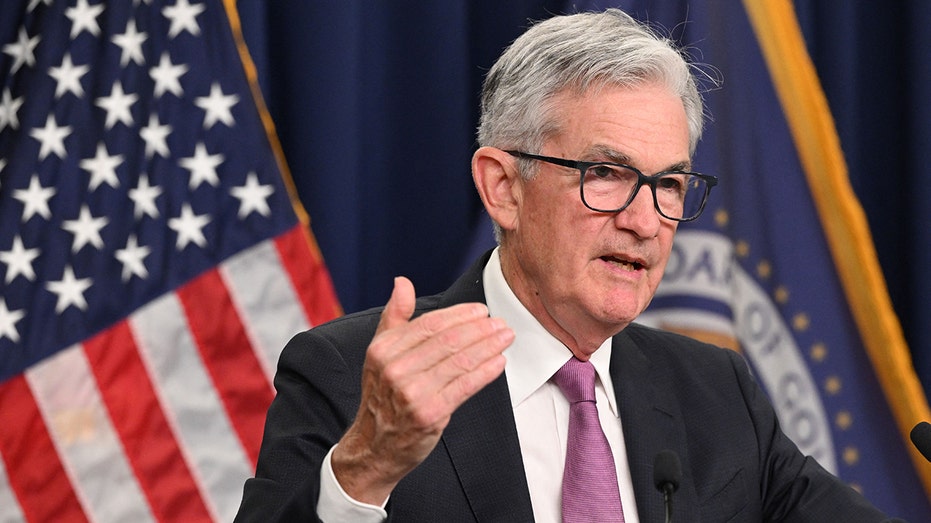
Federal Reserve Board Chairman Jerome Powell speaks during a news conference in Washington July 27, 2022. (MANDEL NGAN/AFP via Getty Images/Getty Images)
Fed Chair Jerome Powell has said tackling inflation remains the central bank’s top priority, even if it means risking a downturn – although he stressed last month that he doesn’t believe the US is currently in a recession .
CLICK HERE TO READ MORE ABOUT FOX BUSINESS
“We think there’s a need to slow growth,” Powell said in July. “We actually believe we need a period of sub-potential growth to create some slack for the supply side to catch up.”
Comments are closed.