


The round dome of Colorado's capital city.
State prioritizes funding for public schools, early childhood education and working families
On Friday, Democratic members of the Joint Budget Committee released the following statements today after the Legislative Council staff and the Office of State Planning and Budget issued quarterly economic forecasts for March.
“Today’s economic forecast tells two stories,” said Sen. Jeff Bridges (D-Arapahoe County). “The first story is that Colorado’s economy is strong. Unemployment rates remain low while job numbers and income levels are increasing.”
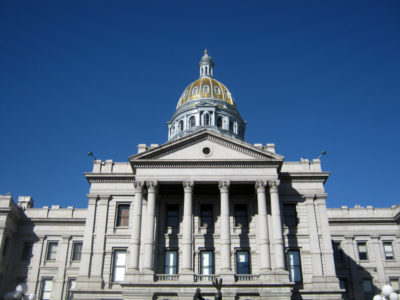
Colorado State Capitol, image courtesy of Good Free Photos.
“However, the second story shows us that our state resources remain stretched due to TABOR and we must be careful with this year’s budget commitments,” he continued. “I look forward to incorporating today’s forecast into the final days of budget preparation to ensure we deliver for hard-working Coloradans and set our state up for success.”
Colorado's economy continues to grow, with an unemployment rate of 3.4 percent and overall job growth of about 2.5 percent in 2023, adding a total of 57,600 jobs last year. Year-over-year wage increases of 6.2 percent exceeded the average inflation rate, which rose 3.9 percent.
“Colorado's growth is an indicator of a strong economy, yet we remain cautiously optimistic as we put the finishing touches to the budget,” said JBC Chairman Rep. Shannon Bird (D-Westminster). “I am pleased that we are able to fulfill our promise to students and faculty by eliminating the budget stabilization factor. This will put more money into Colorado classrooms, increase teacher salaries, reduce class sizes and ensure students have the resources they need to succeed. We will soon complete a fiscally responsible and balanced budget that represents our values, supports our economic growth, strengthens families and invests in essential services.”
“The March economic forecast represents the final set of data before we finalize this year’s budget,” said JBC Co-Chair Sen. Rachel Zenzinger (D-Arvada). “Today's cautiously optimistic outlook confirms our budget work to date: We want to be bold to support essential services by fully funding schools and health care provider plans, but also be responsible and limit spending so we remain well prepared for the future. I am pleased that despite challenging financial conditions, we are well positioned to meet our commitments to schools and families, address workforce shortage gaps, and fund critical behavioral and mental health services—all without overwhelming state resources .”
“This economic forecast shows steady economic growth and lays the foundation for us to craft a budget that invests in Colorado’s families and workers,” said Rep. Emily Sirota (D-Denver). “Despite our strong economy, Colorado’s unique tax constraints make it difficult to finance new investments. Our goal this year is to prioritize funding for our public schools and early childhood education, working families, and the critical community-based services that Coloradans rely on to keep us safe, protect our health, and thrive.”
State revenues rise, but TABOR's fiscal reality hangs over investments in Coloradans
The Legislative Council Staff (LCS) forecast projects General Fund revenues to be $17.6 billion in the 2023-2024 fiscal year and $18.7 billion in the 2024-2025 fiscal year , which corresponds to an increase of 5.9 percent compared to the previous year. For fiscal year 2024-25, the TABOR surplus is expected to be $1.91 billion; However, budget constraints will continue to limit investment in government services.
The Office of State Planning and Budgeting (OSPB) has revised its General Fund revenue expectations upward to $17.9 billion in fiscal year 2023-24 compared to the December forecast, while revenue for fiscal year 2024-25 has been revised up to $18, $1 billion was revised downwards. OSPB expects General Fund revenues to increase 5.8 percent to $19.1 billion in fiscal year 2025-26 due to stable income and revenue growth.
The March forecast assumes Colorado's economy will make a soft landing with no recession expected in 2024, and Colorado is expected to slightly outperform the U.S. economy. However, the economy is still vulnerable to a downturn in the event of major shocks.
Stronger-than-expected wage growth could cause sales and income tax revenues to exceed the amounts projected in this forecast, which assumes continued, slowing economic growth. Risk factors that could improve the forecast include a quicker resolution of inflationary pressures and more accommodative monetary policy. Risk factors that could negatively impact the forecast include a potential tightening of household finances, which could affect consumption, and high borrowing costs, which could discourage investment.
Comments are closed.