


From triple bottom line companies and B corporations to cooperatives and shared ownership companies, there are dozens of movements working toward a more equitable economy at different paces and with different priorities. But what does it look like when an economy is truly designed to serve people and the planet first?
This question was asked at the first Just Economy Summit hosted by Institute for Ecological Civilization (EcoCiv) and the California Wellbeing Economies Coalition (CWEC) in Sacramento (the state capital). The first weekend of March brought together dozens of organizations and activists working to transform California's economy to redefine societal success toward shared well-being.
Amanda Janoo, Head of Economics and Politics at Wellbeing Economy Alliance (WEAll) says that while there have been state-level events on this topic, this is the first in-person meeting in California, the state with the highest GDP in the country.
But the idea is to look completely beyond GDP, WEAll emphasizes, “to a shift in the way we want to live together, away from being seen as owners and consumers to being stewards and creators of a thriving world.”
This old versus new way of thinking impacts every aspect of life, from the way we view healthcare to housing, public education and the arts.
With so many different stakeholders with different philosophies, Janoo says they saw a lot of energy and enthusiasm for the potential of building a nationwide network. However, there are still open questions about the practicality of supporting each other and facilitating connections between core partners.
“We have organizations whose focus varies – economic justice, racial justice, environment – but the main theme was to provide a framework for connection between the different groups to see if there is interest in building a network at the state level,” she says.
“Everyone who came was already part of this movement in some way to drive change in economic systems, so a big question was how we could appeal to a broader audience.”
The event had two main focuses: one group focused on government and advocated for policy proposals at the state level, while the larger group focused more on making connections and proposing the outstanding issues they were wrestling with. For example, what if lending focused on welfare rather than short-term business impact? What if lending mechanisms were not independent of people's utility, but focused on communities?
Photo courtesy of the Institute for Ecological Civilization
Megan Anderson serves as Project Manager for EcoCiv's Economics Department. She says the summit succeeded in bringing together people from different backgrounds, particularly grassroots groups who don't always hear about these types of events.
“Many people said they came feeling exhausted but left with renewed energy and hopesays Anderson. “It was incredibly valuable to have a space where people could come together in a way that wasn't 100% focused on strategy and action items. Such events are crucial for burnout prevention, but they don’t happen often enough.”
Anderson says the group found unexpected overlaps that could form the basis for future collaboration as a coalition. Many of the policy experts at the summit work on behalf of marginalized communities and explicitly represent their needs as they advocate for reform policies in Sacramento.
But Anderson says the conference really showcased two approaches: those who want to push for greater economic justice within the current system and adopt its methods; and those who want to work to change or overthrow the current system.
“We assume that the future political group will consist of the previous group,” she says. “But the annual California Just Economy Summits, in contrast, will also include people who feel they need to work outside the current system to bring about more radical change.”
In both cases, the overarching intention is to work towards building a coalition –Building trust and building a network to create something more concrete.
Kevin Bayuk is a worker and owner at LIFT economics whose work and mission are directly aligned with the California Wellbeing Economies Hub: to support economic solutions and reforms and increase the economic well-being of all California residents.
Examples of this include bringing one Indigenous-run bioregional hemp economy to life, from a tool bag made by Patagonia to increasing the utility of compostable disposable items for the catering industry through a Impact accelerator.
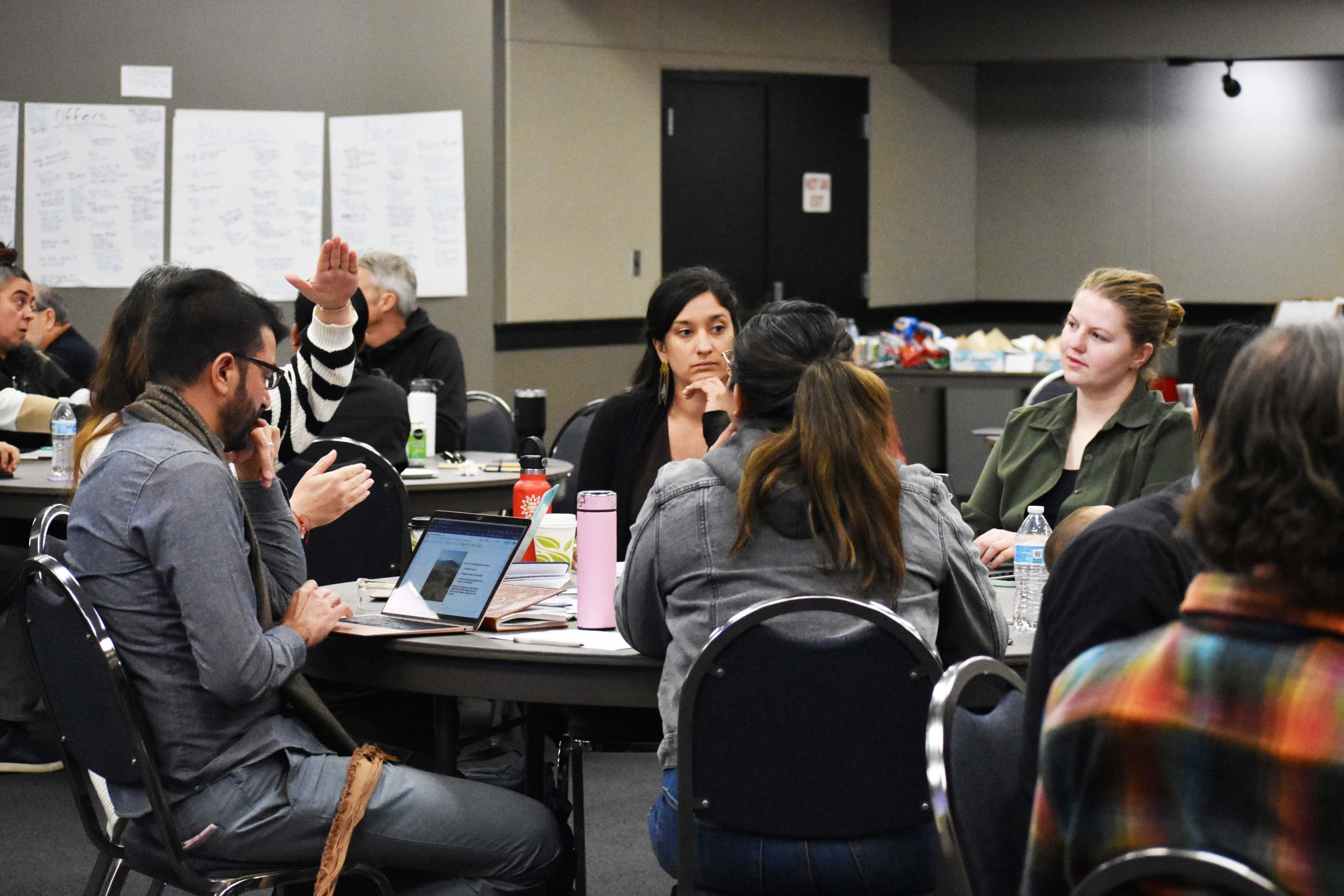 Photo courtesy of the Institute for Ecological Civilization
LIFT Economy has already supported the work of the summit participants TAC Farm, which works to stimulate the economy of a disadvantaged region through the use of interconnected agricultural ventures; and that Legal Center for Sustainable Economy, Their mission is to create a new legal landscape that supports community resilience and grassroots economic empowerment. Additionally, about half a dozen participants from LIFT Economy Next Economy MBA program attended.
Bayuk says LIFT Economy emerged from the summit with potential partnerships to explore and a stronger sense of connection to projects previously unknown to LIFT.
“We already have a relationship with Native Roots Network, but that was the first time we were able to meet in person,” he says. “We will continue to collaborate on their land trust and economic development initiatives.”
Keynote speaker Lindsay Morgan Tracy spoke about Washington State's cutting-edge work to transform economic and government systems and shared that they had just secured $2 million in the budget for community meetings on environmental and economic justice.
But beyond the rumblings in sectors in progressive states like Washington and California, the leaders of the Well Being Economy are making headlines Amsterdam, New ZealandAnd Finland while America lags behind.
According to Janoo, the US is now in a learning and listening space and taking the lead from other countries. Although there are so many economic system movements and initiatives across the states, they often operate in isolation. Events like the Just Economy Summit bring together stakeholders from different philosophies to find common principles and values and remove the barriers to social and environmental well-being.
And because California's economy is so large, the impact could ripple through the rest of the country and the world.
Next month, WEALL will bring together state-level coalitions in DC for an event organized in partnership with New America. The coalitions operate under many different banners, but each has established a new definition of progress with social and environmental well-being at its core. helped shape a transformative economic strategy; and focus their movements on principles of deliberative, participatory democratic process/governance. Participants include I love the economic future of the country, Vermont Prosperity Project, Alaska Just Transition, Reimagine Appalachia , Economics Laboratory, Virginia Solidarity Economy Network, WEAll California and Puerto Rico's Social/Solidarity Economy Network.
Comments are closed.