


“Fiji has no comparative advantage in rice production due to its low average yield per hectare and high production costs. “Importing rice from countries with more efficient production practices results in lower prices for consumers in Fiji,” said University of the South Pacific economics professor Baljeet Singh.
“This aspect is of utmost importance, especially to ensure food security and improve affordability for the population,” he added.
Rice, rice maybe? Asia's middle class is looking for low-carb alternatives
Fiji once had a thriving rice industry, with production peaking at 33,000 tonnes in 1987. In 2020, this amount fell to 8,209 tonnes, despite the increase in rice consumption in the country since the 1990s, Singh said, adding that about 60,000 tonnes were required for self-sufficiency.
“Rice cultivation received utmost attention from the government during the period 1970 to 1990. Achieving self-sufficiency in rice production was a key objective of the development plans, with the ambitious goal of achieving a self-sufficiency rate of 90 percent by 1990,” Singh told This Week in Asia.
Although Fiji had achieved 66 percent self-sufficiency by 1987, rice production declined as a result of the 1987 coup by Sitiveni Rabuka, a lieutenant colonel.
The takeover took place in protest against Indo-Fijian dominance in the economy and politics. At this time, most rice farmers and rice consumers were Indo-Fijians.
In the two decades before the coup, the government had made large investments in the rice industry. Support to farmers through fertilizer subsidies, credit facilities, extension services and access to irrigation water led to production peaking in 1987.
“[The coup] led to a significant change in government policy and a shift from import substitution to export promotion. All previous government support to the rice industry was withdrawn, leading to a gradual decline in rice production from the early 1990s,” Singh said.
Residents drink kava at a bar in Suva, Fiji. Over the past two decades, the eating habits of indigenous Fijians have changed significantly, largely due to the proliferation of Asian grocery stores that have popularized rice. Photo: AFP
However, the last two decades have seen a significant change in the eating habits of indigenous Fijians, largely due to the proliferation of Asian – particularly Chinese – grocery stores, which popularized rice over the traditional yam, taro and cassava-based diet have .
It was only with the pandemic that the government began to support the rice industry again by launching the “We Rice Up” program to increase yields and bring the industry back to its glory days.
Despite all efforts, the agricultural industry is suffering from a severe workforce crisis, according to Raj Sharma, chairman of rice milling company Fiji Rice Pte Ltd.
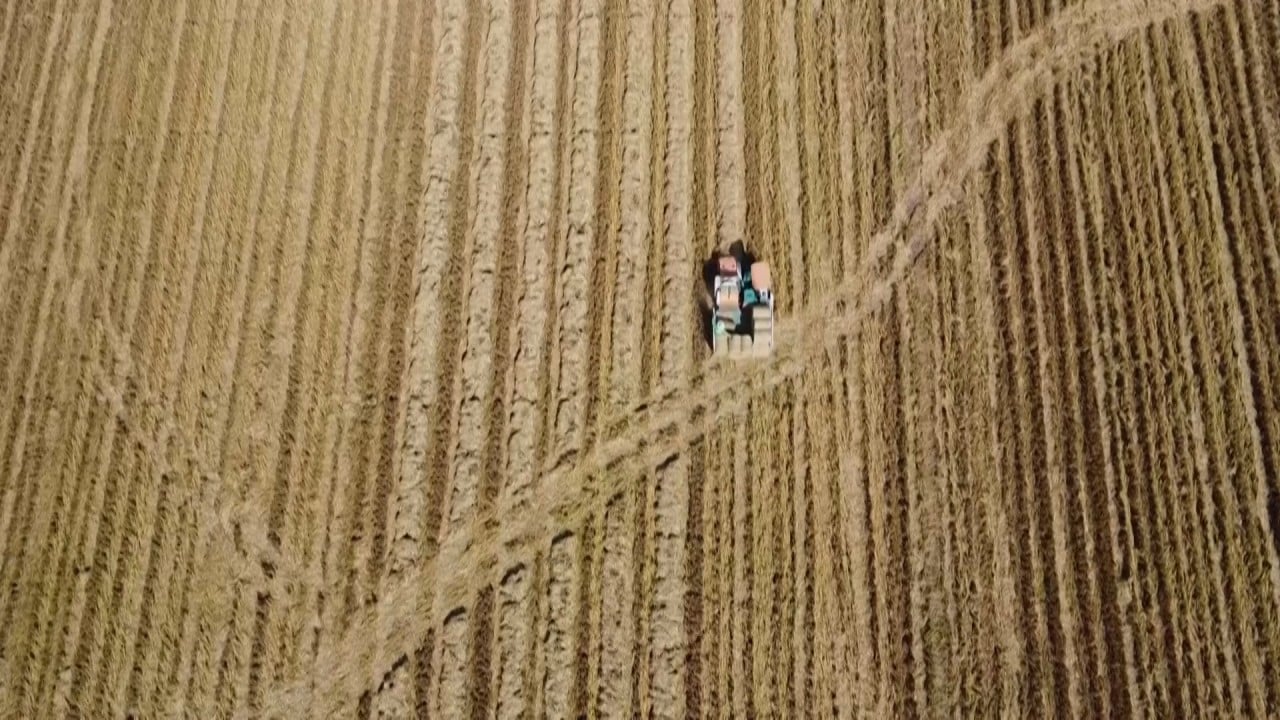
“Old farmers and extreme labor shortages on farms require an alternative, namely mechanization,” he told This Week in Asia.
 Chinese experts on Vanua Levu, Fiji's second largest island, teach locals how to transplant rice. Photo: Han Hui
Chinese rice development assistance to Fiji aims to address these challenges through the use of new, high-breeding seeds and technology-enabled rice cultivation techniques.
Since January 2015, China has contributed to the renewal of five local rice varieties and introduced 16 Chinese rice varieties under the development assistance program. In addition, more than 4,000 local agricultural officials and farmers were trained. In addition, since October 2022, China has sent six experts to Fiji to implement a three-year program to introduce mechanized rice cultivation.
In an interview with This Week in Asia, Chinese agricultural engineer and team leader Chen Huazao explained the team's plan to train Fijians to increase yields on rice farms.
“We will promote mechanized direct farming technology for rice,” he said. “Targeted training on rice production technology will be provided to local rice farmers, rice technicians and students of agricultural colleges.”
'We're on our own': Asian rice farmers brace for El Niño's wrath as crops wither
Chen said a team of experts from China arrived in Fiji in July and conducted field research in collaboration with the Fiji Academy of Agriculture Sciences to understand Fiji's production situation and “identify problems, analyze them and work to solve them effectively.” “.
Asked whether the introduction of new high-yield rice seeds and machinery could lead to dependence on China, Chen said the seeds would be Fijian varieties, eliminating the need to source them from China in subsequent seasons . The first shipment of machinery and spare parts will be provided free of charge, he added.
“The use of high-yielding and high-quality rice varieties can lead to high-yield rice cultivation through scientific crop management measures, so that more Fijian rice farmers can benefit,” Chen said.
02:32
Vietnam sees rice as an unlikely contributor to climate change
Vietnam sees rice as an unlikely contributor to climate change
According to Sharma, the China-led program to promote dryland farming is going well, but inputs (machinery and seeds) are high and “farmers do not have the means to sustain these high inputs”. Sharma welcomed the government's decision to subsidize the cost of these inputs and offer grants for land preparation, fertilizers and weedkillers.
Dryland farmer Parvin Kumar from Rakiraki says he would like training from the Chinese to improve yields on his farm, which does not have a proper irrigation system. “If the government can help get machinery, everyone could farm,” he told This Week in Asia.
Chen said the introduction of mechanized rice farming methods would help transform the industry into a technology-driven and “scientific” industry, thereby encouraging more young Fijians to take up farming.
 Dry farming land Parvin Kumar from Rakiraki. Photo: Kalinga Seneviratne
Sharma welcomed the idea but said there was a need to identify young people at the farm level. “It could be at the level of clusters of rural youth groups as many of them migrate to urban areas in search of work,” he said.
The government should also work with village communities and encourage young people's involvement in agriculture, said Singh of the University of the South Pacific.
“Policymakers should target school dropouts and provide them with necessary training and agricultural machinery,” he added.
Learn Crypto Trading, Yield Farms, Income strategies and more at CrytoAnswers
https://nov.link/cryptoanswers
Comments are closed.