


Since the breakthrough year of 2020, the market capitalization of decentralized finance (DeFi) applications has skyrocketed from $500 million to around $10 billion. The size of the DeFi market is currently a staggering $141 billion, and much of this growth can be attributed to this Yield farming – a worthwhile way to provide funds or liquidity to decentralized protocols to receive rewards paid out in tokens.
What is yield farming?
Yield farming, also known as liquidity mining, involves staking digital assets in decentralized finance protocols to earn token rewards for providing liquidity in DeFi markets.
A yield farmer (also known as a liquidity provider) typically deposits crypto assets into an autonomous trading or lending pool in exchange for trading fees or interest payments, as well as yield farming rewards paid out in protocol tokens to generate additional returns.
How does yield farming work?
Yield farming is somewhat similar to fixed deposits in traditional finance, but is more complex and technical. These are typically investors known as liquidity providers (or yield farmers) who deposit funds into smart contracts called liquidity pools in the hope of earning above-average returns on their assets.
Yield farmers use their funds to provide liquidity to decentralized liquidity pools, and in return, the fees paid by users of these DApps are distributed to farmers according to the share of liquidity they contributed. In addition, yield farming offers exciting mechanisms that allow investors to maximize their returns through fairly complex farming techniques.
For example, when farmers provide liquidity to Curve Finance, they receive a token that represents their share of the liquidity of a specific liquidity pool on Curve. You can decide to deposit this token to another protocol and mint another separate token to serve as additional yield. The process can become very complex and also very rewarding for yield farmers.
In addition, yield farming also serves as a way for investors to earn new crypto tokens without purchasing them directly from exchanges. Some protocols attract liquidity by distributing additional tokens to liquidity providers – this can be a governance token or a token that provides other utilities in the protocol's ecosystem.
How to Make a Yield on a Compound Farm
To demonstrate the process of yield farming on DeFi protocols, we will use Compound as an example.
Connection is a DeFi lending and borrowing platform that allows investors to earn interest on their cryptocurrencies by using them to provide liquidity to their pools. Let's take a look at how to farm for yield on Compound.
- Open your browser and type “compound.finance” to access the lending DApp.
- Click “App” and connect the DeFi wallet to access Compound’s lending and borrowing markets.
- Next, select your preferred network – Ethereum, BNB Smart Chain, Avalanche C-Chain, etc. – in the top right corner of your screen next to the three dots.
- Navigate the market and select the cryptocurrency you want to provide liquidity for as a lender.
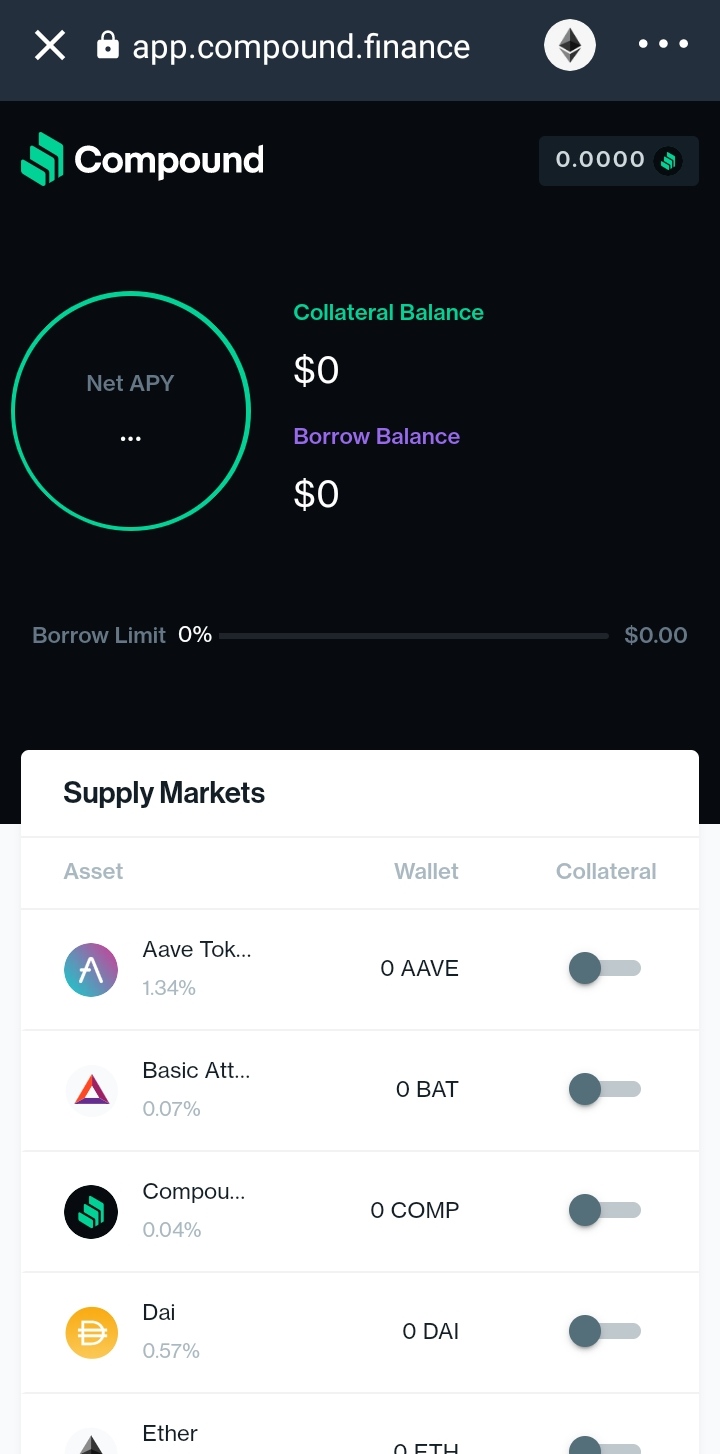
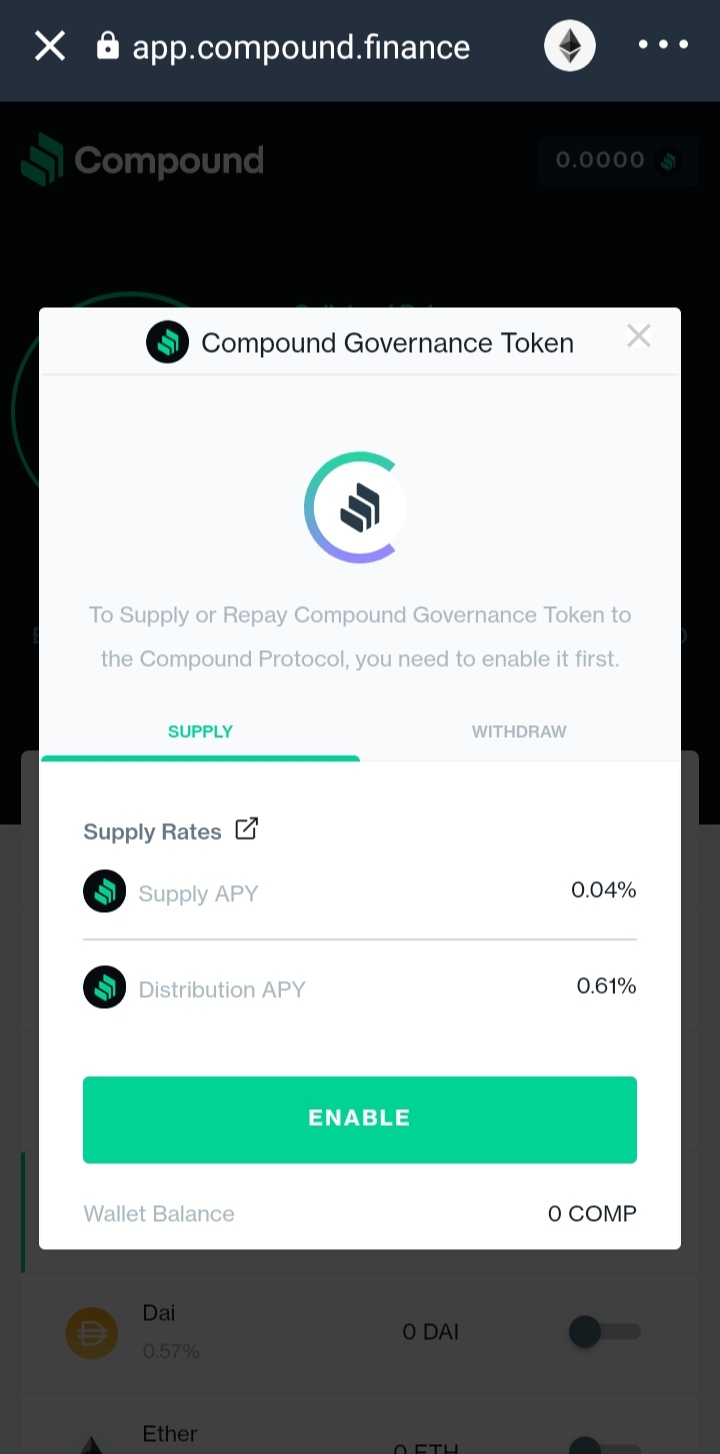
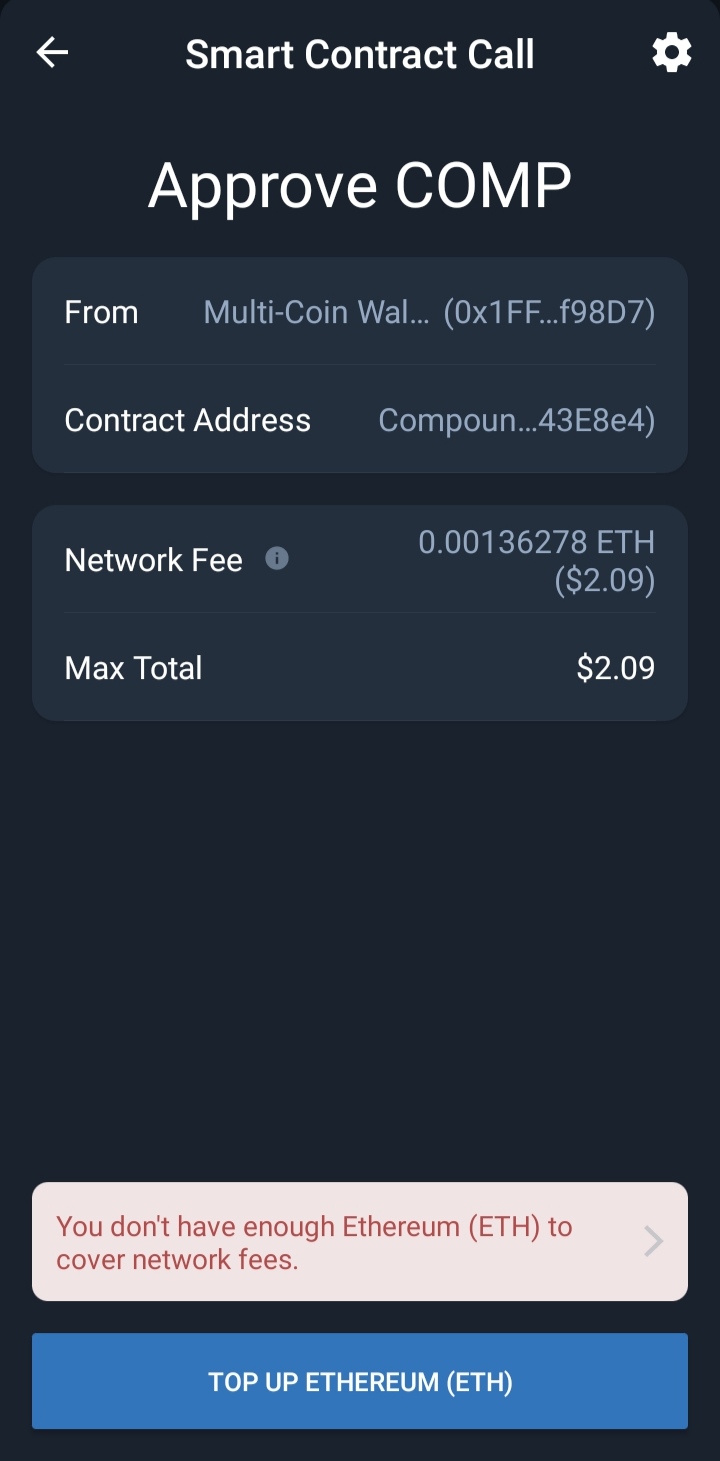
- Click ACTIVATE. The protocol makes a smart contract call to your wallet.
- Deposit the crypto token you want to lend.
- Sign the transaction and you will immediately start earning income from your crypto asset.
- To withdraw your tokens, follow the same process and navigate to withdraw.
- You have successfully completed the yield farming process.
Types of cash crop farming
There are several ways yield farmers earn yield in the DeFi market. Let's take a look at three.
Liquidity provision
If you act as a liquidity provider on a decentralized trading platform, you must lock your tokens in a protocol's liquidity pool to receive rewards. Decentralized exchanges charge a small fee for all transactions and distribute it to liquidity providers in proportion to the percentage of liquidity provided.
Additionally, some decentralized trading applications provide additional incentive through liquidity pool (LP) tokens, which liquidity providers can obtain and stake to generate yields from farming.
Loans and credits
In DeFi lending and borrowing, DeFi investors provide tokens as liquidity to enable DApps to extend loans to borrowers. Borrowers, on the other hand, tend to over-collateralize their loans to ensure the safety of the LP's funds due to the high volatility of cryptocurrencies. Borrowers on lending apps like Compound and Aave receive the protocol's governance token as an additional incentive on top of interest payments to deposit funds and provide liquidity to lending pools.
NFT farming
A new yield farming trend that has emerged with the emergence of NFTs is NFT farming. Farming NFTs involves staking non-fungible tokens in a stake contract for a reward paid out in tokens, or staking stake tokens for a reward paid out in the form of an NFT.
Yield farming protocols
Uniswap
Uniswap is a trustless and permissionless decentralized exchange protocol that allows users to exchange crypto tokens without intermediaries or third parties. Investors will deposit the equivalent of two tokens in a 50/50 ratio to create a market that enables peer-to-peer trading. By providing tokens to Uniswap's liquidity pools, users receive rewards from the share of transaction fees as well as the UNI governance token. Uniswap currently has a TVL of $5.9 billion.
Curve financing
Curve is one of the largest DEXs enabling stablecoin swaps with over $5 billion tokens in its liquidity pools. Liquidity providers provide tokens to the pools and receive CRV tokens as part of their rewards in return for their effort. Thanks to the huge token supply, users can exchange their crypto assets efficiently while keeping slippage and transaction fees low.
Pancake swap
Pancakeswap is a DEX based on the BNB Smart Chain that allows users to exchange BEP-20 tokens. It uses the popular AMM model, which allows users to trade against a liquidity pool. Liquidity providers receive an LP token representing their share of the popular pools on Pancakeswap, which can be staked to earn CAKE tokens.
Risks of cash crop farming
Yield farming is a risky venture. Let’s take a look at the yield farming risks you need to be aware of before depositing your first tokens in a yield farming DApp.
Temporary loss
A temporary loss occurs when the assets in a liquidity pool become unbalanced due to a heavy sale or purchase of an asset in the pool. A temporary loss is technically not a loss if LPs have not withdrawn their tokens from the liquidity pool and should recover over time.
Smart contract risks
While the open-source nature of DeFi allows for easy inspection of protocol codes and detection of errors, this can also be dangerous. Hackers have exploited vulnerabilities in the codes of many DeFi protocols to drain their liquidity pools.
Carpet handles
A rug pull is an exit scam in which the developers behind a DeFi project flee with all of the users' funds in its liquidity pools and abandon the project. Most of these projects attract users by promising exceptional returns for low investments. It is important to research a protocol before providing liquidity to ensure that the founders have an exit mechanism built in.
Increased volatility
The high volatility of cryptocurrencies can cause the value of your token to plummet while it is locked. Therefore, you have no option to withdraw funds during times of extreme volatility. Although most yield farming protocols are now making their lock-up periods and mechanisms more flexible to attract LPs.
Regulatory concerns
The decentralized finance market is largely unregulated, meaning there is often no legal recourse if funds are lost.
FAQs
Who pays interest to liquidity providers?
In yield farming, the entire process is controlled by smart contracts that automatically distribute interest to each investor according to the share of liquidity they contribute.
Is yield farming safe?
While yield farming is an exciting way to potentially make money in the crypto markets, the process is rather technical and involves many risks. Without proper research and a good strategy, liquidity providers can experience temporary losses, rug pulls, smart contract risks, or old-fashioned market risks and end up losing money.
Can anyone become a yield farmer?
Yes, anyone with cryptocurrencies and a Web3 wallet can choose to use them to provide liquidity to earn income from their digital assets.
What is Total Value Locked (TVL)?
TVL is a term that represents the total funds or amount of money locked in a DeFi protocol. It is a metric commonly used to measure the overall health of the yield farming market and the market share of various DeFi protocols. You can use platforms like DeFi Lama, DeFi Pulse, DappRadar, and Dune Analytics to track the TVL of major DeFi protocols.
Learn Crypto Trading, Yield Farms, Income strategies and more at CrytoAnswers
https://nov.link/cryptoanswers
Comments are closed.