


Usually my Tuesday column focuses on a specific coin or token. It goes into detail about its technical and fundamental positioning, but instead of focusing on a single project, this week I’m going to cast a broader net (or field, I suppose) and talk about the broader topic of yield farming.
Yield farming has been the hottest trend in DeFi in 2020. While it may not have as much hype now, it is still alive and well. Understanding at least the basics of crypto is essential for anyone who owns (or wants to own) a significant amount of crypto yield farming.
Although the topic can get quite complex, the basics of yield farming are just that: basic. In today’s column, we’re going to look at ways anyone can get involved in yield farming and then discuss some of the complexities involved with this DeFi growth strategy.

Define yield farming
There have been many ways the term “yield farming” has been thrown around. I like a very clear and concise definition, so let’s define yield farming as follows:
Yield farming manages various passive strategies to earn a defined rate of interest on cryptocurrency holdings or positions.
Interestingly, there are many parallels between yield farming in traditional finance and crypto. Yes, yield farming in traditional finance is one thing. Consider the following cases:
- Many people keep cash in a bank account. This is not yield farming because there is no management strategy. However, an investor who constantly opens new high-yielding savings accounts to earn bonuses and promotional interest would earn their fiat cash holdings.
- Holding a company’s stock even if it pays a dividend isn’t yield farming as there’s no active strategy, but what about those who get in and out of stocks just to earn dividends? What about those who lend their shares to short sellers for a return? There are also covered calls, which allow stock investors to earn additional returns by selling options on the stocks they own. These are all examples of yield farming.
Now that we have a clear and concise definition of yield farming, let’s look at how it applies to crypto.
Getting Started: The Basics of Yield Farming
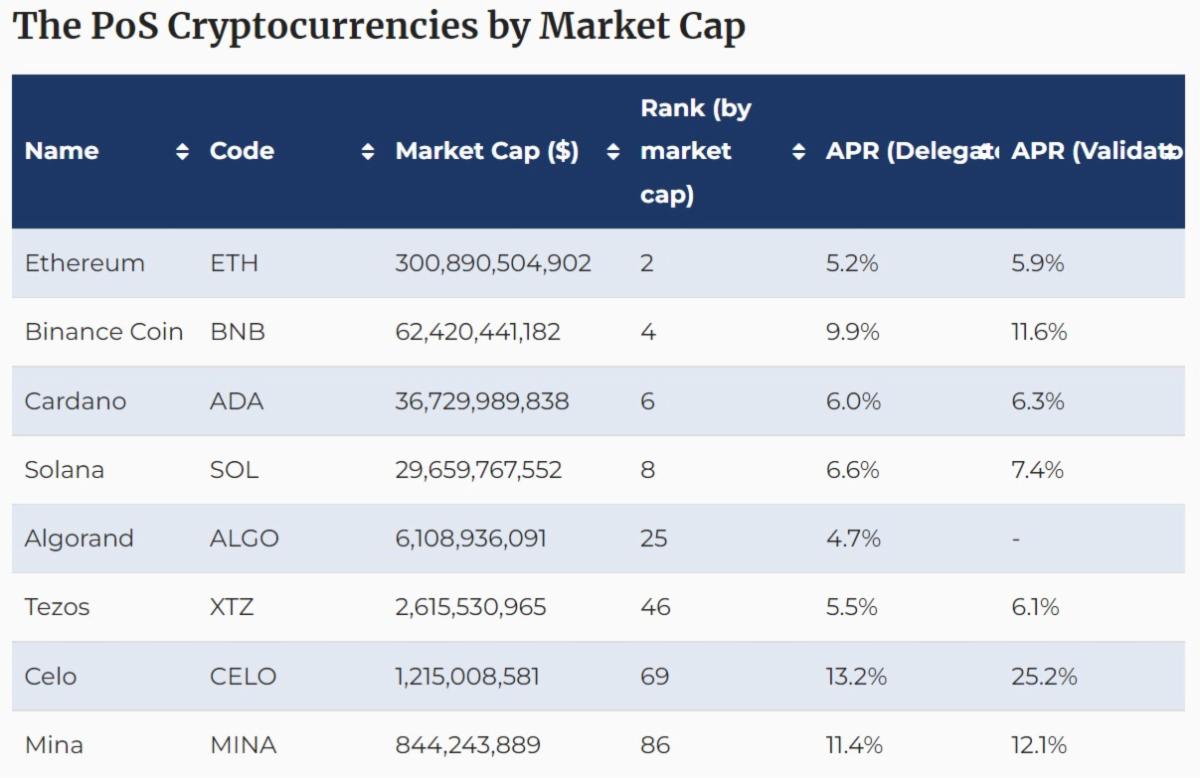
The easiest way to start yield farming is through staking (read our guide to crypto staking here). As a beginner, you can easily start staking through many online crypto exchanges or platforms with a few simple steps:
- Sign up on an online exchange/staking platform.
- Compare different cryptos (APY, lock-up period, minimum stakes, etc.)
- Buy the required number of crypto tokens.
- Enter the amount you want to wager.
- Confirm adding crypto to the staking pool.
If you don’t like leaving your coins on an exchange or third-party platform (not your key, not your coins), there are several cryptocurrencies that allow you to stake by storing coins in your own wallet with no custody.
For example, if you only use Algorand and Algorand-based assets, the Algorand official wallet is a great option for getting ALGO staking rewards. If you have more than one ALGO in your wallet, you will automatically start earning rewards.
Other coins like Polkadot and Cardano allow you to store your coins in your own wallet, appoint validators, and collect regular staking rewards without the hassle of running your own node (which can be expensive, time-consuming, and technical know-how required). .
If staking sounds interesting to you, we also have a staking rewards page covering some of the top staking coins and their current yields.
Grow more: Intermediate yield farming
Those willing to go beyond simple staking might consider lending as a way to increase the returns they deserve. The potential downside is that crypto lending comes with additional risks, which is why we refer to it as an intermediate strategy.
Lending is an extension of the stake. When staking, you are essentially lending your coins to the protocol or those running validator nodes. Crypto lending opens things up so you can lend to anyone. There are central lending platforms (like Nexo and BlockFi) and decentralized lending platforms (like Aave, Compound and Anchor).
The centralized platforms accept deposits from lenders and distribute them to borrowers. The APY earned by lenders and paid by borrowers depends on supply and demand. As we have seen in 2022, the risk with these platforms is undercapitalization, leading to their closure.
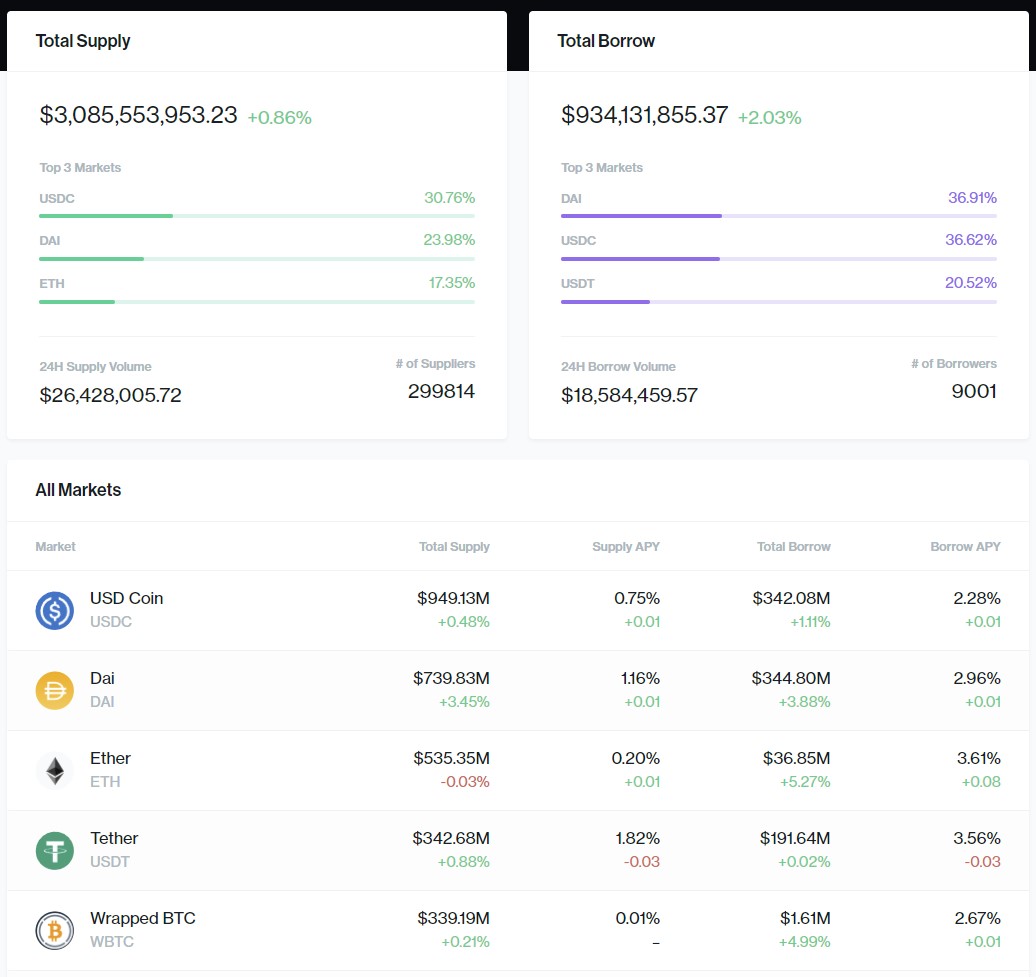 Lending on Compound
With these decentralized platforms, lending and borrowing is controlled by smart contracts. These protocols track deposits by issuing new synthetic tokens (e.g. “aUST” for Anchor) to lenders, which lenders can use to later redeem initial positions and accrued interest. These protocols focus on overcapitalized loans to maintain adequate reserves, but they face the risk of temporary loss.
Advanced yield farming
The next step in the yield farming continuum is providing liquidity. This involves lending to decentralized exchanges to increase the liquidity of these exchanges or other platforms. In return, the lenders receive portions of the trading proceeds generated from their assets.
Two of the most popular liquidity platforms are Curve and Uniswap. These were created for EVM compatible chains, but there are many other liquidity platforms including Serum and Raydium on Solana, TraderJOE on Avalanche, and application specific DEX chains like Thorchain.
These pools act as central liquidity hubs, facilitating trading between many different asset pairs. By utilizing these platforms, yield farmers provide liquidity to the crypto markets, thereby minimizing the market impact of traders. Essentially, this helps reduce volatility. In return, liquidity providers are compensated in three ways:
- Borrower trading fees and spreads are distributed to liquidity providers.
- Platforms often issue rewards in their own native tokens. An example is Curve, which emits the CRV token.
- Some protocols pay rewards to those who provide them with liquidity.
This opens up even more advanced yield farming methods. Consider the following example of a popular yield farming strategy:
Escrow of stablecoins and other major assets like BTC and ETH to stableswaps like Compound or Curve Finance as liquidity, which is then compensated with native token rewards.
It is possible to stake unused ETH on Compound and get cETH tokens in return. The cETH earns interest that leads to COMP rewards. You can then bring and deposit cETH and COMP to Uniswap for more returns.
This example only scratches the surface of what is available. Check out the table below to get an idea of the complex strategies that professional yield farmers devise:
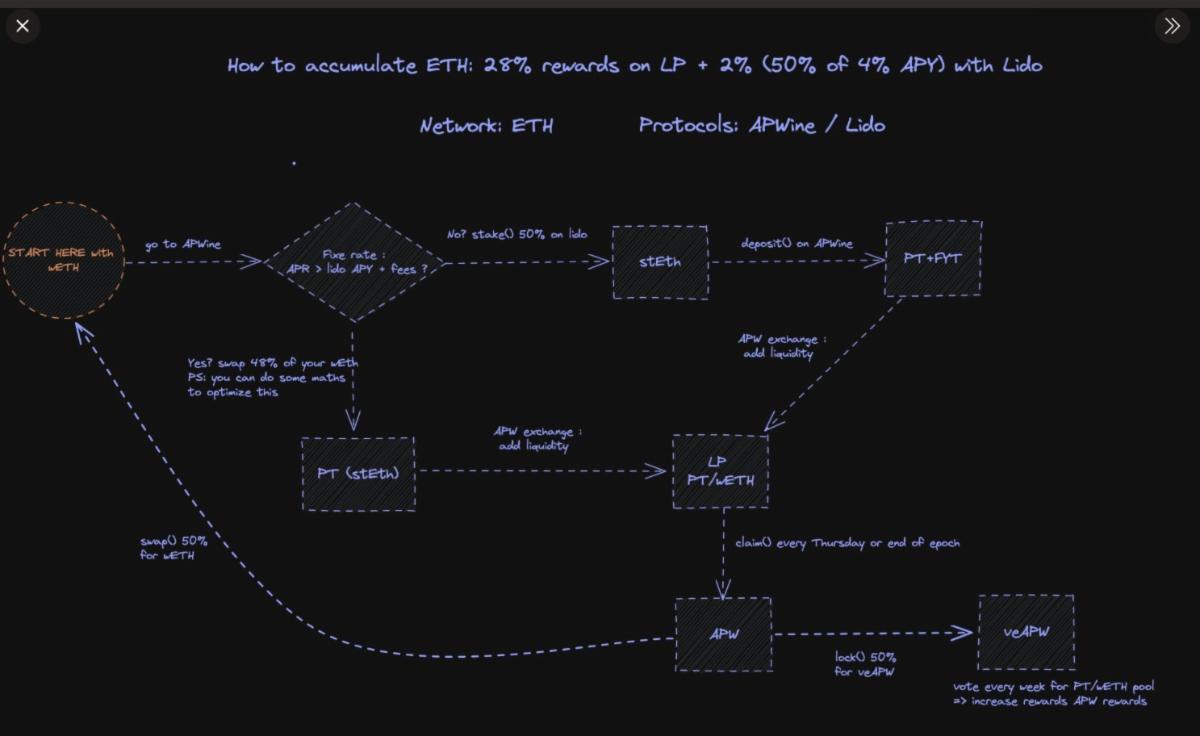 Image via Twitter
Investor Takeaway
Because such strategies are so complex and difficult to comprehend for most of us, many have been put off from yield farming.
However, it is possible to implement complex strategies via yield generation services that have emerged like yearn.finance for Ethereum or YieldYak for Avalanche. Obviously these aren’t for everyone and if you want to explore them you should fully understand how they work before investing your money.
Luckily, there are basic yield farming strategies like staking that anyone can use without in-depth financial knowledge and without the need to monitor ever-changing DeFi platforms prices.
This is an area where the bear market is your friend. You can buy more crypto at bargain prices and then increase your holdings through staking.
Given what you now know about yield farming, there’s no reason to let your crypto idle. Instead, you can plant your wealth across the different protocols and build more wealth.
Learn Crypto Trading, Yield Farms, Income strategies and more at CrytoAnswers
https://nov.link/cryptoanswers
Comments are closed.