


The crypto asset markets are constantly evolving and with them new tools and methods to understand and analyze the market. One such tool is the Bitcoin Stock-to-Flow (S2F) model, which aims to predict the price of Bitcoin based on its scarcity.
In this guide, we’ll examine what the Bitcoin Stock-to-Flow model is, the pros and cons of the model, and whether you can use it to trade Bitcoin.
What is Bitcoin’s stock-to-flow model?
The mastermind behind the Bitcoin stock-to-flow model is a Twitter user named PlanB. Despite their mysterious identity, they claim to be a highly qualified institutional investor from the Netherlands with a background in both legal and quantitative finance.
PlanB took the classic stock-to-flow model and gave it a digital twist by making predictions about the value of Bitcoin (BTC). As S2F’s predictions have been proven correct multiple times in Bitcoin’s short history, PlanB’s stock-to-flow model has quickly become a popular tool for Bitcoin investors.
The Stock-to-Flow (S2F) model is an economic model that measures the relationship between the existing inventory (supply) of a commodity and its flow (annual production or supply growth). The stock-to-flow ratio is calculated as stock divided by flow and is used to measure the scarcity of a commodity.
Stock to flow = stock/flow
The stock-to-flow model was originally developed for precious metals like gold and silver, but has since been applied to other assets, including bitcoin.
In the case of bitcoin, the stock-to-flow model compares the current supply of bitcoins to its annual production, i.e. the new bitcoins created through mining.
The stock-to-flow ratio is calculated as stock divided by flow and is used to measure the scarcity of a commodity. A high stock-to-flow ratio implies low annual production and relatively large inventory, which usually translates into higher perceived value and price.
To put this in perspective, let’s take a look at gold’s stock-to-flow. The gold inventory is 197,576 tons and the flow is 3,000 tons per year. This calculation gives a stock-to-flow ratio of 65.85, meaning it would take about 66 years of mining to double the amount of gold currently in circulation. This shows that gold is very scarce compared to silver, which has a stock-to-flow ratio of 22. This explains why gold is more expensive at $1,914 an ounce while silver is $23 an ounce.
Similarly, we can calculate Bitcoin’s stock-to-flow as of January 31, 2023. The inventory (supply) of bitcoin is 19.28 million, and currently about 385,000 bitcoin are mined in a year.
19.28M/385K=58.69.
Because we know the exact bitcoin supply going forward as well, we can calculate its stock-to-flow and predict future prices, making more informed investment decisions.
How Bitcoin Scarcity Affects the Stock-to-Flow Model
Bitcoin’s scarcity is a crucial factor in understanding its value and price, and is closely tied to the stock-to-flow model.
Bitcoin has a finite supply, with only 21 million bitcoins ever being created. This scarcity, combined with increasing demand for the currency, is creating upward pressure on its price.
An important aspect of Bitcoin’s scarcity is the halving event. Every four years, the rate at which new bitcoins are mined by miners is halved. When bitcoin was first introduced, miners were rewarded with 50 bitcoins per block. This amount was reduced to 25 bitcoin in 2012 and further reduced to 12.5 bitcoin in 2016. As of May 2020, the reward for mining a new block is 6.25 bitcoin.
This pattern of reducing the flow of new bitcoins into the market will continue, meaning that bitcoin’s stock-to-flow ratio will continue to rise.
Ultimately, almost no new bitcoin supply will come onto the market, so the price will be determined solely by demand. This situation has led to some optimistic predictions about the future price of Bitcoin.
The Bitcoin stock to flow chart
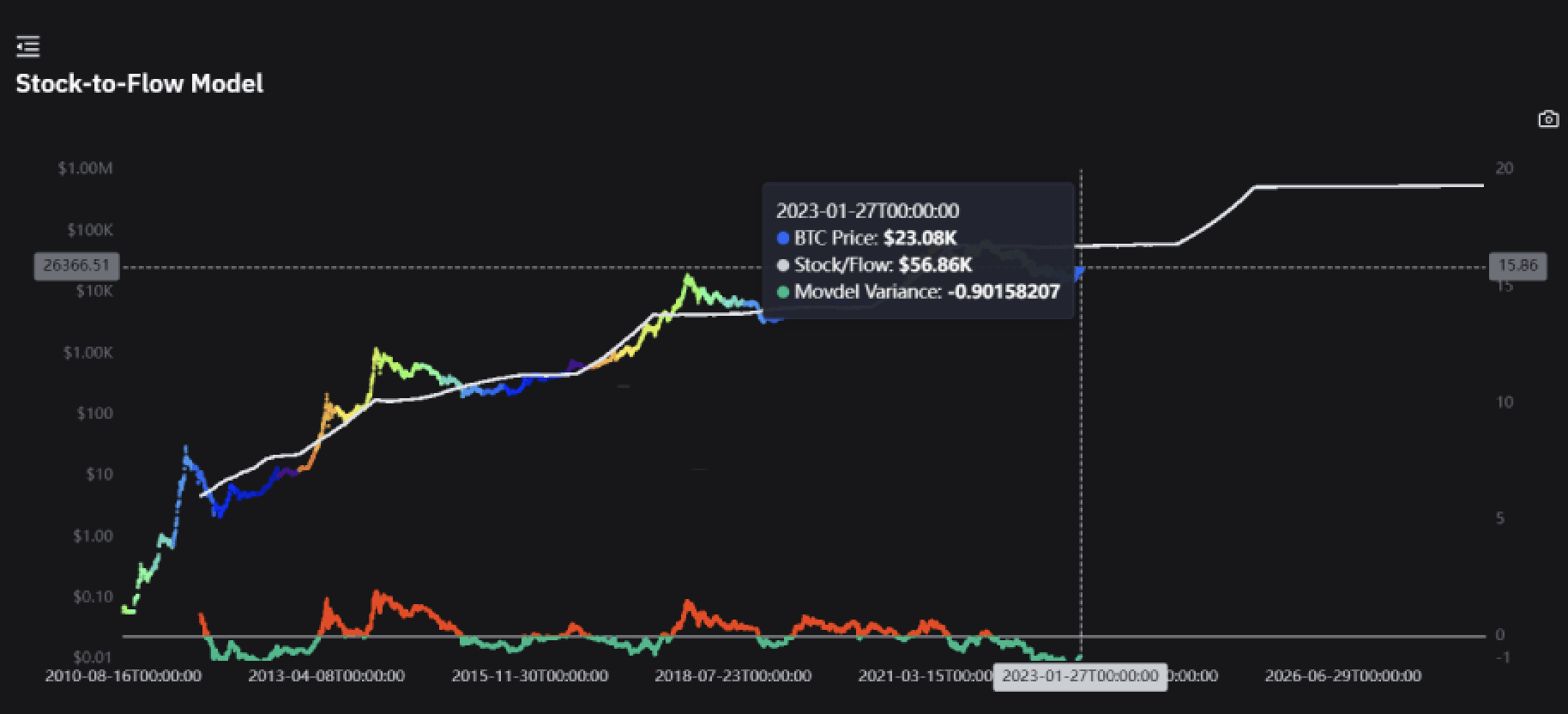
The Bitcoin stock to flow chart provides a visual representation of the stock to flow ratio over time and is used by some investors to assess the current state of the market. The chart shows Bitcoin’s historical stock-to-flow ratio as well as forecast ratios for future years.
Pros and cons of the Bitcoin stock-to-flow model
Like any economic model, the Bitcoin stock-to-flow model has its strengths and weaknesses. Here are some of the pros and cons of the model:
Advantages
- Offers a framework for understanding the relationship between scarcity, value and price in the case of bitcoin.
- Offers a simple and simple method for assessing the current market situation based on scarcity.
- Provides a long-term perspective: The Stock-to-Flow model takes into account Bitcoin’s long-term supply and demand dynamics, making it a valuable tool for those looking to make long-term investment decisions.
Disadvantages
- Limited focus: The stock-to-flow model does not take into account other factors that can affect the price of bitcoin, such as: B. Demand, market sentiment, regulatory changes, global economic conditions, technological advances and competition from other cryptocurrencies.
- Historical data only: While the stock-to-flow model has historically been accurate, it is based solely on historical data and does not take into account unpredictable events that could affect Bitcoin’s price in the future.
Can you use the Bitcoin Stock to Flow model to trade Bitcoin?
The short answer is yes; You could use the Bitcoin stock-to-flow model to trade Bitcoin.
By understanding the stock-to-flow ratio and historical trends of the market, traders and investors can make decisions about buying and selling Bitcoin.
However, It is important to remember that the Bitcoin Stock-to-Flow model is just one tool among many and should not be used exclusively. Many factors can affect the price of bitcoin, and it’s important to consider these other factors when making investment decisions.
Additionally, it is important to approach any type of trade or investment with caution and to thoroughly research and understand the market before making any decisions. While the Bitcoin Stock-to-Flow model can provide valuable information and insights, it is always important to consider multiple sources of information and to use a combination of different tools and methods when analyzing the market.
In summary, the Bitcoin Stock-to-Flow model is a useful tool to understand the relationship between scarcity, value and price in the case of Bitcoin. By considering currency scarcity and historical market trends, traders and investors can make informed decisions about buying and selling Bitcoin.
However, it is important to remember that the model is just one tool among many and should be used in conjunction with other sources of information and analysis.
Learn Crypto Trading, Yield Farms, Income strategies and more at CrytoAnswers
https://nov.link/cryptoanswers
Comments are closed.