


It can take a while to understand how everything works in the crypto industry. This can certainly be the case with crypto trading as it uses a number of different essential tools and additional features. One such tool, an Automated Market Maker (AMM), is now used daily by traders to conduct transactions.
But what is an Automated Market Maker and can it help you?
What is an Automated Market Maker (AMM)?
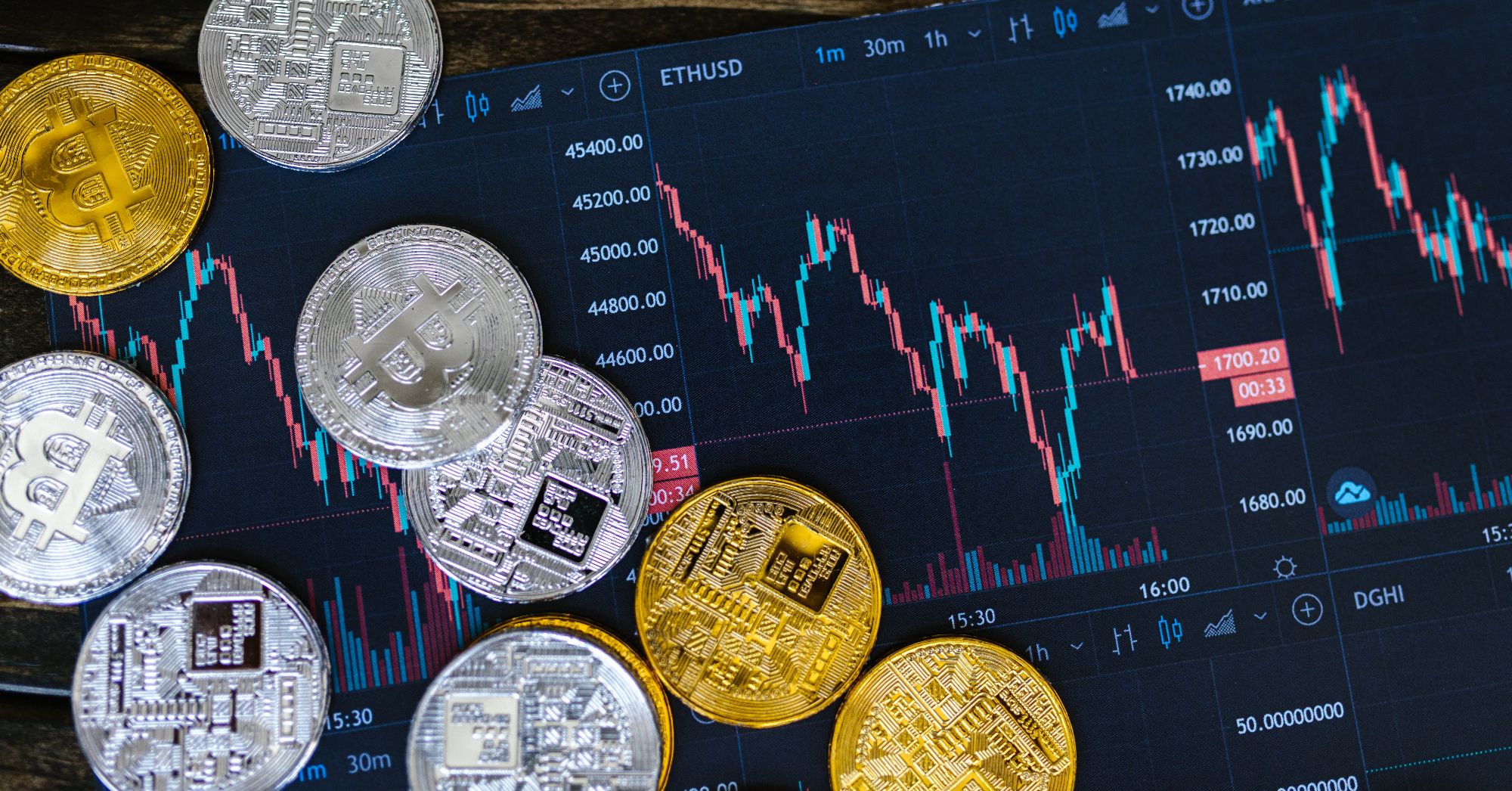
One of the main desires of many cryptocurrency holders is trustworthy trading. Unfortunately, third parties and central authorities can be problematic and time-consuming when it comes to funding, so decentralized finance (DeFi) services are designed to eliminate these problems. This is where automated market makers come in handy.
An automated market maker is a digital tool or protocol used to facilitate trustworthy crypto transactions i.e. without a third party. While not used by all cryptocurrency exchanges, all decentralized cryptocurrency exchanges (DEXs) use them. However, many major crypto exchanges such as Coinbase and Kraken do not use a decentralized model today, which may be off-putting to some as the whole idea of cryptocurrency is largely based around decentralization.
So if you want to use a fully decentralized exchange, get in touch with an automated market maker.
The first decentralized exchange to introduce a successful automated market maker was Uniswap, which exists on the Ethereum blockchain. Since its inception in 2018, automated market makers have become far more common in the DeFi space.
You won’t find an automated market maker anywhere outside of the DeFi industry. They are essentially an alternative to the typical order books used by regular exchanges. Instead of a user offering a price to buy an asset from another user, AMMs step in and price the assets as accurately as possible. So how does this work?
How does an automated market maker work?

Automated market makers rely on mathematical formulas to price assets automatically without human intervention. Liquidity pools play another key role in this process.
On a crypto exchange, a single pool of liquidity contains a large stack of assets locked in a smart contract. The main purpose of these locked tokens is to provide liquidity, hence the name. Liquidity pools require liquidity providers (ie asset providers) to create a market.
These liquidity pools can be used for a number of purposes such as: B. Yield farming and borrowing or lending.
Within liquidity pools, two different assets come together to form a trading pair. For example, on a decentralized exchange, if you saw two asset names side by side separated by a slash (like USDT/BNB, ETH/DAI), then look at a trading pair. These example pairs are ERC-20 tokens on the Ethereum blockchain (like most decentralized exchanges).
The ratio of the amount of one asset to another in a trading pair does not have to be equal. For example, a pool could contain 80% Ethereum and 20% Tether tokens, giving an overall ratio of 4:1. But pools can also have the same proportions.
Anyone can become a market maker by contributing the preset ratio of two assets within a trading pair to the pool. Traders can trade assets against the liquidity pool instead of directly with each other.
Different decentralized exchanges may use different AMM formulas. Uniswap’s AMM uses a fairly simple formula, but it has still been very successful. In its most basic form, this formula presents itself as “x*y=k”. In this formula, “x” is the amount of the first asset in a liquidity pool and trading pair, and “y” is the amount of the other asset within the same pool and pair.
With this particular formula, each pool using the AMM must maintain the same total liquidity on a constant basis, which means the “k” in this equation is a constant. Other DEXs use more complicated formulas, but we won’t get into that today.
The advantages of automated market makers
As mentioned earlier, AMMs can cut out the middleman and make trading DEXs completely trustworthy, a valuable element for many crypto owners.
AMMs also incentivize users to provide liquidity in pools. When a person provides liquidity to a particular pool, they can earn passive income from other users’ transaction fees. This financial lure is why liquidity providers are so numerous on DEXs.
Because of this, AMMs are responsible for bringing liquidity to an exchange, which is really their bread and butter. So, on a DEX, AMMs are crucial.
Additionally, liquidity providers can also benefit from yield farming via AMMs and liquidity pools. Yield farming involves a person using their crypto to obtain assets from the liquidity pool in return for providing liquidity. Vendors can also move their assets between pools to maximize their returns. These returns are usually delivered in the form of an Annual Percentage Return (APY).
The Disadvantages of Automated Market Makers
Although AMMs are very useful, they can give way to certain disadvantages, including slippage, which occurs when there is a difference between the predicted price of an order and the price of the order that ends up being filled. This is mitigated by increasing liquidity in a given pool.
Additionally, AMMs and liquidity pools also come with volatile losses. This includes losing funds due to volatility within a trading pair. This volatility relates to the price of one or both assets within the pair. If the value of the assets is lower when withdrawn than when deposited, then the holder has suffered a temporary loss.
Impermanent loss is a common problem with DEXs as cryptocurrencies are inherently volatile and unpredictable. In some cases, however, an asset will recover from its price decline, which is why this type of fall in value is called ‘volatile’.
Automated market makers keep DeFi running
While automated market makers can be extremely useful within DEXs, they certainly pose certain risks for traders and investors. Because of this, it is always important to understand the DeFi service you intend to use before submitting any of your funds. In this way, you can prepare as well as possible for unexpected price drops or crashes.
Learn Crypto Trading, Yield Farms, Income strategies and more at CrytoAnswers
https://nov.link/cryptoanswers
Comments are closed.