


You may have noticed that there are two different types of Ethereum cryptocurrencies listed on the exchanges. The first one you probably know well is Ethereum (ETH) and the other one you might not be quite as familiar with is Ethereum Classic (ETC).
To understand the main differences between Ethereum and Ethereum Classic, we need to take a quick look at how these two coins, which were once a single cryptocurrency, diverged.
The history of the Ethereum network
The original Ethereum cryptocurrency was a blockchain-based platform for running automated smart contract transactions and applications. These decentralized applications (dapps) served a variety of functions.
The hard fork that saw ETC and ETH diverge was the result of the currency’s unfortunate involvement with the Decentralized Autonomous Organization (DAO), a type of venture capital firm aimed at funding dapps on the Ethereum platform.
The founding of the DAO
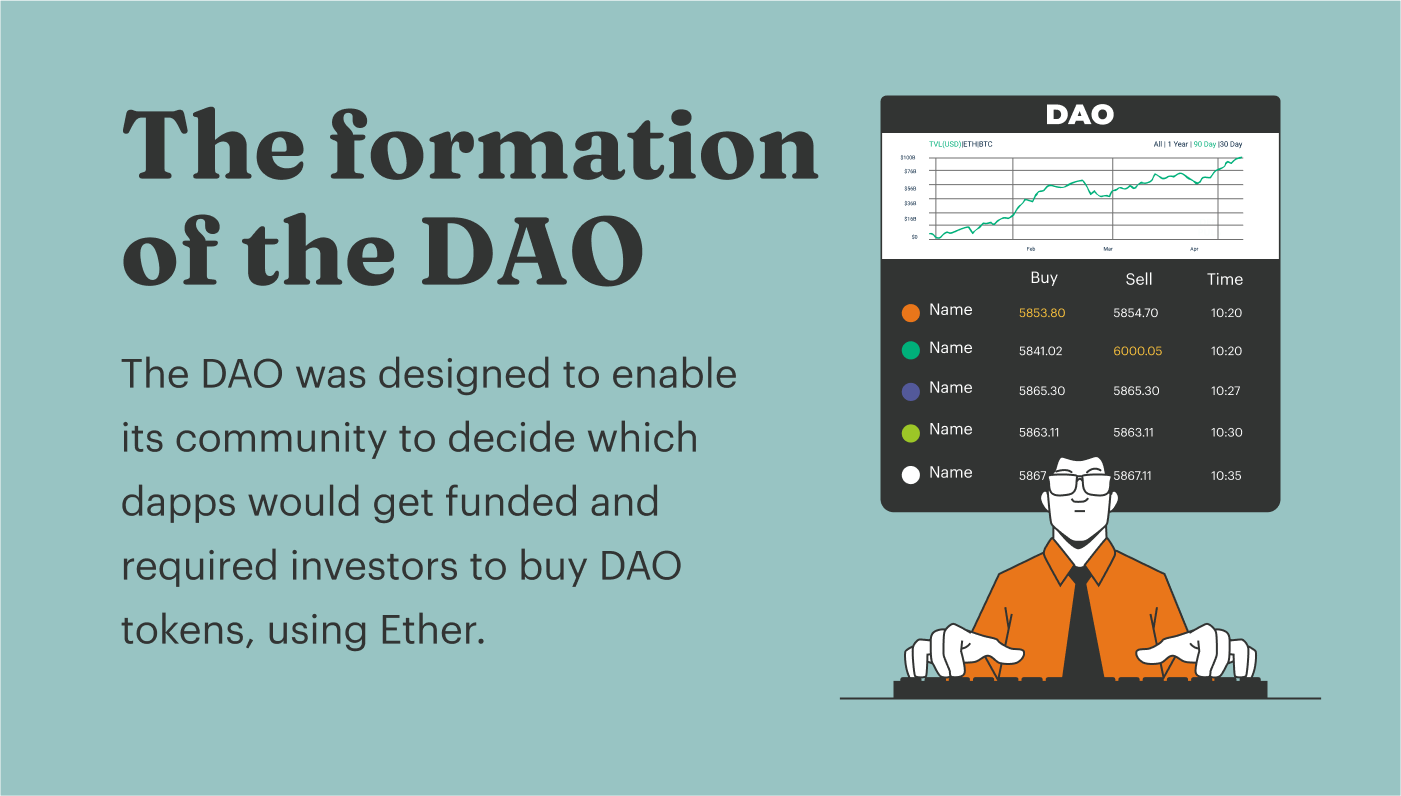
Designed to allow its community to decide which dapps get funded, the DAO urged investors to buy DAO tokens with Ether. Investors can exit the DAO at any time and withdraw their ether funding using the “split function” with the option to create a “Child DAO”. However, the investor had to keep their ether for 28 days before being allowed to spend it.
The DAO is hugely popular and instantly lucrative, raising over $150 million in ether in its first month. The problem was that the entire system of the DAO was full of security flaws, especially regarding the split function, and in June 2016 the system was hacked and $50 million was stolen.
The DAO attack
Whenever someone made a split function request, they were refunded Ether in exchange for their DAO tokens. Then the ledger would be updated automatically, as well as the internal token balance.
By adding a recursive function to their split-function request, the hacker was able to automatically repeat them by repeating the request for the same DAO tokens multiple times before the system had a chance to register them, allowing them to siphon off a third of all DAO could mean.
With DAO accounting for around 14% of all Ethereum, the community was thrown into chaos as a result of the hack. While Ethereum was in no way to blame as it ran independently of DAO, the hack was a blow to confidence in the cryptocurrency, causing the price to drop from $20 to $13.
The missing $50 in ether was stuck on the hacker’s child, DAO, for 28 days, so the community had to make a decision. They could do nothing and take the loss, which was an unpopular option with the majority of Ether holders for obvious reasons, or they could fork – create an entirely new coin. By soft-forking (keeping the old and new networks compatible) they were able to isolate and separate all the blocks that contained the hacker’s transactions to prevent them from moving the stolen $50 million, but this wasn’t a viable option , as this would cause DoS attack. The majority opted for a hard fork, which would not allow continued compatibility between the old and new networks. The nodes therefore had to decide whether to stay with the original network or switch to the new, upgraded one. The point at which ETH forked was near block 1,920,000, just before the DAO attack. Using a refund smart contract, the hard fork enabled those who had invested in the DAO to be refunded, with token holders receiving 1 ETH for every 100 DAO.
The original Ethereum-based cryptocurrency, ETC, was in the minority, with around 10% of token holders remaining loyal, while the new cryptocurrency, ETH, took the 90% majority into the upgraded network.
Differences between Ethereum and Ethereum Classic

Making a decision between ETC and ETH requires considering the significant differences between them. ETH is the new cryptocurrency for mining and using Ethereum, while ETC is the original.
ETC stays true to the idea of an immutable ledger. Hard forking to create ETH has been viewed as manipulation that goes against the ideological rationale behind the creation of Ether, opposes financial corruption, and supports an immutable blockchain. Due to the hard fork, ETC is not backwards compatible, so it cannot benefit from upgrades to the ETH blockchain. Its primary value is speculative, like many altcoins, and it currently has a market cap of $3.9 billion.
In contrast, ETH is more dynamic and could have more forks in the future. Its value is not only speculative, but also based on strong community support that strengthens the ETH ecosystem and facilitates the adoption of Ethereum technology. As a result, ETH is one of the largest and most well-known cryptocurrencies in the world with a market cap of 250 billion, second only to Bitcoin and far surpassing ETC.
Which is better: Ethereum or Ethereum Classic?
ETH is viewed by ETC loyalists as a violation of Ethereum’s original principles of blockchain immutability. However, it is this adaptability that has enabled several innovative dapps to run on the Ethereum platform that might otherwise never have existed, with applications for all types of industries. Even when it comes to Ethereum compared to other cryptocurrencies, it is way ahead of the pack. It is on par with Bitcoin as a household name and has consistently maintained its place as the second-best cryptocurrency after BTC.
In contrast, ETC operates on a smaller scale, which is actually beneficial for app developers, while the mining organizations help to keep ETC independent and decentralized, stabilizing the market value of the cryptocurrency.
Ethereum Classic has a higher bandwidth processing 25 transactions per second as opposed to Ethereum’s 15 per second, and mining the Ethereum cryptocurrency is easier as it doesn’t require huge farms or large computing power. However, it is undeniably seeing far more gradual growth than Ethereum, although the news for the future is positive. According to CoinSwitch, the price of ETC is expected to reach $114 by 2025. Although still far from ETH’s growth rate, the future of the coin still looks bright.
Where are both projects today?
In terms of universal recognition, ETH is almost as well-known as Bitcoin and is a household name, even for those with no crypto knowledge. It has a high level of adoption, while ETC is a lesser-known altcoin that will be unfamiliar to anyone who is not familiar with the crypto world.
As we noted above, ETH has a market cap that is hundreds of billions larger than ETC. Furthermore, Ethereum’s current value is $2677 for 1 ETH, in stark contrast to Ethereum Classic, which is currently worth $34 per ETC.
A different kind of token investment
If, instead of investing in an established coin like ETC or ETH, you want to get started on the ground floor with a reliable token that is expected to surge sharply in 2021, take a look at RBIS.
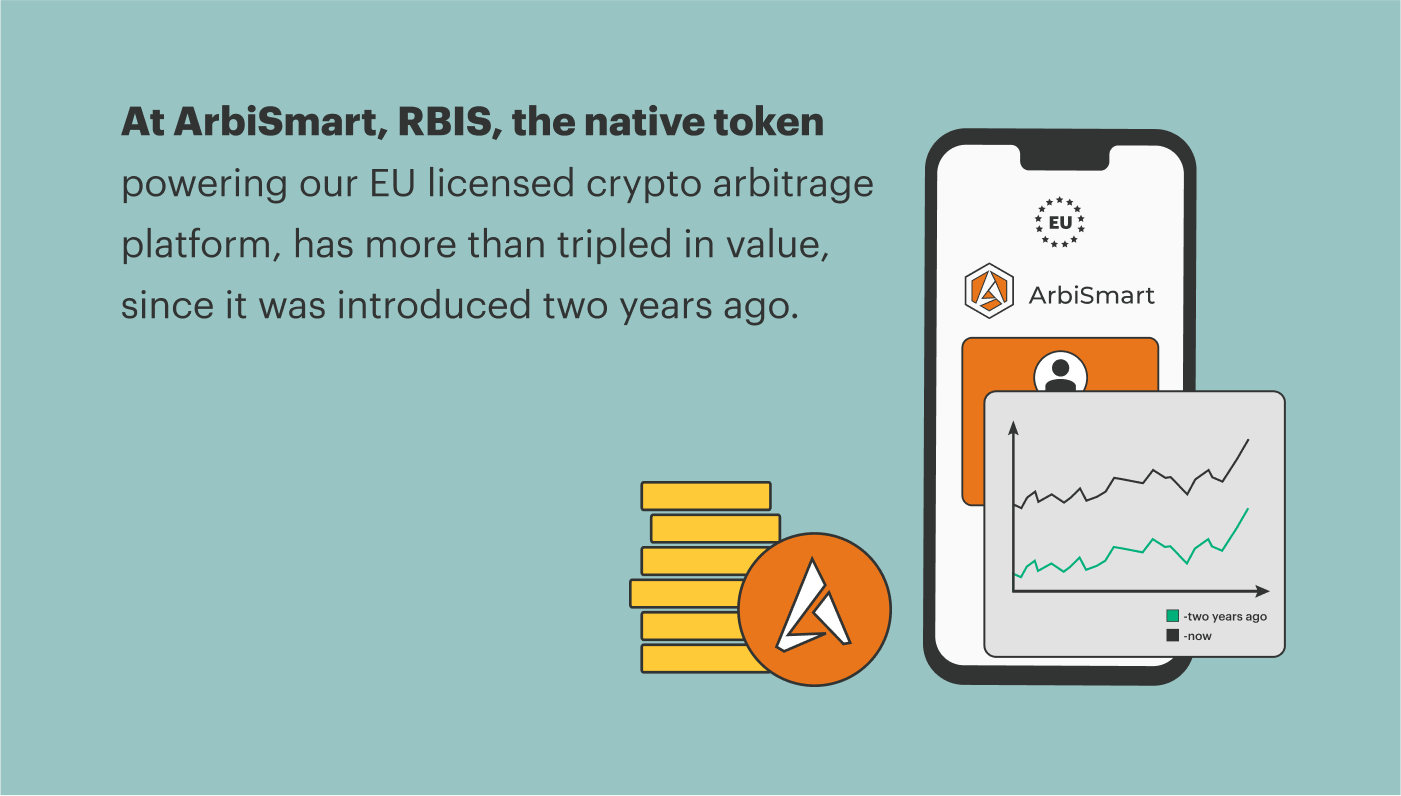
Here at ArbiSmart, RBIS, the native token powering our EU-licensed crypto arbitrage platform, has more than tripled in value since its launch two years ago. Part of the reason for this growth is that our fully automated, AI-powered trading platform offers exceptional passive profits with almost zero risk. Crypto arbitrage is not only one of the lowest risk forms of investing, it is also effortless with ArbiSmart. You simply sign up, deposit funds and the platform takes over as you go about your day. Your funds are automatically swapped into RBIS to trade crypto arbitrage and earn guaranteed returns of up to 45% per year depending on the size of your investment. You can always withdraw your funds in fiat or crypto straight to your bank account or e-wallet.
With ArbiSmart, your profits come not only from crypto arbitrage and compound interest on that earnings, but also from the growing value of the RBIS token that is being listed. Clients who came to us in early 2019 when we launched the token have already seen the token value increase by 350% and once it is tradable on exchanges, the price is expected to increase even further later this year climb. Additionally, we have a variety of developments in the pipeline for 2021, with RBIS gaining multiple utilities by the end of the year as new services such as our interest-bearing wallet are launched. The total amount of RBIS that can ever be created is capped at 450 million, so as demand increases and the platform gains in popularity, supply will fall, driving up the price.
Another reason for the steady growth of the RBIS token is that even when coins like BTC, ETH, and ETC crash, crypto arbitrage opportunities continue to generate revenue, so the price of the RBIS token keeps rising.
Learn more about ArbiSmart or learn about a range of different crypto and blockchain related topics by browsing our blog.
Learn Crypto Trading, Yield Farms, Income strategies and more at CrytoAnswers
https://nov.link/cryptoanswers
Comments are closed.