


Excitement about Bitcoin’s 4-year cycle has grown in recent years and has become a much-discussed topic among crypto enthusiasts and market analysts. The cycle marked by significant events and trends in the crypto market has aroused curiosity and interest among both experienced participants and newcomers.
However, the causes and effects of Bitcoin’s 4-year cycle are often misunderstood or oversimplified. Examining the factors shaping it, including the halving, macroeconomic influences, and human behavior, could be beneficial for investors.
Bitcoin Halving: A Key Catalyst or a Self-Fulfilling Prophecy?
One of the most intriguing aspects of Bitcoin’s behavior is the “halving”. This is a predetermined event that halves the number of new BTC generated and distributed by the network.
Around 900 bitcoins are currently being produced every day. In the upcoming halving, which is scheduled for late Q1 or early Q2 next year, that number will drop to 450. The previous halvings in 2012, 2016, and 2020 marked significant turning points for Bitcoin.
The halving affects the price of Bitcoin due to a simple supply-demand principle.
bitcoin output. Source: MacroMicro
When the halving occurs, even if bitcoin demand remains stable, the reduction in supply can create an imbalance and push prices higher. These price dynamics can spark a multi-year bull market in Bitcoin.
As the cycle progresses, the initial momentum of the halving is fading, but the momentum continues and propels the market forward.
The Ripple Effect: Liquidity diversification in the crypto market
As the bull market matures, Bitcoin’s liquidity will spread to other cryptos like Ethereum and eventually to riskier long-tail assets.
This dispersion continues until the inflow of new funds into the crypto market can no longer sustain the growing number of assets conditioned by the correlation with the major cryptocurrencies and the emerging new projects.
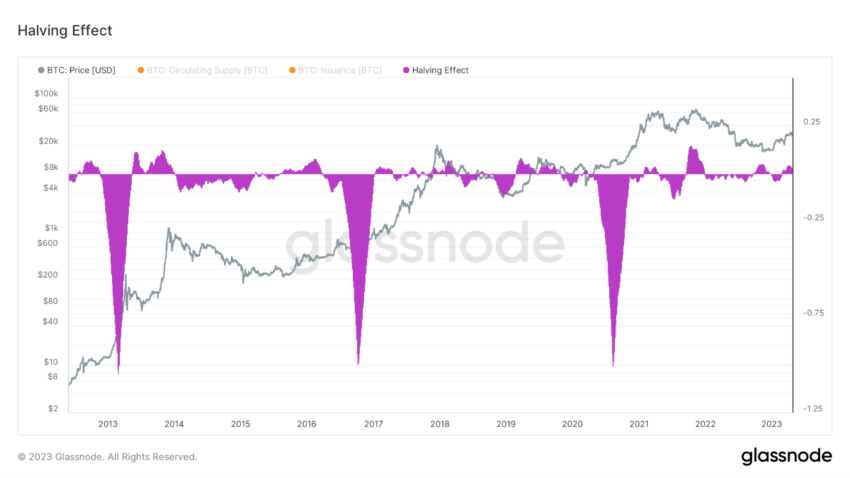 Bitcoin halving effect. Source: Glassnode
When this unsustainable point is reached, the market collapses and the distribution of liquidity reverses. Funds are flowing back into Bitcoin and Ethereum from long-tail assets, marking a fresh start for the liquidity cycle.
This liquidity flow pattern is not unique to the crypto market, but is characteristic of traditional financial markets.
The human factor: behavioral dynamics and market psychology
Along with halving and liquidity cycles, the psychological dynamics of market participants is another important factor influencing Bitcoin market behavior. To better understand this, one needs to delve into Bitcoin’s on-chain data.
The price of Bitcoin and the profitability of active network participants significantly influence the market dynamics. In fact, market participants who have made significant unrealized gains are more likely to sell during market downturns for fear of losing those gains.
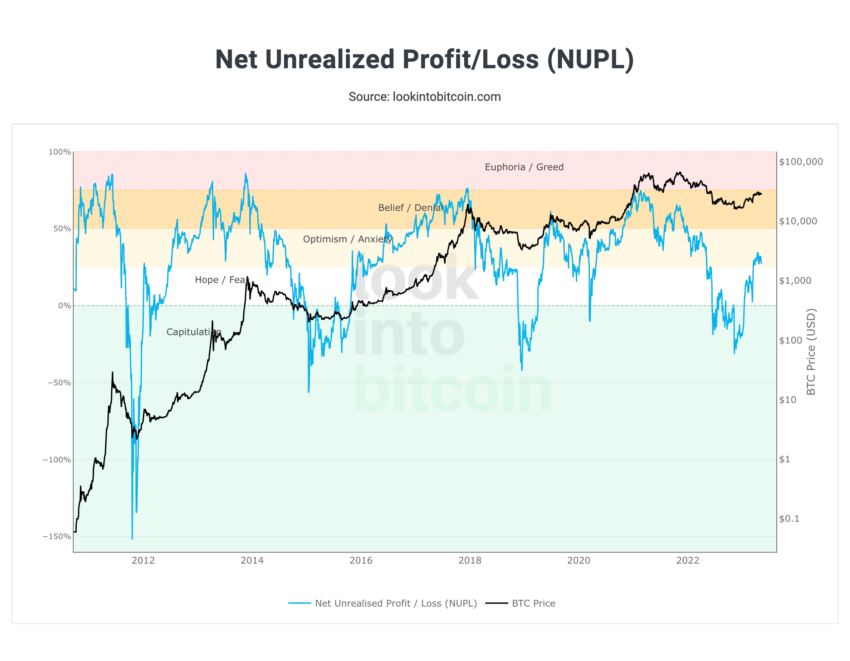 Bitcoin NUPL. Source: LookIntoBitcoin
Additionally, individuals who enter the market after a significant price increase are typically less experienced or less confident in the long-term value of the asset. These factors cause the bearer base to be more volatile than the stable base seen during bear market bottoms.
Profitability and owner base: the key drivers behind it
When it comes to profitability, one often refers to a set of metrics categorized under cost basis. These include the realized price, a proxy for the network’s aggregate cost basis, and the owner’s short- and long-term realized price.
These metrics help understand the state of the market, whether it’s unrealized losses or gains.
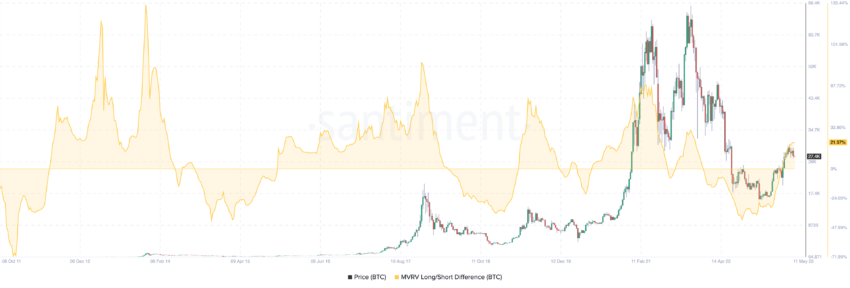 Bitcoin MVRV. Source: Santiment
The change between the market price and the aggregate cost basis can be measured using the Market Value to Realized Value Ratio (MVRV).
High MVRV readings, indicating large amounts of unrealized gains, have historically marked the peak of Bitcoin’s 4-year cycles.
Miner influence: A diminishing force in Bitcoin’s 4-year cycle
Historically, bitcoin miners have significantly impacted the market and acted as pro-cyclical forces.
Miners accumulate bitcoin when it is profitable during bull markets and are forced to sell during bear markets.
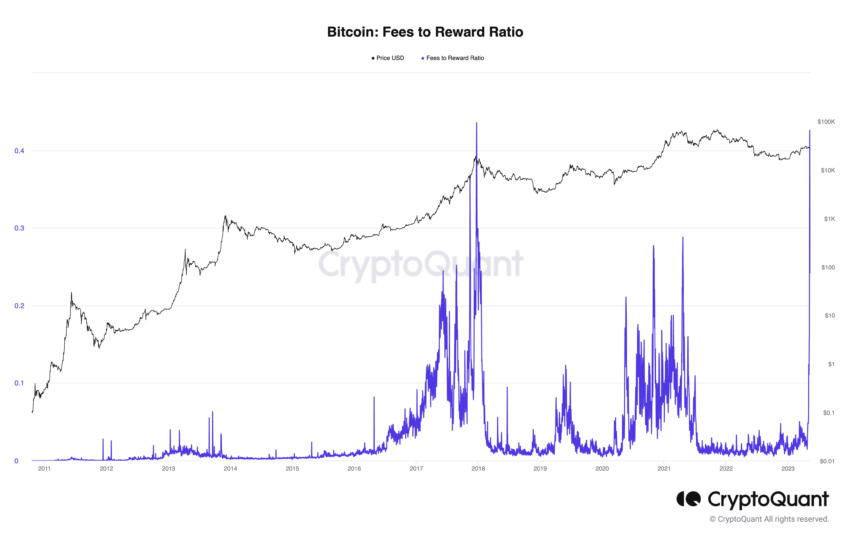 Bitcoin Fee to Reward Ratio. Source: CryptoQuant
However, the term capitalization metric shows that their influence on the market has diminished.
The global macro picture: A growing influence
Historically, Bitcoin has maintained some isolation from global macroeconomic factors. However, it is becoming more vulnerable to these influences as it becomes more integrated into the traditional financial system and gains more acceptance from institutional investors.
For example, fluctuations in the strength of the US dollar, changes in monetary policy, and geopolitical tensions can now directly impact Bitcoin’s market behavior.
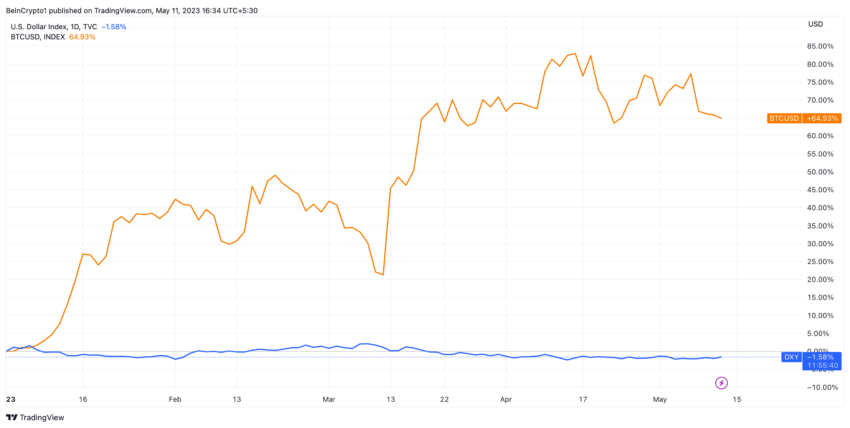 Bitcoin vs DXY. Source: TradingView
Similar to gold, people often view Bitcoin as a safe haven during economic crises or instability in the financial markets.
Therefore, during periods of heightened risk or uncertainty in the global economy, there may be an increase in demand for Bitcoin, which can push the price higher.
Regulation: The Wild Card
The role of regulatory factors in shaping Bitcoin market behavior is significant and can often be unpredictable. While some countries have adopted bitcoin and other cryptocurrencies, others have imposed strict regulations or outright bans.
Positive regulatory news can push Bitcoin’s price higher, while negative news can trigger sharp declines.
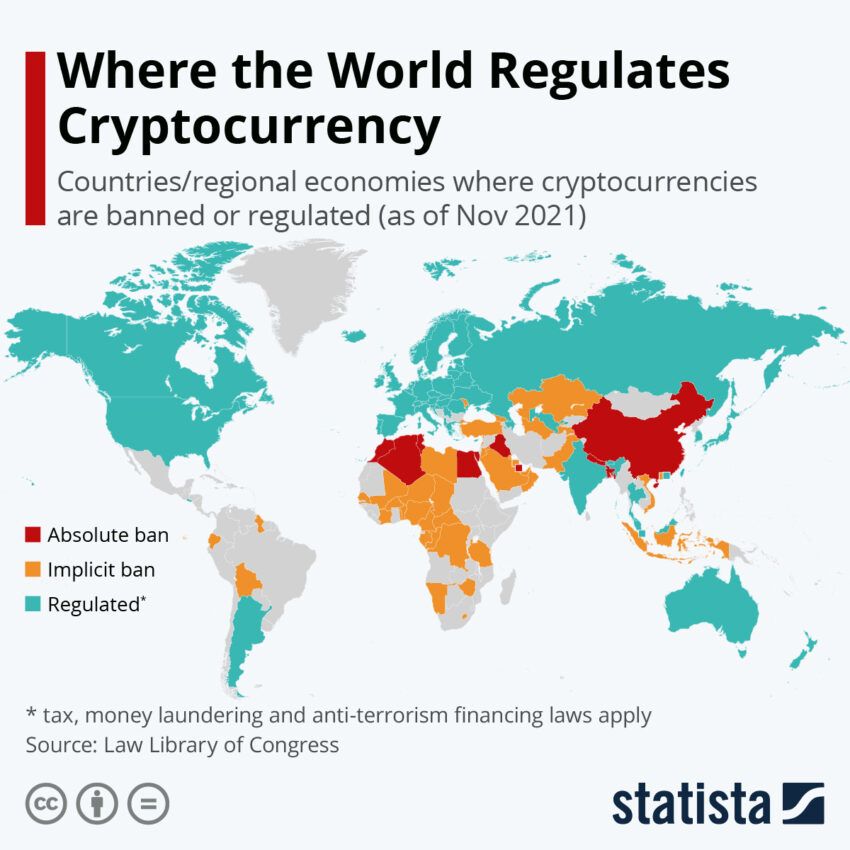 Crypto regulation worldwide. Source: Statistics
For example, when countries like Japan and South Korea recognized bitcoin as a legal payment method, its price had a significant positive impact.
On the other hand, when China announced a crackdown on bitcoin mining and trading, it led to a sharp market downturn.
Preparing for the next bitcoin 4-year cycle
A complex interplay of factors characterizes the market behavior of Bitcoin. These include the built-in halving mechanism, liquidity cycles, the psychology and behavior of market participants, the influence of miners, global macroeconomic factors, and regulatory developments.
Understanding these factors can provide investors and market participants with valuable insights into Bitcoin’s potential price movements.
Still, one should not take these factors as definitive predictors due to the high volatility and unpredictability of the crypto market. Instead, they should be used as tools for assessing probabilities and managing risk.
As Bitcoin evolves and matures, the factors influencing its market behavior may also change. Therefore, staying up to date with the latest developments in Bitcoin and the broader cryptocurrency market is crucial.
Disclaimer
Following the Trust Project guidelines, this feature article presents opinions and perspectives from industry experts or individuals. BeInCrypto is committed to transparent reporting, however, the views expressed in this article do not necessarily reflect those of BeInCrypto or its employees. Readers should independently verify information and consult a professional before making any decisions based on such content.
Learn Crypto Trading, Yield Farms, Income strategies and more at CrytoAnswers
https://nov.link/cryptoanswers
Comments are closed.