


Visualized: The State of Central Bank Digital Currencies
Central banks around the world are committed to digital currencies, but some are further along than others.
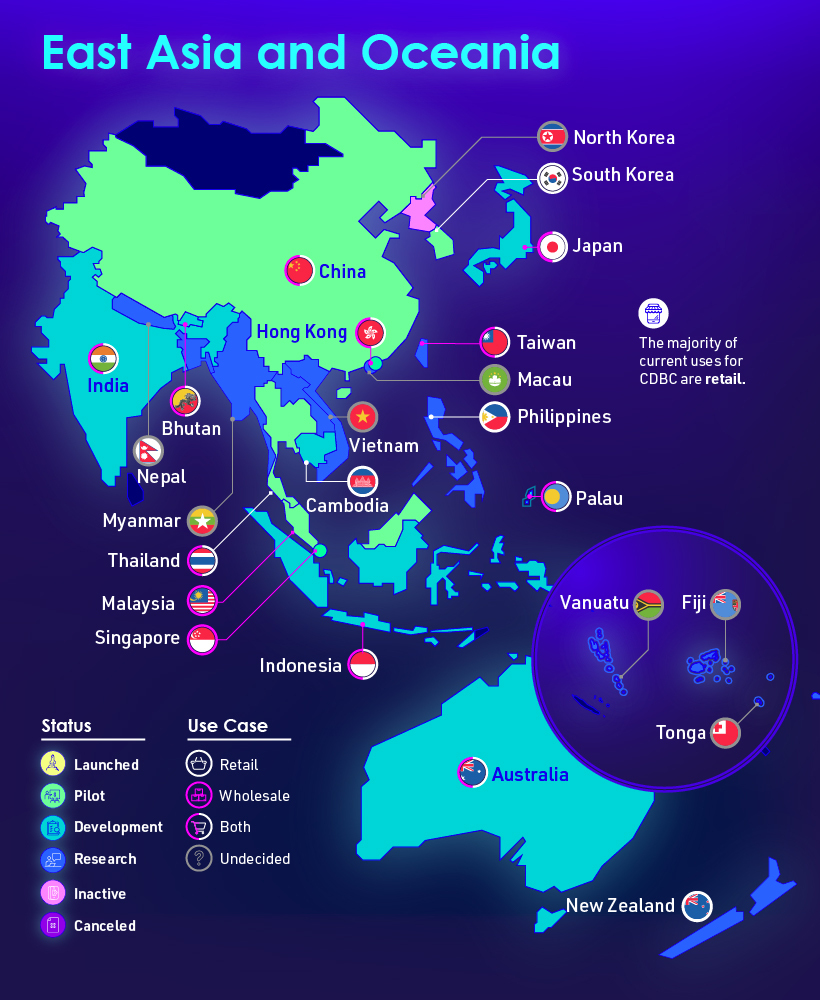
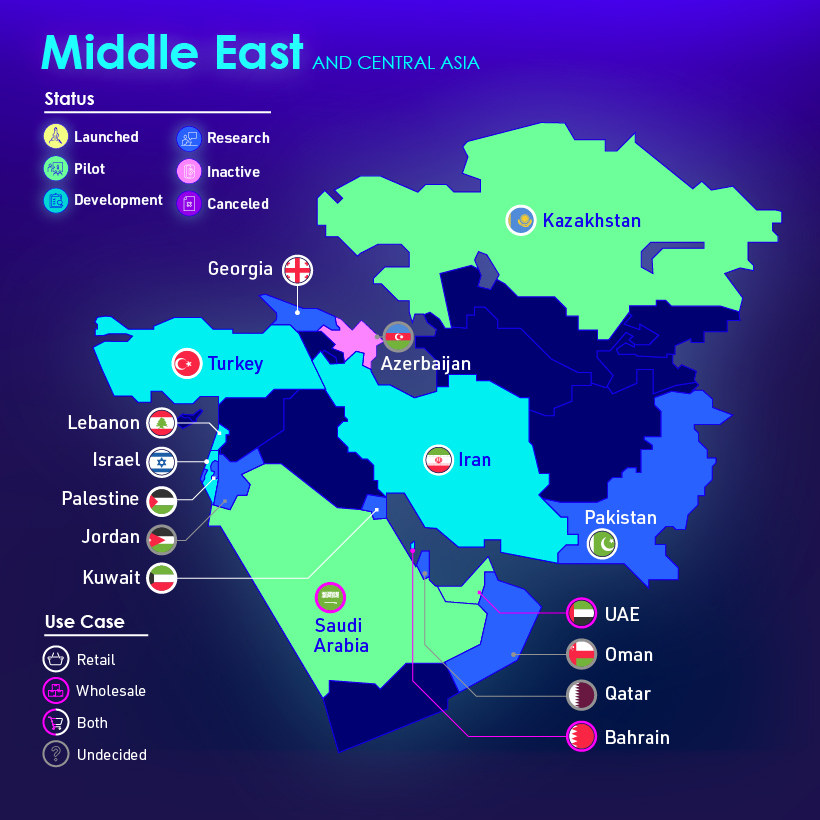
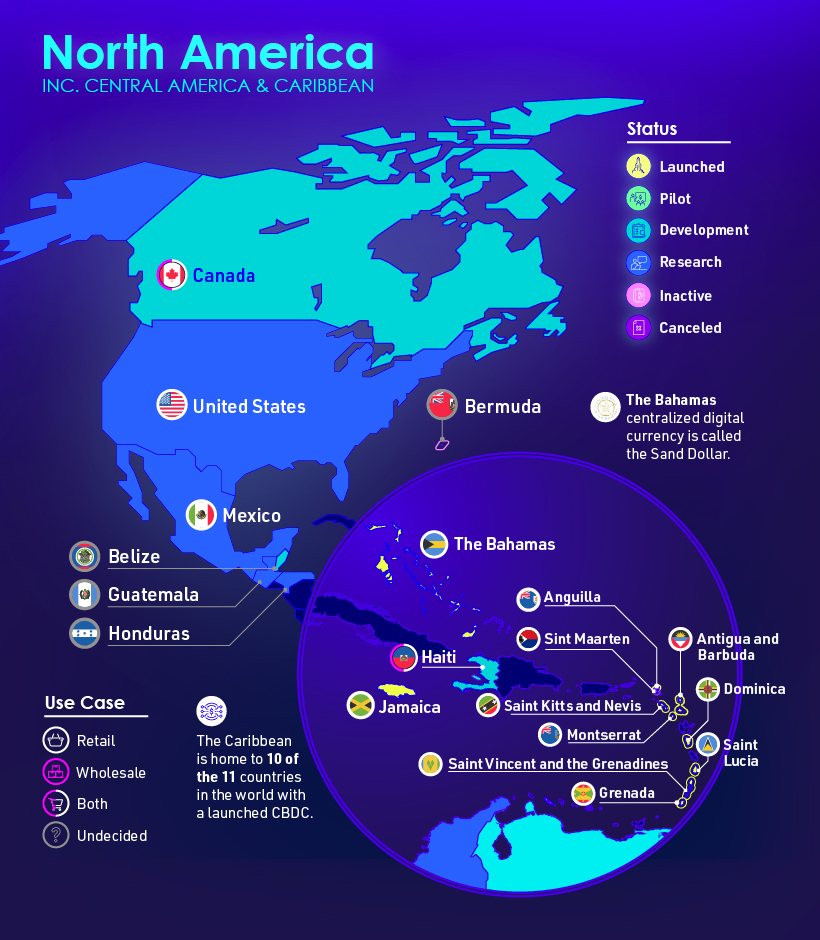
In this map, we’ve used data from the Atlantic Council’s Currency Tracker to visualize the state of each central bank’s digital currency efforts.
Digital Currency – The Basics
Digital currencies have been around since the 1980s but only became widespread with the introduction of Bitcoin in 2009. Today there are thousands of digital currencies, also known as “cryptocurrencies”.
A distinctive feature of cryptocurrencies is that they are based on a blockchain ledger. Blockchains can be either decentralized or centralized, but the most popular cryptocurrencies today (Bitcoin, Ethereum, etc.) tend to be decentralized. This makes it very difficult to track transfers and payments as there is no single entity with full control.
Government-issued digital currencies, on the other hand, are controlled by a central bank and should be easily traceable. They would have the same value as local cash currency but would be issued digitally with no physical form.
Central bank digital currencies worldwide
105 countries are currently exploring centralized digital currencies. Together they represent 95% of global GDP. The table below lists the data used in the infographic.
| country | status | use case |
|---|---|---|
| Nigeria | started | retail trade |
| The Bahamas | started | retail trade |
| Jamaica | started | retail trade |
| eel | started | retail trade |
| Saint Kitts and Nevis | started | retail trade |
| Antigua and Barbuda | started | retail trade |
| Montserrat | started | retail trade |
| Dominika | started | retail trade |
| Saint Lucia | started | retail trade |
| St. Vincent and the Grenadines | started | retail trade |
| Granada | started | retail trade |
| Sweden | pilot | retail trade |
| Lithuania | pilot | retail trade |
| Ukraine | pilot | draw |
| Kazakhstan | pilot | retail trade |
| Russia | pilot | retail trade |
| China | pilot | Both |
| Thailand | pilot | Both |
| Hong Kong | pilot | Both |
| South Korea | pilot | retail trade |
| Saudi Arabia | pilot | Wholesale |
| United Arab Emirates | pilot | Wholesale |
| Singapore | pilot | Wholesale |
| Malaysia | pilot | Wholesale |
| South Africa | pilot | Both |
| Canada | development | Both |
| Belize | development | draw |
| Haiti | development | Both |
| Venezuela | development | Both |
| Brazil | development | retail trade |
| Turkey | development | retail trade |
| Iran | development | retail trade |
| Bahrain | development | Wholesale |
| India | development | Both |
| Mauritius | development | Both |
| Bhutan | development | Both |
| Cambodia | development | retail trade |
| Indonesia | development | Both |
| Palau | development | Both |
| Australia | development | Both |
| Japan | development | Both |
| Spain | development | retail trade |
| France | development | Both |
| Netherlands | development | retail trade |
| Switzerland | development | Wholesale |
| Italy | development | draw |
| Germany | development | draw |
| Estonia | development | retail trade |
| Lebanon | development | retail trade |
| Israel | development | retail trade |
| euro area | development | Both |
| United States | research | retail trade |
| Mexico | research | retail trade |
| Guatemala | research | draw |
| Honduras | research | draw |
| Trinidad and Tobago | research | draw |
| Colombia | research | draw |
| Peru | research | draw |
| Paraguay | research | draw |
| Chile | research | retail trade |
| Iceland | research | retail trade |
| United Kingdom | research | Both |
| Morocco | research | retail trade |
| Ghana | research | retail trade |
| Namibia | research | draw |
| in the swat | research | Both |
| Madagascar | research | retail trade |
| Zimbabwe | research | draw |
| Zambia | research | draw |
| Tanzania | research | draw |
| Rwanda | research | draw |
| Uganda | research | draw |
| Kenya | research | retail trade |
| Tunisia | research | Wholesale |
| Oman | research | draw |
| Kuwait | research | retail trade |
| Jordan | research | draw |
| Georgia | research | retail trade |
| Belarus | research | draw |
| Norway | research | retail trade |
| Czech Republich | research | draw |
| Pakistan | research | retail trade |
| Nepal | research | draw |
| Bangladesh | research | draw |
| Burma | research | draw |
| Laos | research | Both |
| Vietnam | research | draw |
| Macao | research | draw |
| Taiwan | research | Both |
| Philippines | research | retail trade |
| New Zealand | research | retail trade |
| Vanuatu | research | draw |
| Fiji | research | draw |
| Tonga | research | draw |
| Palestine | research | retail trade |
| Jordan | research | draw |
| Austria | research | Wholesale |
| Hungary | research | retail trade |
| Bermudas | Inactive | draw |
| Saint Martin | Inactive | retail trade |
| Curaçao | Inactive | retail trade |
| Argentina | Inactive | draw |
| Uruguay | Inactive | retail trade |
| Denmark | Inactive | retail trade |
| Azerbaijan | Inactive | draw |
| Egypt | Inactive | draw |
| North Korea | Inactive | draw |
| Finland | Inactive | retail trade |
| Ecuador | Cancelled | retail trade |
| Senegal | Cancelled | retail trade |
If we aggregate, we can see that the majority of countries belong to the research Stage.
We’ve also divided the map by region for easier viewing.
Africa

Asia
Europe

middle East
South America

North America
What are the advantages?
A major advantage of government-issued digital currencies is that they can improve access for the unbanked.
This is not a big problem in developed countries like the US, but many people in developing countries do not have access to banks and other financial services (hence the term “underbanked”). As the number of internet users continues to grow, digital currencies represent a good solution.
To learn more about this topic, visit this Global Finance article, which lists the countries with the most banks in the world in 2021.
The 9%
Only 9% of countries have adopted a digital currency so far.
This contains Nigeriawhich became the first African country to do so in October 2021. It is believed that half of the country’s 200 million people do not have access to bank accounts.
acceptance of eNair (the digital version of the naira) has been relatively sluggish so far. The eNaira app has accumulated 700,000 downloads as of April 2022. Corresponding 0.35% of the population, although not all downloads are from Nigerian users.
Vice versa, 33.4 million It has been reported that Nigerians are trading or owning crypto assets, despite attempts by the Central Bank of Nigeria to restrict usage.
status in the United States
The American central bank, the Federal Reserve, has not yet decided whether it will introduce a central bank digital currency (CBDC).
Our primary focus is whether and how a CBDC could enhance an already secure and efficient US domestic payments system.
-Federal Reserves
To learn more, read the Federal Reserve’s January 2022 paper on the pros and cons of CBDCs.
Learn Crypto Trading, Yield Farms, Income strategies and more at CrytoAnswers
https://nov.link/cryptoanswers
Comments are closed.