


vjkombajn / Pixabay
Cryptocurrencies and digital assets keep enthusiasts confused as the market cap slipped 7% after higher-than-expected inflation for August signaled the possibility that the Federal Reserve is likely to raise interest rates again.
The single-digit decline pushed the total market cap down to just under $998 billion from a previous $1.07 trillion.
Across the crypto market, traders and investors have fled in all possible directions as broader macroeconomic conditions send shockwaves across the digital asset industry.
Alluvial Fund August 2022 performance update
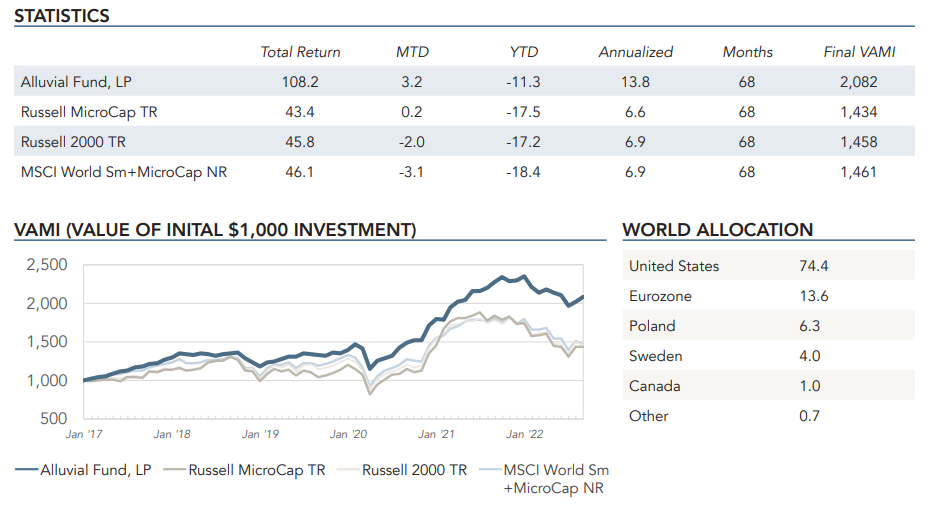 Alluvial Fund performance update for the month ended 31st August 2022. Q2 2022 Hedge Fund Letters, Conferences and More Dear Partners and Colleagues, Alluvial Fund, LP returned 3.2% in August compared to -2.0% for the Russell 2000 and -3.1% for the MSCI World Small+MicroCap. Year to date . . . FORGIVENESS! This content is for paying members only. Continue reading
Get the full Henry Singleton series in PDF
Get the entire 4 part series on Henry Singleton in PDF. Save it to your desktop, read it on your tablet, or email it to your colleagues

Q2 2022 hedge fund letters, conferences and more
Headwinds in the DeFi sector
Aside from bearish price action, activity within the decentralized finance (DeFi) sector has faced a number of headwinds over the past few months, leaving many enthusiasts now wary of forward-looking opportunities.
The wayward activity has signaled that many users are shifting interest as DeFi technology stacks begin to buckle amid uncomfortable conditions.
Although multiple projects make up DeFi activity, the majority of it revolves around liquidity pools of one level or another. Liquidity pools enable decentralized trading, lending and revenue production, among other things.
Within these liquidity pools, there is generally a secondary tier where users can deposit tokens in addition to an initial pool deposit.
To avoid confusion, think of the liquidity pool as a mechanism that allows users to trade between two crypto tokens. Users deposit the crypto tokens and try to match the value of the two different tokens in the pool.
The users staking or depositing generally receive a proportional percentage fee for each transaction customers within the pool make using that token pair.
Use of Liquidity Pools
In recent years, the use of liquidity pools has become one of the central parts of the decentralized system, allowing many users to better trade and pair tokens to increase their proportional fees. Platforms such as Uniswap or Sushiswap are among the largest market pools.
Several questions arise here, particularly whether these liquidity pools are still a valuable tool for crypto traders and users looking for staking incentives.
A 2021 study by Bancor found that more than 50% of liquidity providers on Uniswap lost money due to fickle losses (IL), a phenomenon where revenue generated in the form of fees is outstripped by dollar losses.
Many argue that this form of token staking and mining will remain an underpinned protocol of the decentralized exchange (DEX) for years to come. The use of automated market makers (AMM), a system of financial automation first discovered in the late 1990s, has helped fuel the popularity of decentralized protocols.
On the contrary, some believe that this form of liquidity stripping and staking is dead, leading to new sub-sectors focused on replacing liquidity pools and offering more substantive and financially viable solutions.
There are many reasons users believe liquidity pools are inaccurate incentive tools that often attract mercenary farmers. In the same breath, a number of other issues, such as token control and bribery among others, also shed light on issues that have left liquidity pools to show users their value.
While momentum has steadily increased, it is perhaps the underlying issues that make the performance of these pools viable or financially attractive to users.
In a note to its users, Kamino Finance, a protocol that allows users to earn fees by providing concentrated liquidity, said that “in order for liquidity pools and liquidity mining protocols to remain a valuable part of the DEX, technology stacks for delivery.” capital efficient and deep liquidity needs to be optimized, minimize temporary losses and are user-friendly for the liquidity providers.”
Kamino Finance is a project incubated by the Hubble Protocol, the DeFi platform that mints the censorship-resistant stablecoin USDH.
Creating pools
Protocols are now trying to incentivize users by giving them the ability to create pools directly, which allows them to keep a portion of trading fees from the pool. While this creates an additional revenue stream, it creates a sense of bias towards protocols controlling their pools.
Some argue that the activities in which protocols bribe users into creating their pools or similar projects are beginning to affect DEX’s credibility and authority. This directly reflects the prospects of liquidity pools and how long they can still be a viable project within a decentralized finance ecosystem.
In addition to these random shortcomings, which have now become almost common practice, traditional problems inherent in liquidity pools such as B. access-based risks and smart contract risks. All of these have been major challenges for users lately as it has resulted in unmanageable losses.
While liquidity pools aren’t going away anytime soon, users must remain bullish on existing projects that help drive innovation and inclusivity within the decentralized protocol.
Additionally, users must also make more favorable judgments that could potentially restore confidence and value to the liquidity pools. Although many have taken a pessimistic mood towards these protocols and the ecosystem is swamped with uncertainty, perhaps it is more important to have several competing allied projects that can lure and stimulate users in a more practical way.
Learn Crypto Trading, Yield Farms, Income strategies and more at CrytoAnswers
https://nov.link/cryptoanswers
Comments are closed.