


Bitcoin whales have accumulated $3 billion as industry attention focused on the launch of several Bitcoin exchange-traded funds (ETFs). Whales, defined in this case as addresses that hold 1,000 BTC or more, have increased their total holdings to around 76,000 BTC this month, according to on-chain analysis.
Whales increased their holdings by buying BTC at a lower price on the Bitfinex exchange. Bargain hunters caused the asset to trade at a premium to the price of Bitcoin on Binance and Coinbase last week.
What Bitcoin whales could see
The accumulation has dwarfed inflows into Bitcoin exchange-traded funds, which stood at around $744 million on Friday. According to CoinShares, the Grayscale Bitcoin Trust (GBTC) saw the highest outflows of $5 billion in January.
Weekly Crypto Fund Flows | Source: CoinShares
The surge in whale activity took advantage of fluctuations in the price of Bitcoin after the US Securities and Exchange Commission (SEC) gave the green light to several ETFs. Following the approvals, Bitcoin's volatility increased as investors cashed out or transferred funds between funds. Many investors were suspected of withdrawing GBTC because of the 1.5% management fee.
Read more: What causes Bitcoin volatility?
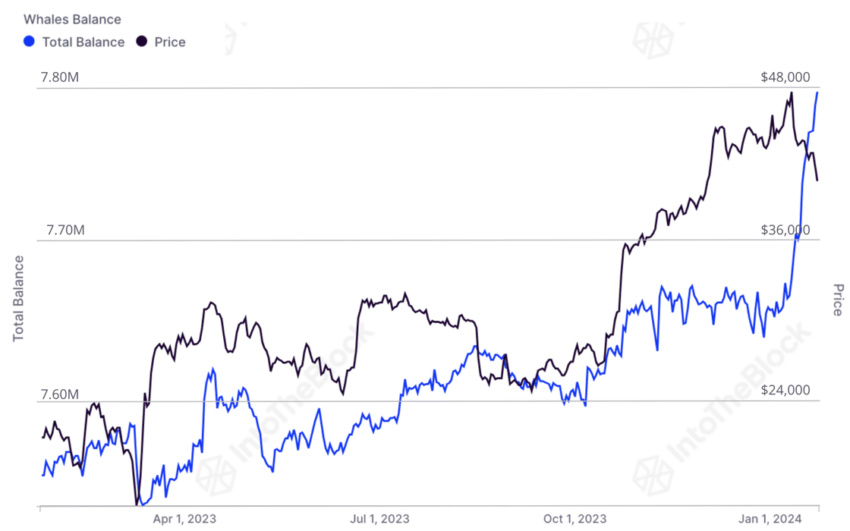 BTC whale accumulation | Source: IntoTheBlock
Whales may have chosen to accumulate their holdings ahead of the next big event in the Bitcoin calendar: the halving in 2024. Approximately every four years, the Bitcoin white paper stipulates an adjustment in the subsidy paid per block mined. This year's Bitcoin halving will reduce the number of BTC released per block to 3.25, reducing the profit margin of Bitcoin miners.
How whales can bring risks to Bitcoin ETFs
The SEC delayed the approval of spot Bitcoin ETFs due to market manipulation concerns. Whales can cause the price of Bitcoin to fluctuate dramatically when they sell or buy Bitcoin in large transactions. As a result, several ETF issuers have enlisted the help of companies that can monitor markets for signs of artificial price fluctuations.
Read more: How to Sell Bitcoin (BTC) in Four Easy Steps – A Beginner’s Guide
Large swings could cause problems for ETF issuers who rely on market makers to keep ETF share prices close to the Bitcoin each share represents. Market makers buy and sell stocks to close this discrepancy.
Together with other players, so-called authorized participants, they ensure that investors get the shares they want at the right prices. Otherwise, the ETF will trade at a premium or discount to the Bitcoin asset value, reducing the long-term benefits for investors.
Morningstar's Bobby Blue said the discount would have reduced returns for investors when Grayscale's shares traded at a discount. The company recently converted the Bitcoin Trust into an ETF.
“An investor who has met the requirements [GBTC] The premium on December 22, 2020 would have yielded a return of 64% by October 2021 – not bad by any means. However, if this investor had invested directly in Bitcoin, his 160% profit would have been 2.5 times higher over the same period. This has had a profound impact on the longer-term returns of each asset.”
Disclaimer
In accordance with Trust Project guidelines, BeInCrypto is committed to unbiased and transparent reporting. The aim of this news article is to provide accurate and up-to-date information. However, readers are advised to independently verify the facts and consult a professional before making any decisions based on this content. Please note that our Terms and Conditions, Privacy Policy and Disclaimers have been updated.
Learn Crypto Trading, Yield Farms, Income strategies and more at CrytoAnswers
https://nov.link/cryptoanswers
Comments are closed.