


Debashis Basu advises that damage from new gimmicks can be contained if regulators act quickly if something doesn’t smell right.
IMAGE: Sam Bankman-Fried, who founded and ran FTX until a liquidity crisis forced the cryptocurrency exchange to file for bankruptcy, is escorted out of the District Courthouse following his arrest December 13, 2022 in Nassau, Bahamas. Photo: Dante Carrer/Reuters
We were mesmerized by the spectacular bonfire of FTX, a crypto exchange.
FTX, which was valued at $32 billion a few months ago and was funded by the best names in global financial markets such as Sequoia, Temasek, Ontario Teachers’ Pension Plan, SoftBank Group Corp and hedge funds Third Point and Tiger Global, suddenly declared Bankruptcy on 11.11.
Since then, there have been bizarre tales of worthless tokens being shown as assets, the sudden withdrawal of billions of dollars in cash before bankruptcy, the fake altruistic halo of frizzy-haired Boy Wonder founder Sam Bankman-Fried, known as SBF, and the total absence of checks, checks and balances at FTX have stunned the world.
What are the lessons from this saga of gigantic fraud?
FTX could not have grown to this size and broken out if two of the key players in the system — institutional investors and regulators — had not strayed from core principles.
What are these first principles?
First principles of investing
As Wall Street Journal columnist Jason Zweig writes, “SBF may be at the center of what went wrong, but he didn’t act alone.
“Behind him lies a vast ecosystem of fantasy and fakery. That’s called an investment business.«
In the case of FTX, the best investors have failed to carefully consider the operation conducted by FTX.
John Ray III, who was appointed CEO of FTX by the debtors after it filed for bankruptcy, says scathingly, “I have over 40 years of legal and restructuring experience. I have been Chief Restructuring Officer or CEO on several of the largest corporate failures in history. I have monitored situations involving allegations of criminal activity and misconduct…
“Never in my career have I seen such a complete failure of corporate controls and a complete lack of reliable financial information as here. From the compromised system integrity and flawed regulatory oversight abroad, to the concentration of control in the hands of a very small group of inexperienced, inexperienced and potentially vulnerable individuals, this situation is unprecedented.’
Investors should have realized that.
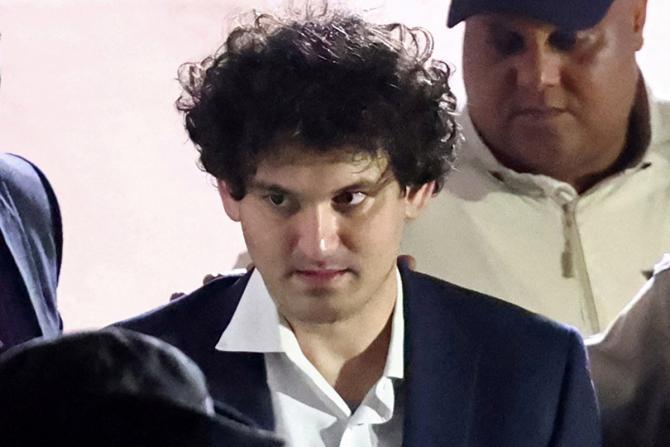
PICTURED: Sam Bankman-Fried is escorted out of the District Courthouse following his arrest in Nassau, Bahamas, December 13, 2022. Photo: Dante Carrer/Reuters
There were many red flags.
- FTX’s board of directors had just three directors earlier this year: SBF, an FTX employee, and an Antigua lawyer who specializes in gambling.
- During a Zoom interview to raise money from Sequoia Capital, SBF secretly played a Sequoia-commissioned video game that featured a boastful profile picture for him.
- The auditing firm of FTX.com and similar exchanges in non-US jurisdictions was Prager Metis, whose website claims it is the “first CPA (Certified Public Accountant) firm to officially open its Metaverse headquarters on the Metaverse platform Decentraland Has”.
- SBF controlled Alameda Research LLC, a “crypto hedge fund” that employed strategies such as arbitrage, market making, yield farming, and volatility trading.
It also offered over-the-counter trading services and made other debt and equity investments.
SBF owned 90 percent and Gary Wang (10 percent) in the company.
Alameda prepared consolidated financial statements on a quarterly basis, but it appears that none of those financial statements have been audited.
The balance sheet as of September 30, 2022 shows total assets of $13.46 billion, which consisted mostly of useless tokens issued by FTX.
In fact, it seems crazy that any seasoned investor would bother to take a second look at the crypto or crypto-related business of any kind.
Cryptos are speculative products that cannot be valued as they are not backed by anything.
Successful investors like Berkshire Hathaway’s Warren Buffett and Charlie Munger have repeatedly warned of the dangers of cryptos.
Munger has likened cryptos to “venereal diseases” and said that anyone who sells them is either “delusional or evil.” Maybe SBF knew that. In several interviews, he didn’t even bother to counter suggestions that the whole crypto business is a giant Ponzi scheme and that many cryptocurrencies will eventually become worthless.
Clearly, many basic principles of investing have been violated here.
First Principles of Regulations
Providing an effective regulatory environment for exchange is not difficult if first principles are followed.
These include the segregation or prevention of commingling of client assets; a fail-safe clearing and settlement system and a trade guarantee fund.
The regulators also subject the exchange to regular review.
It is inconceivable that exchanges would be allowed to issue their own securities that are not backed by anything and also invest in other worthless cryptos.
This is exactly what crypto exchanges like FTX and Binance are allowed to do.
In addition, the Commodity Futures Trading Commission has licensed FTX to launch a crypto exchange and all related speculative products such as futures, options and swap contracts on digital assets and other commodities for US and non-US persons.
Oddly enough, US laws allow this kind of shaky business to take money from customers and allow lenders to lend them money.
Regulatory loopholes in the US also allowed FTX to grow tremendously in the US as an offshore exchange (much of FTX is regulated in the Bahamas).
While it’s true that not every new development can be anticipated through regulatory foresight, damage from new gizmos can be contained when regulators follow the first principles of acting quickly when something smells wrong and being held accountable when they ignore the red flag in front of everyone.
FTX is part of a long line of crypto bankruptcies like Celsius, Three Arrows (a hedge fund) and Luna, but regulators have refused to be alarmed.
Even Bernie Madoff’s Ponzi scheme would have been exposed much sooner if the Securities and Exchange Commission had responded to letters from a whistleblower.
In short, both investors are regulators who are guilty of deviating from the basic principles and who have made it possible to commit such a gigantic fraud.
Debashis Basu is the editor of moneylife.in.
Feature presentation: Aslam Hunani/Rediff.com
Learn Crypto Trading, Yield Farms, Income strategies and more at CrytoAnswers
https://nov.link/cryptoanswers
Comments are closed.