
Bitcoin long liquidations hit $150M in 3 days as BTC price crashes to this key resistance level


Bitcoin. Source: Adobe
Leveraged long positions in the bitcoin futures market have been “rekt” (meaning stopped out in internet lingo) for the past few days.
According to data from crypto derivatives analytics site coinglass.com, liquidations of long positions have exceeded $150 million over the past three days.
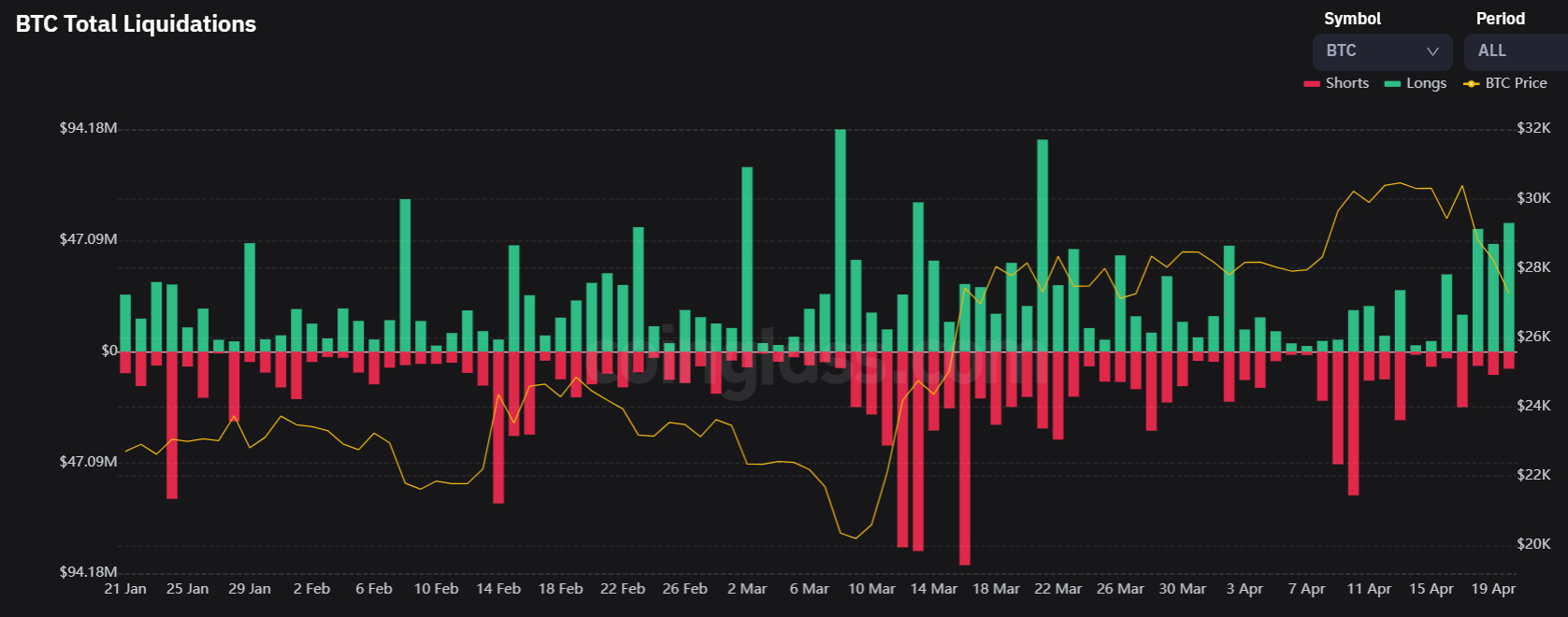
In fact, Bitcoin’s 10% decline over the past three days from the mid-$30,000s to the current low-$27,000 levels marks one of the most intense periods of long liquidation since the start of the year.
Selling pressure accelerated earlier this week as BTC price fell below key support in the $29,000 area in the form of 1) the 21DMA, 2) a late March uptrend, and 3) the late March highs.
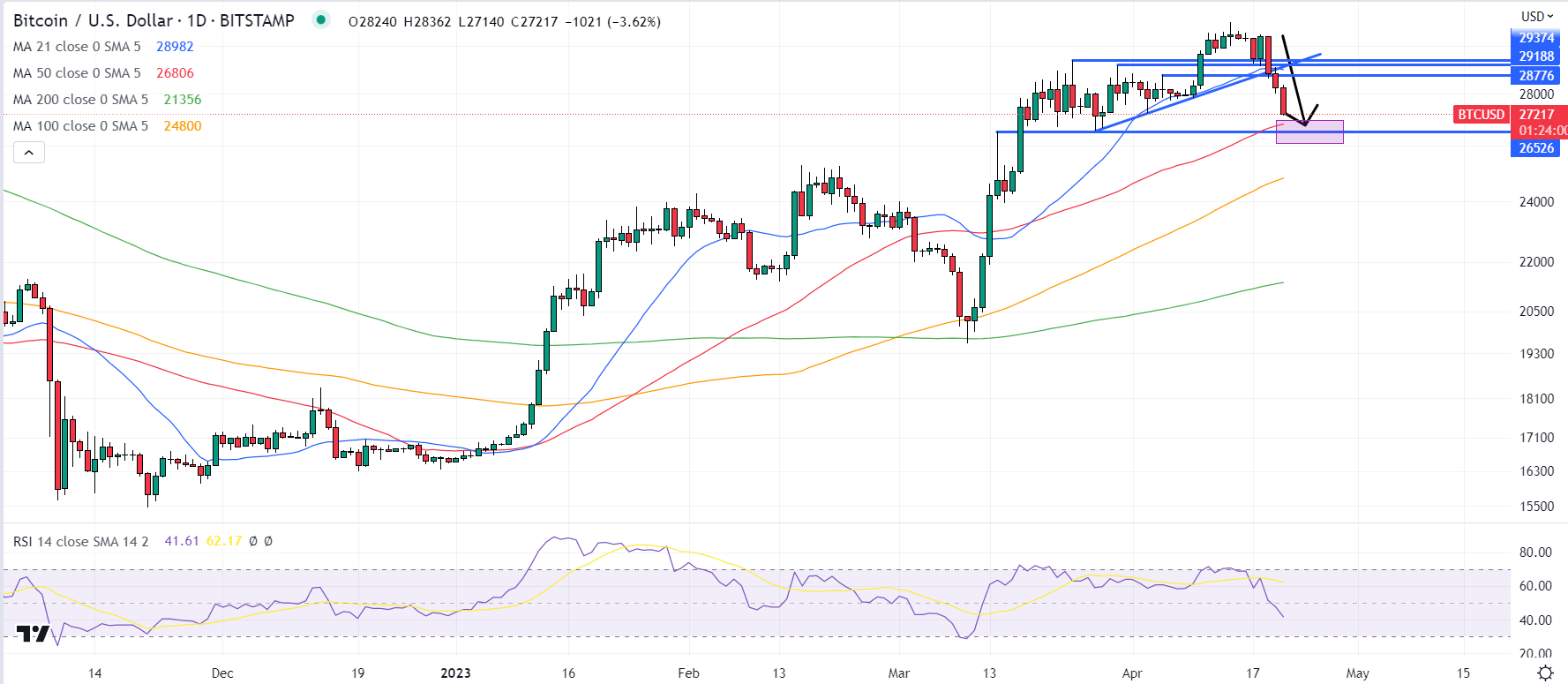
Since that bearish break, technicians have targeted a retest of support in the $26,500-$800 range in the form of March support-resistance levels and the 50DMA.
Why is Bitcoin in the red this week?
Macro developments may partially explain Bitcoin’s decline this week, which is now close to 10% (for reference, this would be Bitcoin’s worst weekly decline since last November’s FTX debacle).
US survey data has painted a mixed picture of US economic momentum, clouding the waters over expectations for the economic outlook and prospects for further Fed tightening.
This, combined with much hotter-than-expected UK inflation data, has propelled US yields higher this week, typically to the detriment of underperforming crypto assets like bitcoin.
Some analysts have pointed to the ongoing uncertainty surrounding the US regulatory landscape, another factor weighing on crypto, with SEC Chairman Gary Gensler’s appearance before Congress earlier this week adding little certainty to the outlook.
Meanwhile, the passage of landmark crypto regulations in the EU did little to lift sentiment.
In fact, this week appears to have been dominated by 1) profit taking after a very strong start to the year, leading to 2) the liquidation of a large number of overly optimistic/greedy bulls who expected Bitcoin to plow above $30,000.
Bitcoin market cooldown
In fact, last week a number of metrics suggested the bitcoin market could be overheating in the short-term as the BTC price hit new 10-month highs of over $30,000 last week.
The 14-day relative strength index had risen above 70, indicating an overbought market. It has now fallen to around 42 and if Bitcoin’s decline extends to the $25/$26K it could signal an oversold market soon.
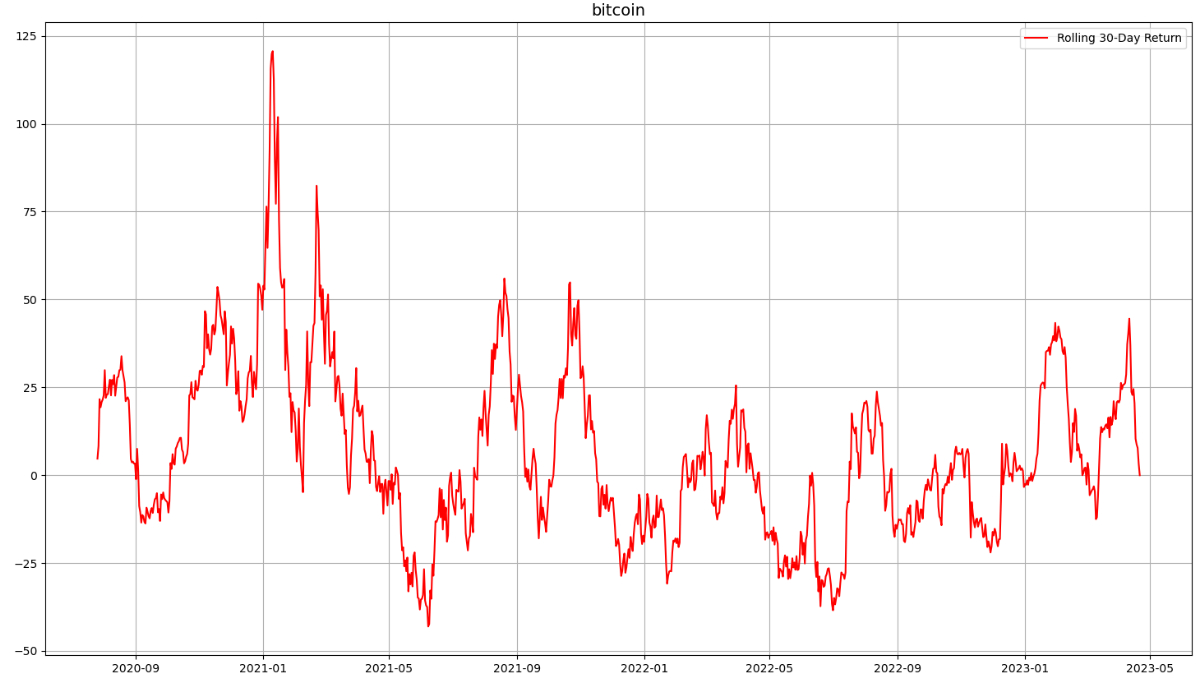
Meanwhile, BTC’s 30-day rolling yield had also surged to its highest level since late November.
The prospect of a further drop towards support in the $25,200-$400 region if optimism fades is certainly on the table for the coming days/weeks.
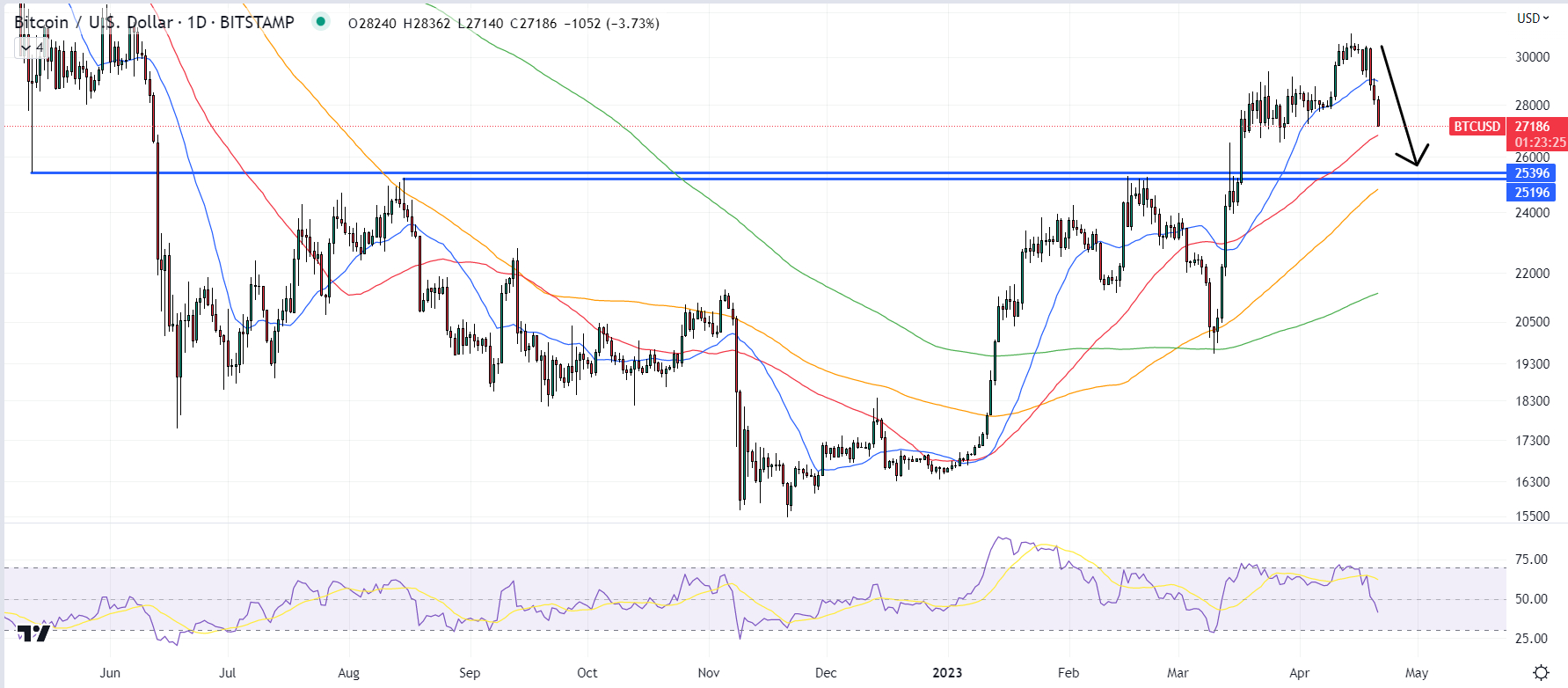
But that shouldn’t do too much damage to the longer-term bull thesis and could provide an excellent entry point for the longer-term bulls to re-enter the market.
As mentioned in a Thursday article, the 25 percent delta skewness of short-term Bitcoin options has turned negative, but the skewness of longer-term options continues to trend positive.
Confidence in Bitcoin’s longer-term price prospects makes sense when considering macro factors, on-chain trends, and mid- to long-term technical indicators.
While there is significant uncertainty about how many more times the US Federal Reserve will raise interest rates and when it will start cutting them, one thing seems certain – the end of the Fed’s tightening cycle appears to be near as US inflation and the slow down economic growth.
This means that unfavorable changes in financial conditions in 2023 are not likely to return as major headwinds for crypto markets like they did in 2022.
Meanwhile, Bitcoin will likely continue to receive tailwinds from key recent technical developments, including 1) Bitcoin’s spectacular bounce from its 200DMA and realized price in mid-March, and 2) Bitcoin’s “golden cross” (as the 50DMA surged above the 200DMA) early on February.
Elsewhere, a litany of on-chain and market cycle indicators scream that last year’s lows marked the end of the crypto bear market. Many investors will remain confident that Bitcoin’s bull market will remain alive and well in 2023.
Therefore, expect bargain hunters and dip buyers to be anxiously waiting on the sidelines to jump in whenever bitcoin posts significant price drops, as it did in mid-March.
Learn Crypto Trading, Yield Farms, Income strategies and more at CrytoAnswers
https://nov.link/cryptoanswers
Comments are closed.