


Bitcoin has fallen 10% in the last week and investors are unsettled. However, these corrections are standard for Bitcoin bull markets. Is this time something different?
Bitcoin (BTC) experienced a significant downturn this week, with the price plummeting to $63,763, a weekly decline of 10%. As investors prepare for the Federal Reserve meeting scheduled for tomorrow, market watchers are watching closely to see whether this event will serve as a catalyst for further corrections or mark the start of a recovery.
Source: BNC
The drop in Bitcoin price coincides with increasing concerns about the Federal Reserve's stance on interest rates amid robust U.S. economic data and persistent inflationary pressures. The central bank's decision, expected on Wednesday, poses a potential risk to risk asset prices as fears remain about a less accommodative monetary policy stance.
The release of higher-than-expected U.S. inflation numbers last week added to market jitters and raised doubts about the Federal Reserve's willingness to implement further monetary easing measures, including interest rate cuts.
Additionally, news of Japan's central bank raising interest rates for the first time since 2007 and significant outflows from the Grayscale Bitcoin Trust (GBTC) have added to the bearish sentiment.
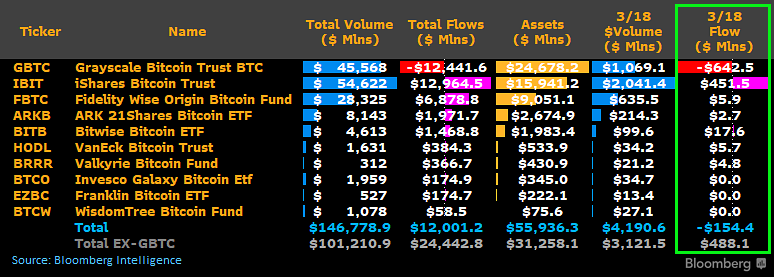
Tuesday was a negative flow day for the spot Bitcoin ETFs due to $GBTC's $643 million outflow day.
Does Bernstein buy the dip?
Despite the recent correction, analysts at Bernstein see Bitcoin's price decline as a temporary opportunity for investors. According to Gautam Chhugani and Mahika Sapra, analysts at the research and brokerage firm, the current consolidation phase offers a favorable buying opportunity ahead of the Bitcoin halving scheduled for April.
“We believe the current phase of Bitcoin consolidation is temporary in nature and provides an opportunity to buy pullbacks ahead of the Bitcoin halving,” Chhugani and Sapra noted in a note to clients. They expect the market to continue consolidating before the halving, followed by a continuation of the overall bull market.
Bitcoin halvings, which occur approximately every four years, are intended to reduce reward subsidies for miners. At the upcoming halving, scheduled for April 20, the reward will drop from 6.25 BTC to 3.125 BTC per block, while miners will continue to earn additional transaction fees.
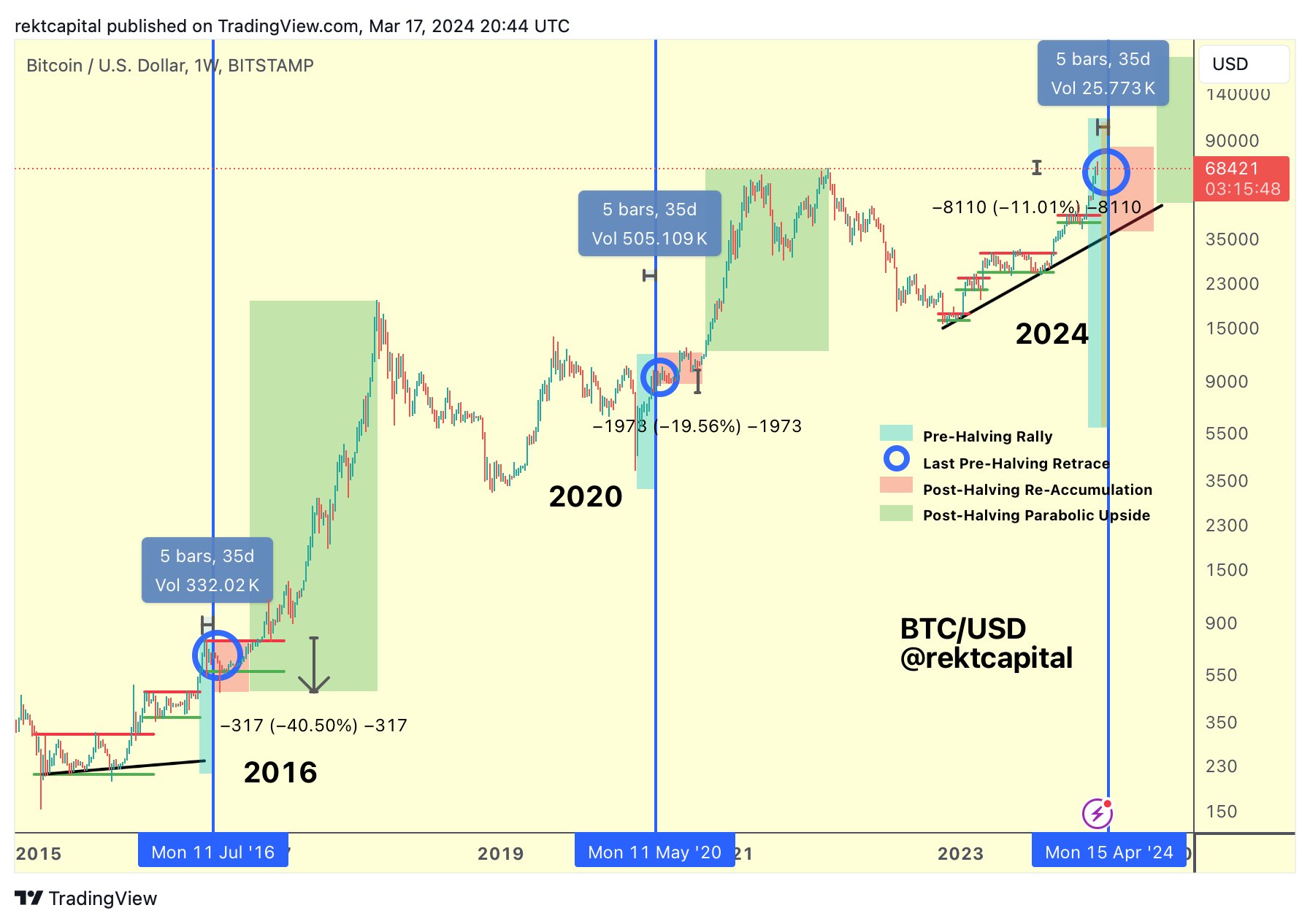
Despite concerns about Bitcoin's price performance leading up to the halving, analysts remain optimistic about its long-term trajectory. Rekt Capital, a crypto analyst, pointed out that Bitcoin could be on the verge of entering a pre-halving “danger zone,” which has historically been marked by pre-halving price declines.
Source: Rekt Capital
“In two days, Bitcoin will officially enter the danger zone where historic pre-halving pullbacks began,” Rekt Capital said. Past halving events have seen significant drops in Bitcoin, with declines of 40% and 20% observed in 2016 and 2020, respectively.
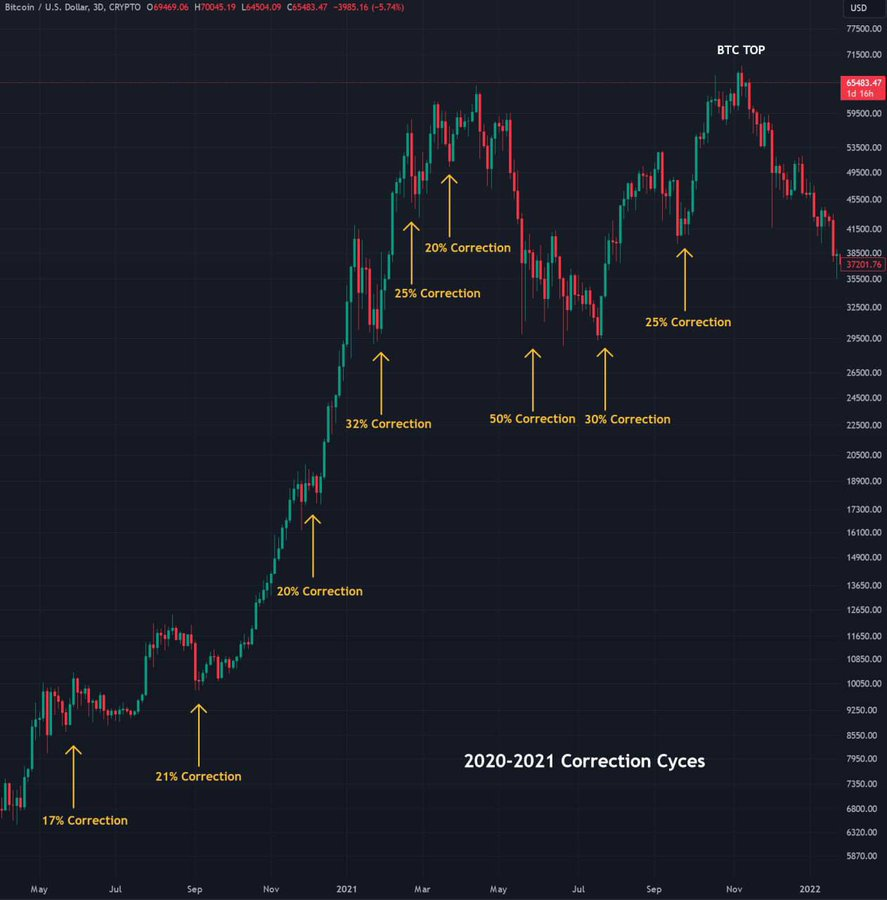
And as the chart below shows, significant corrections in a bull market are commonplace in Bitcoin's price history.
Source: X
Despite short-term fluctuations, most analysts maintain a bullish outlook for Bitcoin and predict a significant price increase after next month's halving. Expect volatility.
Learn Crypto Trading, Yield Farms, Income strategies and more at CrytoAnswers
https://nov.link/cryptoanswers
Comments are closed.