


The Layer 2 scaling solutions industry sees a strong foothold in 2022 as more money pours into the space in the form of institutional investment and mass adoption, evidenced by a growing user base.
Just last month, it was reported that ZK Rollup solutions in particular reduce transaction costs for users by almost 40x to 100x compared to the base layer.
Sequoia Capital, a venture capital firm, has reportedly raised a $600 million crypto fund, with previous investments primarily focused on funding Layer 2 solutions.
The growing interest and adoption of Layer 2 solutions is visible on data tracker L2Beat, which reports that the Total Value Locked (TVL) in DeFi on Layer 2 platforms of the Ethereum ecosystem has dropped to 6.72 from today $1 billion up from just $1.5 billion at the peak of the April 2021 bull run.
This is almost 14x the increase in TVL that took place across the entire Ethereum ecosystem (Layer-1 and Layer-2) over the same period.
This begs the question, “What in God’s name is driving this massive migration to Layer 2 ecosystems?”
The answer to this lies in understanding the need for Layer 2 solutions and the differences between Layer 1 and Layer 2. Let’s go ahead and break this down.
Layer 1 vs Layer 2
One of the most highlighted issues in the crypto space over the past year has been the extremely high “gas fees” and inglorious “gas wars” that users on the Ethereum network have had to deal with.
This was particularly painful in 2021, as the bull run brought a new influx of users into the crypto ecosystem, skyrocketing transaction volumes and overloading the network.
While whales and early hodlers might have been a little bothered by the extra costs, smaller and newer retailers took a real slap on the back hoping to get a taste of this sweet decentralized ecosystem, be it DeFi, NFTs or Gaming on Die Blockchain. Imagine paying a $30 fuel fee for a $20 transaction.
I like to think of the Layer 1 network as a highway where a huge line of vehicles are stuck at the tollbooth, charging everyone a huge amount in tolls for vehicles passing through.
The problem with this particular toll booth is that it doesn’t charge a fee based on the size of the vehicle you’re letting through (be it a tiny car or a huge truck); Rather, a fee is charged based on the number of vehicles stacked on the line.
Pretty inefficient system, don’t you think?
Layer 2 solutions, on the other hand, are like freeway overpasses, allowing more vehicles to pass at the same time for a fraction of the cost. ZK rollups, in particular, are like mega trucks that haul a bunch of cars in their load through the tollbooth for the price of a single toll.
Technically, ZK-Rollups bundles hundreds of Layer2 transactions into one, which is then transmitted to the Layer1 mainnet, reducing the data that needs to be stored on-chain.
Meanwhile, zero-knowledge proofs are constantly generated to ensure consistency of Layer1 and Layer2 states, so that every Layer2 transaction has the same security level as Layer1.
Vitalik Buterin, the man behind Ethereum, believes that ZK rollups are one of the best solutions in Layer 2 space for Ethereum to scale efficiently.
What is ZKSpace?
Currently, ‘ZKSpace’ is one of the major players in the ZK rollup based layer 2 industry. The ZKSpace platform consists of three main components:
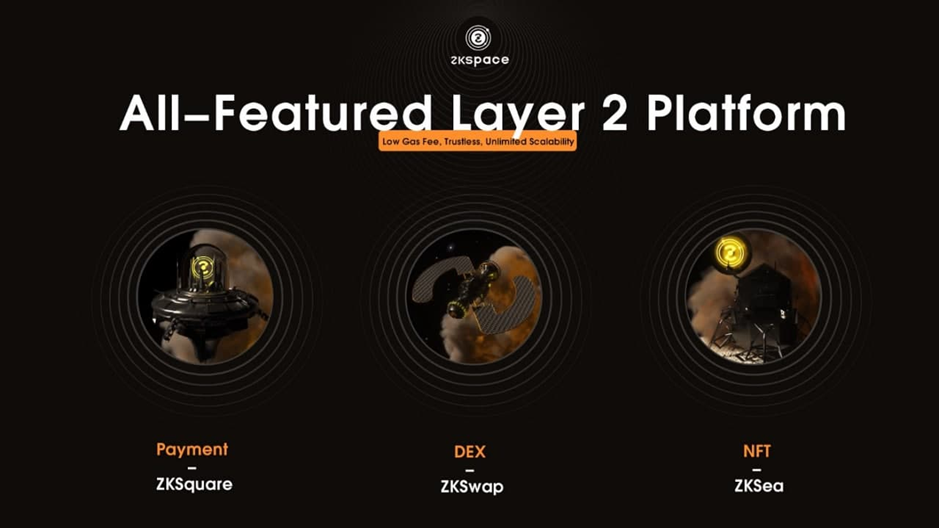
1. ZKSwap – the innovative Layer 2 DEX with ZK Rollups technology,
2. ZKSquare – payment service enabling cheap transfers and payments,
3. ZKSea – an affordable and efficient NFT mining platform and marketplace that offers competitive deals to users.
With a completely redesigned UI, NFT support, unlimited token listing, smoother takeoff, optimized efficiency, and multi-chain support, ZKSpace aims to implement EVM-compatible ZK rollups and bring more Layer 2-based ones to the community soon to offer products.
Why is token swapping and NFT mining better at layer 2?
When it became clear that transactions on Layer 1 networks like Ethereum were no longer possible for small and frequent transactions, users quickly adapted to Layer 2 solutions like Optimism, Arbitrum and ZKSpace.
The migration was seamless as most Layer 2 solutions using Rollup technology use the security of the base layer (Ethereum) to determine the final status of transactions, while on Layer 2 they are calculated much faster .
This prompted decentralized applications (DApps) and projects on the Ethereum blockchain to migrate to Layer 2 networks to enable higher volume and usage of their platforms.
This has been particularly observed with DeFi DApps and NFT platforms as they often have a huge volume of transactions that are simply too expensive on a Layer 1 blockchain like Ethereum.
DeFi, in particular, is an ecosystem that has remained out of reach for users with smaller pockets due to the high gas fees on Ethereum.
Lower costs and better user experience will help democratize access to DeFi beyond the initial group of early adopters.
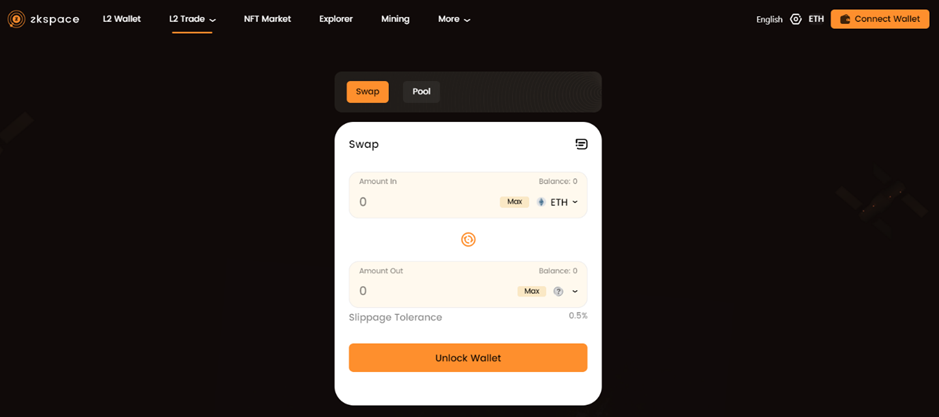
ZKSwap, an innovative Layer 2 decentralized exchange protocol based on ZKSpace’s Automated Market Maker (AMM) model, is helping to realize this vision by allowing users to list and swap all ERC20 token trading pairs by it reduces gas charges to a tenth of a percent while maintaining the same security as the underlying Layer 1 network.
In addition, users of ZKSwap experience real-time trade settlements since all transactions on ZKSwap are transmitted on Layer-2 and users do not have to wait for a block’s confirmation time.
Unlike Layer 1 DEXs, ZKSwap allows its users to pay the gas fee in any of the following four tokens – ETH, ZKS, WBTC and USDT. Users can also create unlimited token pairs in liquidity pools to enable swaps.
The Ethereum NFT space’s parabolic bull run over the past year saw blue-chip projects like Crypto Punks and Bored Ape Yacht Club (BAYC) hit record highs in sales every week.
However, since NFT projects on the Ethereum blockchain were an expensive proposition due to the high gas fees paid to mint the tokens, most of the projects that came out had a high coin price on top of the “gas wars” that scared off investors , large and small, from participating in the coin.
This gas fee problem also prevented most NFT projects from achieving true price discovery, leading to the creation of artificial floor prices.
The NFT ecosystem was in dire need of Layer 2 solutions like Immutable X and ZKSea that were tailor-made to enable a simpler mint and trading process for NFTs.
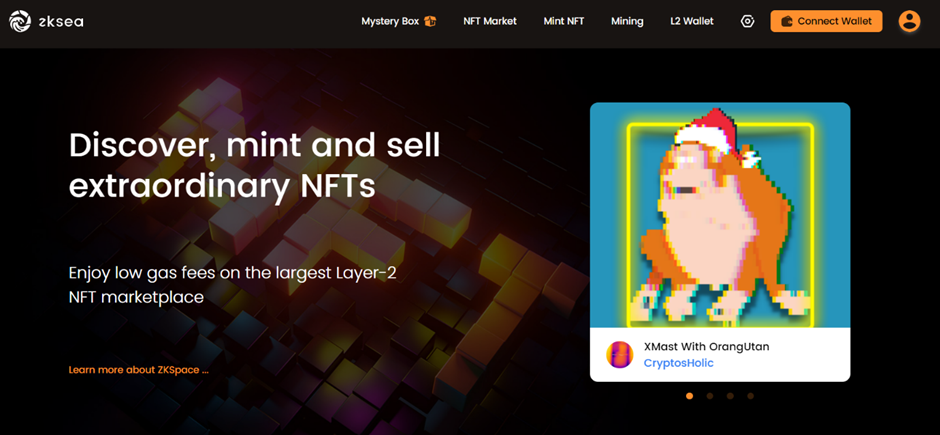
ZKSea, ZKSpace’s native NFT marketplace, supports all ERC721 standard NFTs, which can be freely deposited and withdrawn between Layer-1 and Layer-2 directly.
This allows blockchain gaming and metaverse projects to truly leverage the security of base layer deployment while leveraging the low transaction costs of the layer 2 platform.
ZKSea also offers a full Layer 2 wallet that allows users to easily manage ERC20 tokens and NFTs.
ZKSea allows users to mint NFTs for a gas fee of $5 per creation. After artists have coined the NFT, it can be put up for sale in the marketplace with no gas fees.
OpenSea, a Layer 1 NFT marketplace on Ethereum, also charges a 2.5% platform fee, similar to ZKSea; However, listings on Opensea are subject to gas fees on Ethereum, which can range from a few dollars to a few hundred dollars.
Furthermore, if an artist wishes to delist an NFT on Opensea, they will again have to pay a hefty gas fee, which is many times higher than ZKSea’s $1 delisting gas fee.
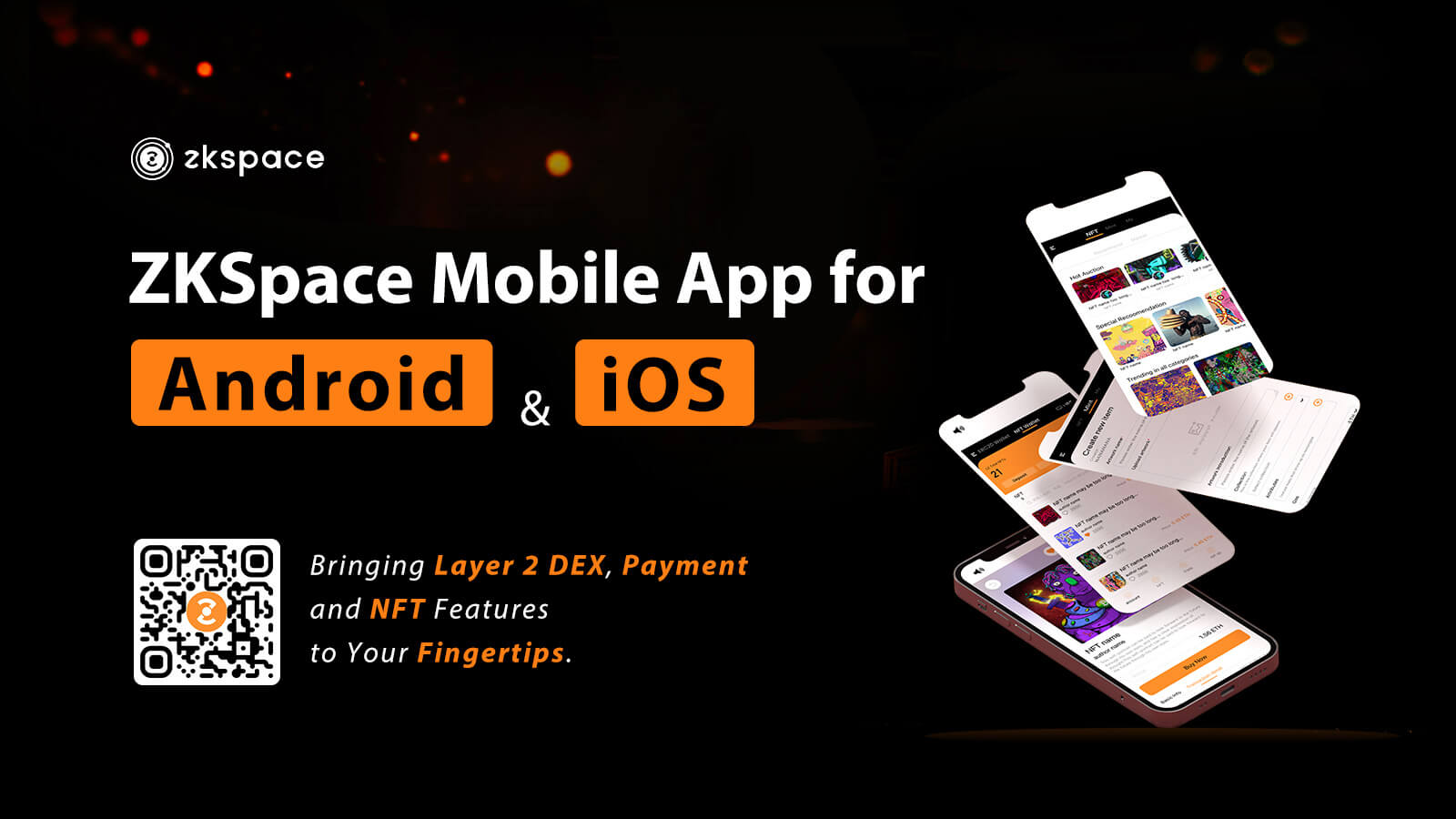
ZKSpace is truly committed to providing users with a smooth, easy-to-use Layer 2 experience with an ever-evolving list of features through its products ZKSwap and ZKSea.
The protocol also starts its own mobile application for Android and iOS users, which allows users to access all web functions through the app. Users of the app can participate in activities like deposits, withdrawals, transfers, swaps and mints.
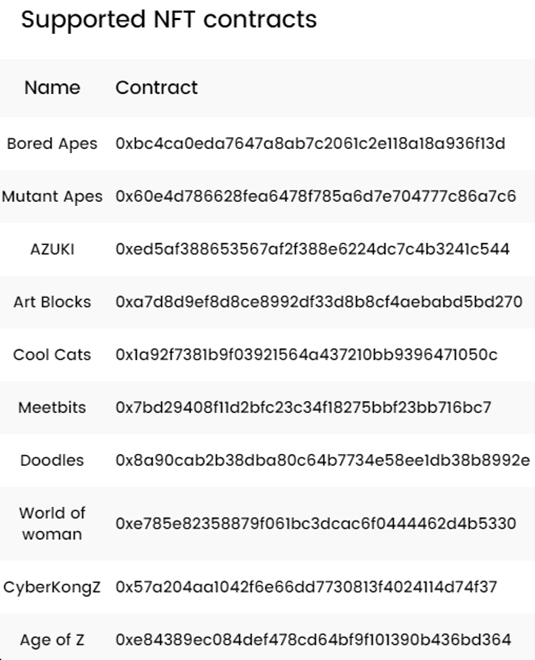
List of supported blue chip NFTs for the PoD mining program
ZKSpaces running mining programs Allow ZKSwap users to mine the protocol’s native ZKS token by either providing liquidity or swapping specific token pairs on ZKSwap during the campaign period.
ZKSea users, on the other hand, can mine ZKS tokens by depositing and listing any of the above Layer 1 blue chip NFTs on the platform during the promotional period.
All mining events in the ZKSpace Web App, from PoS and PoG to NFT PoL, NFT PoT and NFT PoD, are also currently available in the Mobile App.
You can now earn daily mining rewards and exclusive bonuses with your tokens and NFTs.
Final thoughts and future plans
One of the most common misconceptions surrounding the future of Layer 2 protocols is that they will become obsolete once the upcoming Ethereum Consensus Layer (formerly known as Eth 2.0) merges with the Execution Layer (formerly known as Eth 1.0).
Unfortunately, the merger only makes the blockchain greener by switching the consensus mechanism to Proof-of-Stake (PoS) and triggering the deflation mechanism for the ETH token as a result of EIP-1559.
However, the scalability remains unchanged. This is because transaction throughput occurs at the execution level, which is unaffected by the merge.
Ethereum’s vision for increasing the scalability of its network is to implement multiple sharding chains along with the existing Layer 2 solution currently deployed on the blockchain.
This is optimistic for the Layer 2 industry as a whole, as it implies a greater focus on coexistence and dependency on Layer 2 solutions to drive Ethereum scalability in the future.
Ethereum’s vision for scalability also aligns with ZKSpace’s mission to provide its users with a more diverse set of features as the protocol evolves.
The protocol plans to release features like NFT verification, batch mining, auction, bidding services, and Layer 2 domain services before the end of this year.
However, one goal that sets ZKSpace apart from other Layer 2 solutions in this space is its vision to provide cross-chain Layer 2 services by leveraging other Layer 1 blockchains alongside Ethereum, such as BSC and Solana.
This will provide users with faster and cheaper cross-chain services and make it accessible to transfer Layer 2 funds between different chains at low cost.
Disclaimer
All information contained on our website is published to the best of our knowledge and for general information purposes only. Any actions taken by the reader based on the information contained on our website are entirely at your own risk.
Learn Crypto Trading, Yield Farms, Income strategies and more at CrytoAnswers
https://nov.link/cryptoanswers
Comments are closed.