
Bengaluru hosts Kambala race: What is the popular sport in Karnataka and why was it banned earlier? | News explained


On the weekend of November 25th and 26th, 160 pairs of buffalo and their jockeys will compete on the specially constructed slush tracks for the Kambala races City Palace Grounds in Bengaluru.
Hundreds of people are expected to visit the venue even though the traditional racing event has come under Supreme Court control in the past – Kambala was banned in 2014 along with Jallikattu and bullock cart racing. Subsequently, state governments made changes to legislation allowing them to continue.
What is Kambala?
It is a popular sport practiced in the coastal districts of Karnataka, particularly in regions where Tulu speakers form the majority. Various families and groups used to organize races in the muddy rice fields in the days after the harvest. More recently, the Kambala Samithi has been holding weekly events at various locations in Dakshina Kannada and Udupi districts from the end of November to the first half of April.
Kambala is a prestigious event for many families, especially from the Bunt community in the coastal regions. They groom pairs of buffalo throughout the year in the hope of winning a major kambala event or other race.
What are the different categories in Kambala?
Kambala is generally held in four categories. Firstly, there is the Negilu (plough) category where lighter plows are used to tie the buffaloes for racing. The event is aimed at entry level buffalo pairs taking part in their first Kambala race.

The second is Hagga (rope), in which buffaloes are driven by jockeys with only one rope attached to both buffaloes. Adda Halage is the third category where participants stand over a horizontal board pulled by buffaloes. Unlike Hagga and Negilu, where jockeys run behind the animals, buffaloes pull the jockeys behind them in Adda Halage.
Kane Halage is the fourth category in which a wooden board is attached to buffaloes. The plank on which the jockeys stand has two holes through which water sprays out when the plank is pulled over the muddy lanes. The height to which the water splashes determines the winner of the event.
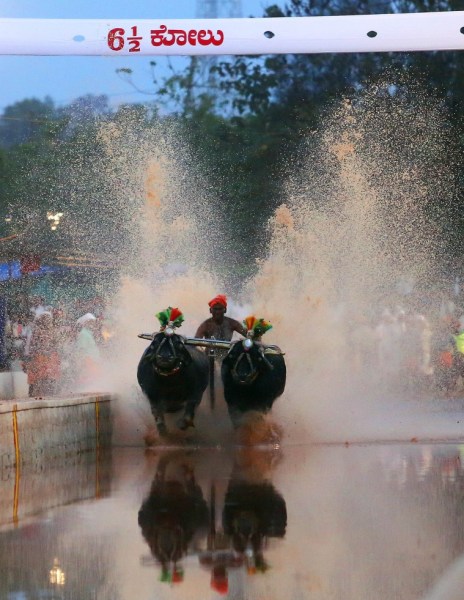 A Kambala jockey races his buffaloes during the Anna-Thamma Kambala organized at Paivalike in Kasargod district of Kerala. (Express archive photo by Nirmal Harindran)

How many teams are expected to take part in Bengaluru Kambala?
Initially, around 228 teams registered in the four categories – of which 160 couples took part in the races on November 25th and 26th. The organizers of Bengaluru Kambala have announced a cash prize of Rs 1.5 lakh along with gold for the first prize winner .
To ensure that more teams took part in the Kambala in the state capital, an incentive of Rs 50,000 was offered to bring the buffaloes to Bengaluru for the event.
Is Kambala popular across Karnataka?
Although the popularity of the races is limited to coastal Karnataka, organizers believe that popular representations of the sport, such as in the 2022 film “Kantara”, have given the event a pan-Karnataka appeal.
Puttur MLA Ashok Rai, one of the main organizers of the event, credited the film’s success for sparking interest in the sport.

Why was Kambala banned by the Supreme Court?
Several organizations, including People for the Ethical Treatment of Animals (PETA), had filed a petition against all traditional sporting events due to allegations of animal abuse.
The accusation against Kambala was that the buffaloes’ noses were tied with a rope and the animals were constantly whipped during the race, which amounted to cruelty. The SC, which heard these petitions, decided to ban jallikattu, kambala and bullock cart racing in 2014.
How was the ban lifted?
In January 2016, the Environment Ministry issued a notification making an exception “that bulls may continue to be trained as performance animals in events such as Jallikattu in Tamil Nadu and bullock cart races in Maharashtra, Karnataka, Punjab, Haryana and Kerala” and Gujarat the way…or practice traditionally according to the customs or as part of the culture in any part of the country”. This was done in recognition of the customs and cultural heritage of different communities.
However, an exception was made subject to certain conditions to reduce the pain and suffering of bulls when used in such sports.
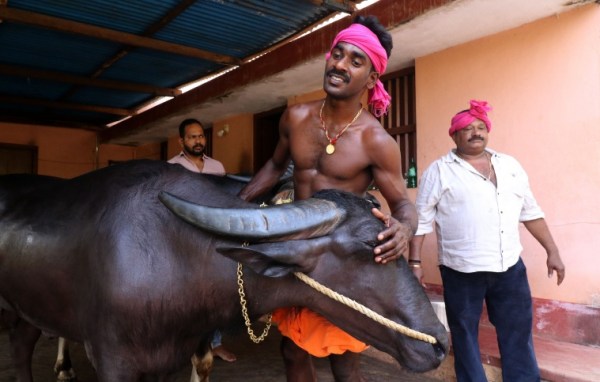 Kambala jockey Srinivas Gowda takes care of his buffaloes with owner Harsh Vardhan Padhwal in their village in Mudibidri, Karnataka before the race. (Express archive photo by Nirmal Harindran)

At the same time, state governments have amended the provisions of the Prevention of Cruelty to Animals Act to provide an exception for these events. Although the changes were challenged, a five-judge Constitution bench upheld the changes made by the governments of Karnataka, Tamil Nadu and Maharashtra in May this year.
Why is Kambala accused of caste discrimination?
Historically, members of the Koraga community faced discrimination before the festival began. Koragas, who were considered “untouchable,” have historically been mistreated during Kambala.
Even today, critics argue, the sport is controlled by dominant caste groups, while those considered “lower castes” end up doing menial labor as part of the event.
Comments are closed.