

![[Vantage Point] The cost of the Israel-Hamas war](https://i0.wp.com/trading-u.s3.amazonaws.com/wp-content/uploads/2023/11/11040536/israel-hamas-war-cost-nov-10-2023.jpg?fit=1280%2C720&ssl=1)
One of the most immediate and obvious effects of the Israel-Hamas war on the global economy is its impact on oil prices. The Middle East is an important region for oil production and export. Any instability in the region, such as the ongoing conflict, raises concerns about disruption to oil supplies.
As a result, oil prices tend to rise, creating uncertainty in energy markets and impacting economies worldwide.
Oil was particularly volatile amid fears that an escalation could restrict supplies from the energy-rich region.
Any conflict in the Middle East tends to lead to rising oil prices. Remember the OPEC oil embargo of 1973-1974, the Iranian Revolution of 1978-1979, the Iran-Iraq War that began in 1980, and the first Gulf War of 1990-1991?
With the region accounting for nearly a third of global oil supply, instability there raises concerns about disruptions to global oil supply, leading to market uncertainty that is reflected in the risk premium in oil markets.
This risk premium refers to the price paid for oil traded in advance in the futures markets compared to the real-time price of oil. It reflects the profits that speculators hope to make from buying and selling oil in times of conflict, as well as the hedging needs of companies that produce and consume oil and their concerns about supply and demand.
3 scenarios
The World Bank and Bloomberg Economics have simulated three scenarios for global oil supplies in the event of a small, medium or large disruption.
From my understanding of their analysis, the impact should be limited unless the conflict expands from a “small disruption” scenario – as oil prices are expected to fall from current levels to an average of around $85-95 per barrel by next year .
But during a “moderate disruption” — comparable to the disruptions during the Iraq War — global oil supplies of about 100 million barrels per day would decline by 3 million to 5 million barrels per day, potentially driving up oil prices by 35% would.
In a “major disruption scenario” – comparable to the 1973 Arab oil embargo – global oil supply would shrink by 6 to 8 million barrels per day and prices could rise by 56 to 75 percent, or to $140 to $157 per barrel.
Should a “major disruption” or more severe scenario occur, it would drive up food price inflation, which is already elevated in many developing countries as a result of Russia’s invasion of Ukraine in February 2022.
An escalation of the recent conflict would increase food insecurity not only in the region but worldwide.
Competing nationalisms
How did we get here?
“From the river to the sea, Palestine will be free”; “Never again!”
These powerful slogans reflect the feelings of the Palestinian people, who have longed for independence and a Jewish state since its founding, under siege from its neighboring states, and serve as a poster child for the anti-Semitism that Israel has endured from right-wing extremists since its existence.
That slogan decided the fate of Rep. Rashida Tlaib, D-Mich., who censured the U.S. House of Representatives by a vote of 234 to 188 for the Hamas attack on Israel on October 7, 2023, for calling for the destruction of the Jewish state . Tlaib, the only Palestinian-American in Congress, has condemned Israel for the “murder of the Palestinian people, including babies.”
She defended the mass protests against the “Israeli occupation of Gaza,” which have gained momentum around the world and are attracting tens of thousands of demonstrators. She says the chant “from the river to the sea…” The lyrics, performed at regular intervals by protesters around the world, are ambitious and never intended to incite destruction.
But is Israel really at war with Palestine? The Palestinian Authority has long given Hamas full control over its people. Hamas, designated a terrorist group by the United States and its Western allies, has violently suppressed the will of the Palestinian people to determine their own destiny. Hamas’ single-minded goal has always been the destruction of the State of Israel.
The war between Israel and Hamas has its origins in the late 19th and early 20th centuries and involves competing nationalisms, historical claims to the same territory and the aftermath of World War II. The founding of the State of Israel some 75 years ago has led to never-ending hostilities between Israel and its Arab neighbors.
Key topics include territorial disputes, the status of Jerusalem, the rights of Palestinian refugees, and broader geopolitical and religious factors. Over the years, there have been several wars, uprisings and peace efforts for which there has been no comprehensive solution. Efforts to find a lasting and just solution continue through shaky diplomatic means, but the complexity of the issues involved makes the undertaking a gigantic and formidable undertaking.
Disruption of supply chains
This is unfortunate as the global economy is interconnected by complex supply chains that span the globe.
The current war is disrupting these supply chains, particularly in industries that rely on the Middle East for resources or transit routes. Sudden disruptions in the movement of goods, for example through the Suez Canal, can lead to delays and increased costs, affecting both producers and consumers worldwide.
The geopolitical instability caused by the conflict is triggering volatility in financial markets. Investors and financial institutions are closely monitoring the situation and any escalation could lead to sharp fluctuations in stock markets and currencies. These fluctuations can impact investors’ wealth, pensions and overall market stability.
Internal and interstate conflicts often have a significant impact on stock market indices, exchange rates and raw material prices. Sometimes prices skyrocket in advance of hostilities. Even more complicated to calculate and harder to predict are the long-term effects of such dramatic and shocking events on investor behavior.
Impact on tourism and travel
The impact of the conflict on the global economy also extends to the tourism and travel industries. Countries in the Middle East and North Africa (MENA) region are popular tourist destinations, and instability caused by the conflict may lead to a decline in tourism.
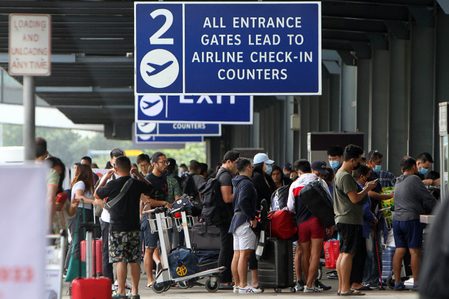
Additionally, airlines may reroute or cancel flights due to safety concerns, resulting in financial losses for the travel industry.
The Israel-Hamas conflict also places a strain on global humanitarian and aid organizations. The conflict often results in significant numbers of displaced people, increasing the need for international assistance. Donor countries must provide resources and resources to address the humanitarian crisis and divert them from other global problems and development projects.
Multinational corporations and companies with branches in the Middle East are exposed to increased risks in times of conflict. The threat to investment and business continuity may lead to a decline in economic growth and stability as companies reconsider their presence in the region.
The war between Israel and Hamas is complex and has far-reaching consequences for the global economy and global trade. Its impact extends beyond the immediate region, affecting energy markets, supply chains, financial markets, tourism, humanitarian efforts, diplomatic relations and business operations.
It is a major challenge for the international community to seek a peaceful solution to this long-standing conflict in order to mitigate the negative economic impact it is having on the world.
A stable Middle East is critical not only to the well-being of the region’s residents, but also to the prosperity of the global economy. – Rappler.coM
Comments are closed.