
The New Zealand Financial Markets Authority notes continued improvements in audit quality and warns against complacency


The Financial Markets Authority (FMA) – Te Mana Tātai Hokohoko – has noted that accounting firms continue to improve the quality of their audits of FMC reporting units.
The FMA’s audit quality monitoring report for 2022/23, published today, states that audit firms have implemented improvement measures since previous reviews, but audit quality remains variable and inconsistent between firms and, in some cases, between audits within the same audit firm.
This review was part of the last three-year monitoring cycle of all approved auditors by the FMA, which examines selected audit files of listed companies and other companies reporting in accordance with the Financial Market Conduct Act (MwG). The FMA targets a sample of higher risk files while selecting others at random.
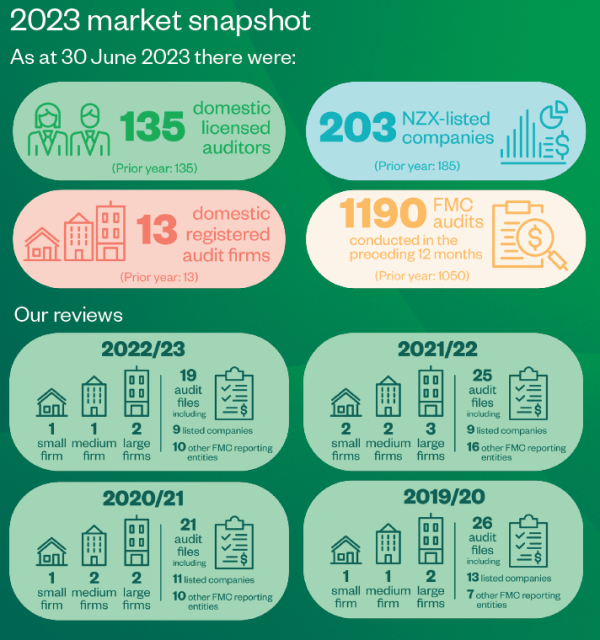
This year marked the return of on-site visits for the FMA after two years of remote reviews due to Covid-19. The FMA audited two large, one medium and one small auditing companies. The FMA examined 19 audit files, nine of which were from listed companies.
Although it is difficult to compare previous years, the FMA is encouraged that the proportion of “non-compliant” audit files fell to 16% in 2022/23 from 28% in 2021/22.
The FMA has highlighted the following priorities for audit firms:
- Checking the information created by management for accuracy and completeness
- Duties of a contract quality auditor and the process to be followed in completing the audit
- Audit procedures and collection of evidence to assess the continuation of the company
- Risk assessment procedures
- Review of journal entries.
Jacco Moison, FMA head of audit, financial reporting and climate-related disclosures, said: “We are pleased to see audit firms continually improving and incorporating our feedback from previous audits into policies and procedures.” Given the development of new technologies and the numerous risks to the In business, it is important that auditors remain vigilant and skeptical of the audit evidence they receive. While the improvements noted this year are welcome, we want to avoid the risk of complacency in the audit process and its governance.”
Ethics in the accounting profession
Even though the FMA did not find any violations of ethical standards during this review, it has reiterated the FMA’s expectations of audit firms following recent events abroad.
Conduct such as audit fraud by various Big Four firms in many jurisdictions and breaches of confidentiality by PwC Australia raise questions about ethical conduct across the audit profession.
Unethical behavior by a firm or individual auditor can strain relationships and damage the reputation of the accounting firm, but can also have broader implications for trust in the profession and confidence in the financial services sector generally. The risk of reputational damage and damage from negative publicity is increased for professions such as auditing that promote ethical standards in the work and services they provide.
Mr Moison said: “The behavior of those who provide financial services, including accountants, impacts the consumers of those services, who are exclusively New Zealanders.” High standards of conduct support fair, efficient and transparent markets – and the confident participation of Companies, investors and consumers in these markets.
“We expect accounting firms to proactively cultivate a culture that allows employees at all levels to speak up on ethical issues, with the assurance that such concerns will be taken seriously. Audit quality is based on independence and ethics, and these critical foundations must be maintained.”
Comments are closed.