


The IPO of Tamilnad Mercantile Bank (TMB) is an important one. Not only is TMB among the last known commercial banks to go public as planned, but the IPO comes amid several legal battles, including the one that took place on Friday last week. Questions have been asked about some shareholders and this is being looked into by RBI and ED
With nearly 30 percent of existing shareholders bound as a result of these lawsuits, investors considering TMB’s IPO should keep in mind that the outcome of all these legal battles could dampen sentiment around the stock post-listing. What might offer some consolation, however, is that as a publicly traded regulated company, the bank could pretty much put an end to several hostile takeover attempts it’s seen in the past.
Interestingly, it’s also the only bank doing an IPO for a fresh capital raise rather than an offering to sell. The intent of the IPO is to comply with the capital raising standards mandated by RBI. Since the branch expansion has been on hold since 2019 because the bank failed to meet regulatory requirements, the IPO is intended to remedy the situation.
Since TMB is not an IPO for a stressed bank, which is valued at 1.4 times book price for FY22, its asking price seems reasonable. It also scores well against peers, whether mid-sized banks or regional players, in terms of asset quality and return metrics, and as such we recommend investors subscribe to the IPO.
Business Overview
Originally founded in 1921 as Nadar Bank, a community representing traders and businessmen in Tamil Nadu, the state continues to account for a large proportion of its business (75 percent). A deeper reading of the numbers suggests that the impact of concentration has been positive for the bank, rather than being a risk factor. In TN, the bank’s 5-year customer retention rate was nearly 82 percent. In Andhra Pradesh, too, the figure was 77 percent. Interestingly, even in states like Maharashtra, Karnataka and Gujarat, the percentage of long-term customers is 58-68 percent.
In addition, the bank has managed to build a very high proportion of secured loan assets by appealing to the financially literate population. At almost 99 percent in FY22, TMB’s share of secured loans was undoubtedly the best in the industry. This factor played an important role in ensuring a sharp decline in the gross NPA ratio from 3.44 percent in FY21 to 1.69 percent in FY22.
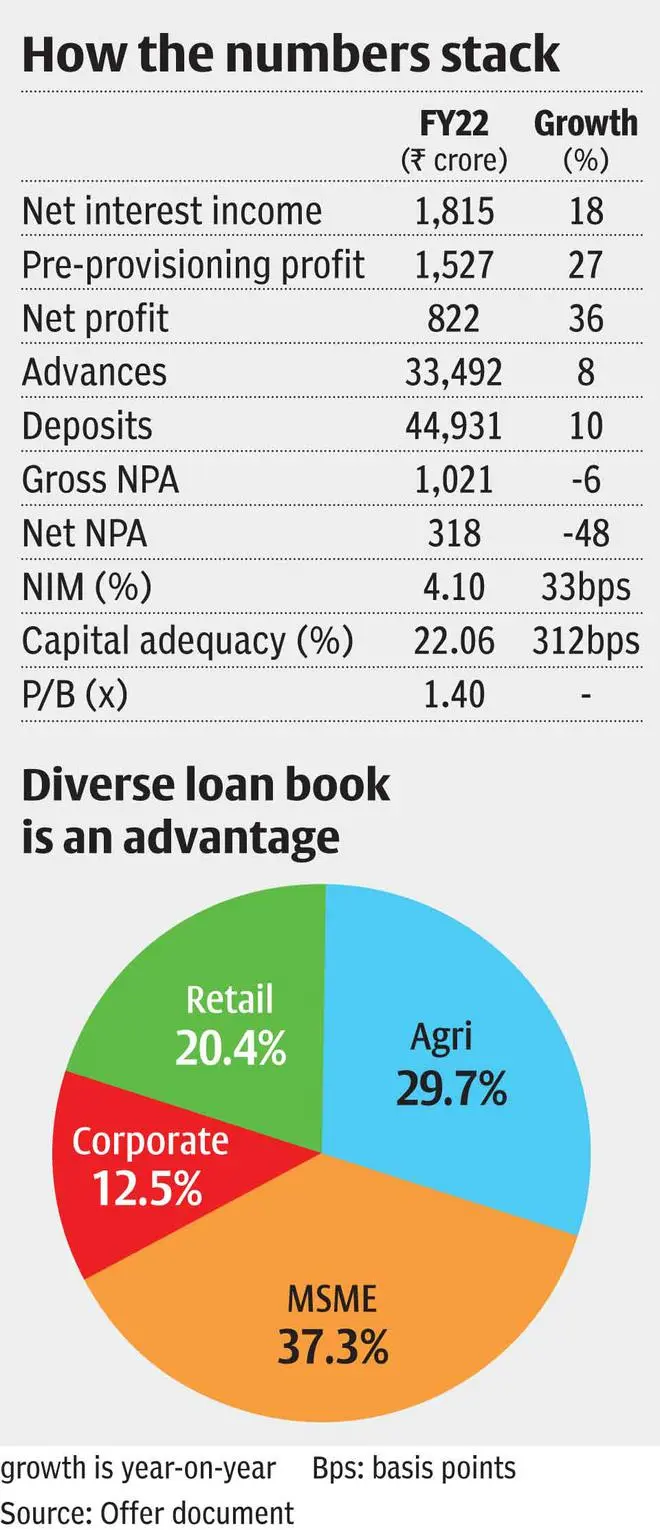
Likewise, personal, agricultural and MSME loans accounted for 88 percent of the bank’s total loan portfolio, and this was the highest among mid-cap banks such as RBL, IDFC First, Federal Bank and City Union Bank. It’s also reassuring that over 60 percent of TMB’s retail book includes home loans, giving the book stability.
Another interesting factor in the composition of the loan book is its granularity. The average ticket size of retail and farm loans in FY22 was 4.7 lakh and 1.3 lakh, respectively. Only 3.6 per cent of the bank’s total book had a ticket size greater than 25 lakh and loans in the 1 lakh to 5 lakh range accounted for 44 per cent of the total book. This level of granularity can come in handy in times of need.
TMB’s net interest margin (NIM) in FY22 was 4.1 percent. Investors should consider this a one-off, however, as the bank has made a few rate reversals over the past fiscal year. Therefore, based on its historical performance, a NIM of 3.85 to 3.95 percent seems more achievable.
asset quality
This aspect might surprise investors. With 1.69 percent gross NPA (0.95 percent net NPA) in FY22, a slippages ratio of 1.6 percent and borrowing costs of 0.4 percent, TMB’s asset quality numbers were those of peers like Karur Vysya Bank , City Union Bank, DCB Bank and RBL Bank. This is a key factor justifying TMB’s valuations based on FY22 financials. However, most of TMB’s peers experienced significant improvement in asset quality parameters during the June quarter of FY23. How much improvement TMB has seen for the current fiscal year will only be known after the listing.
Risks to consider
Aside from the legal battle surrounding the bank, investors should keep in mind that one of the main goals of the IPO is to allow the bank to resume opening branches. With 100-150 stores expected to open in the next 18-24 months, according to news reports, most of which are expected to be set up outside of Tamil Nadu, this could push TMB’s cost-income ratio to 42.1 percent for the fiscal year 22 was the best among peers. A new branch typically takes around three years to breakeven, so cost pressures on the bank could last longer and not be isolated.
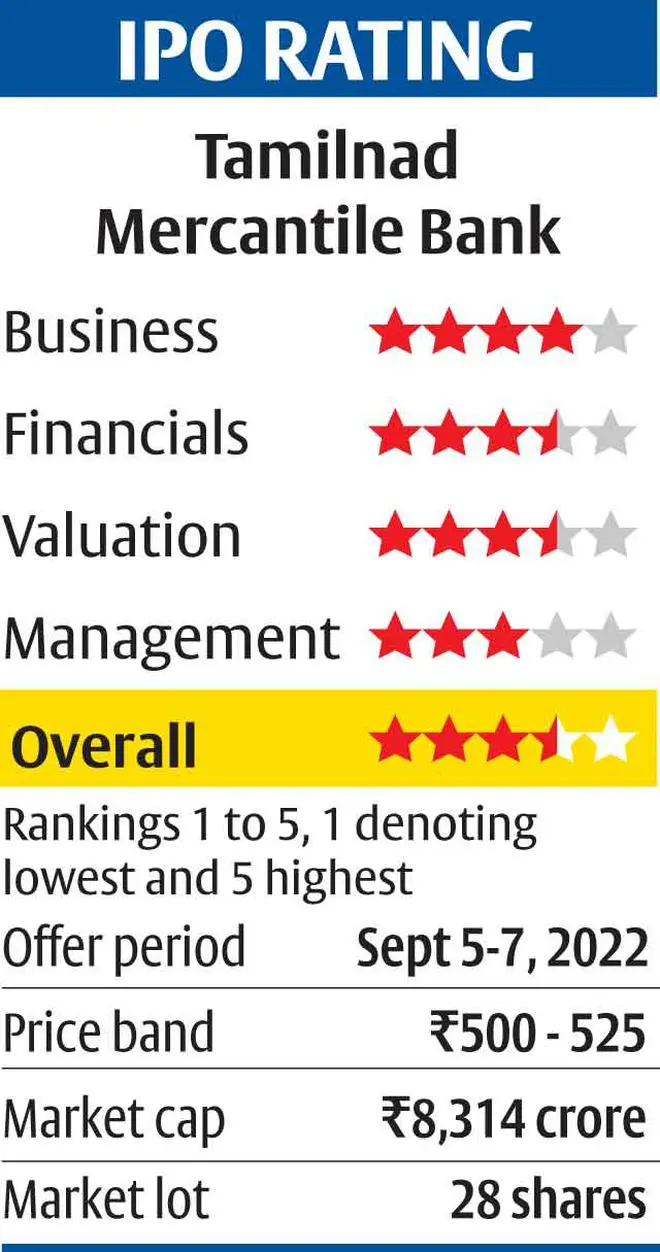
Also, the £8.32bn injection from the IPO would increase TMB’s capital adequacy from 22.1 per cent in FY22 to 25 per cent post-flotation. A likely increase in operating expenses and pressure from the cost of capital could weigh on the bank’s yield profile, which is currently best-in-class and alongside CSB. In FY22, the bank’s ROE was 16.6 percent and its ROA was 1.7 percent.
The current MD & CEO’s term ended on 3 September (Saturday) and he was replaced by S. Krishnan, former MD & CEO of Punjab and Sind Bank. Usually when there is a changing of the guard at a bank, there is some kitchen flushing. This factor could come into play in FY23 and investors should be aware of this risk.
Published on
09/03/2022
Comments are closed.