


Commentators, particularly those who appear to have had no past experience of real estate-related financial crises in countries such as the United States and Europe, Hong Kong and Latin America, fail to recognize the significance of the systemic risk involved.
So while China appears to be able to absorb the impact of its housing crisis in terms of its financial and fiscal resources, even if this will slow economic growth, the same cannot be said of the US and some European countries.
This is particularly true in the USA, which has the largest commercial real estate market in the world. Prices there have fallen by 11 percent since the Federal Reserve began Increase in interest rates in March 2022.
The IMF notes that this decline is significantly steeper than in previous monetary tightening cycles and has wiped out all of the gains made over the past two years – a threatening development not only for commercial real estate, but also for the U.S. financial sector and the economy as a whole.
Higher borrowing costs always tend to dampen commercial real estate prices – directly, by making investment in the sector more expensive, and indirectly, by slowing economic activity and reducing demand for such properties. Nevertheless, the IMF states: “The sharp decline in prices during the current monetary policy tightening cycle in the USA is striking.”
Federal Reserve Chairman Jerome Powell attends a press conference in Washington on December 13 last year. The Fed left interest rates unchanged at a 22-year high of 5.25 to 5.5 percent, signaling the end of its rate-hiking cycle and possible rate cuts next year. Photo: Xinhua
The broader implications of such developments are serious, both for economists, bankers and financial analysts, as well as for investment institutions such as pension funds that view commercial real estate as alternative assets to stocks and bonds.
The knock-on effect of falling real estate prices on the banking system, the securities markets and the real economy of a country can be serious – Hong Kong, for example has experienced in the past. In the case of the USA, these are domino effects can resonate in the international financial markets.
Hong Kong homeowners looking to sell have missed the window as the recession continues
Developments in the real estate sector are (or should be) of considerable interest to journalists in their role as guardians of the public interest. Surpluses or “bubbles” often sneak up on commentators – or even regulators – unprepared.
While many people are currently obsessing over China's housing crisis, they seem to be paying far less attention to developments in commercial real estate markets and, more dangerously, broader debt markets.
Should a crisis arise due to falling commercial real estate valuations and a resulting debt crisis – including among private mortgage holders who are unable to meet their obligations – banks today have less leeway to finance rescue packages than in the past. They've splurged on lending to real estate and other sectors during a long period of low interest rates and won't want to indulge in more of it now. Meanwhile, governments have been pumping up fiscal stimulus and you have to retreat instead of diving in again.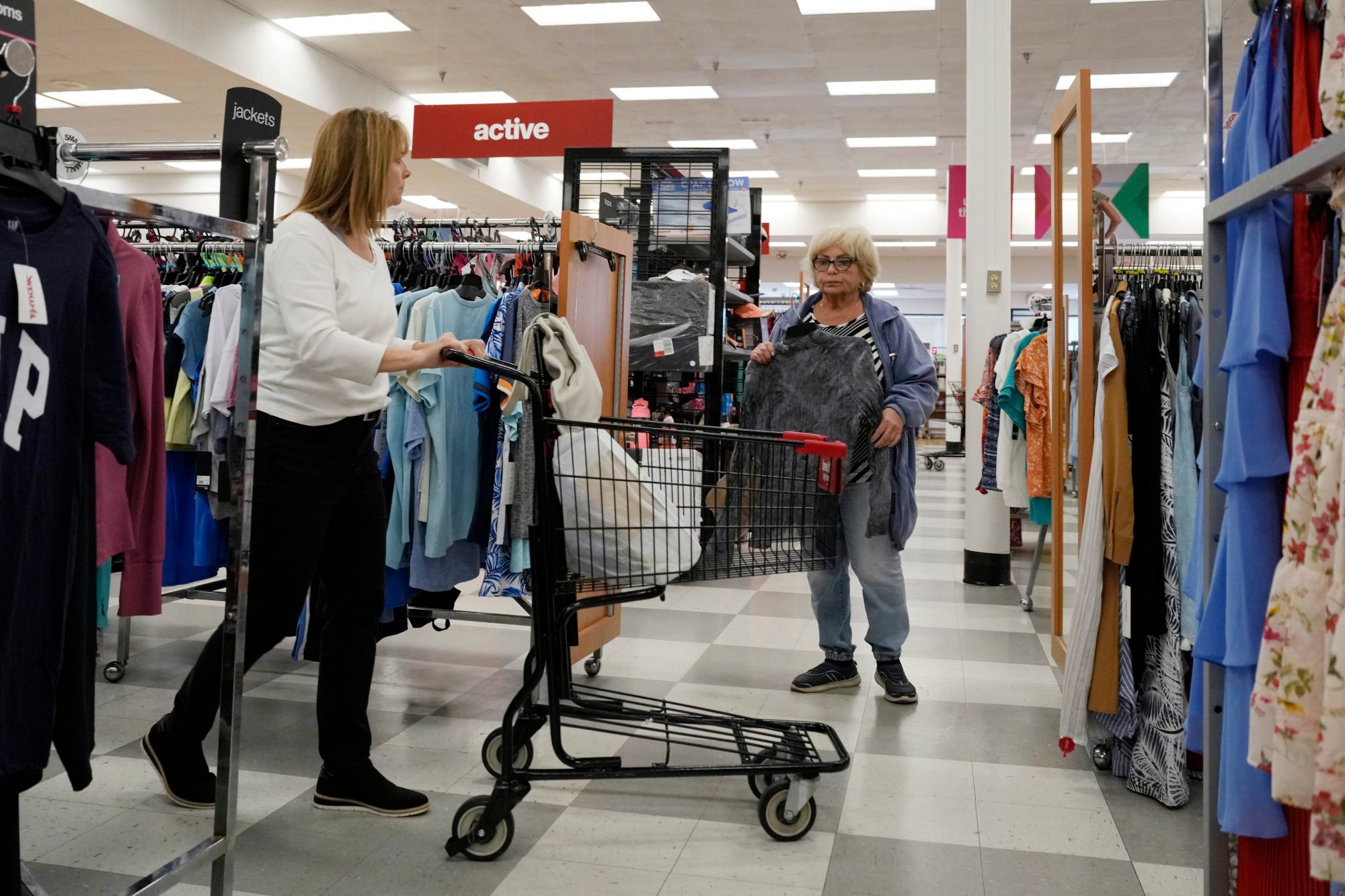 Customers shop at a retail store in Vernon Hills, Illinois, on June 12, 2023. Trends like remote work and e-commerce have resulted in dramatically lower demand for office and retail space. Photo: ` The same short-sightedness (or bias) that leads to an excessive focus on the problems of China's real estate sector leads to a failure to grasp the importance of these issues Record debt worldwide and rising interest rates. There could be another global financial crisis before interest rates fall.
Falling property valuations will be a major factor. As the IMF notes, commercial real estate prices remained “generally stable” during the Fed’s past rate hikes. It says that the difference in price behavior between recent and past monetary tightening cycles could be partly explained by “the steep pace of monetary tightening this time,” which “has contributed to the sharp rise in mortgage rates and mortgages backed by commercial mortgages. “Security spreads”.
Due to higher financing costs since the start of the tightening cycle and the decline in real estate prices, losses on commercial real estate loans increased. As U.S. banks implement stricter lending standards, available funds have become scarce.
Asia can only hope that the Fed decides the right time to cut rates
In addition, trends such as telecommuting and e-commerce led to lower demand for office and retail buildings and drove up vacancy rates. In these segments, prices have collapsed and loan default rates have increased, which is a cause for concern given the upcoming high refinancing volumes.
Meanwhile, the real estate market in parts of Europe is suffering from falling valuations and rising interest rates. A study by Swiss bank UBS examining 25 of the world's largest cities shows that real property prices fell by an average of 5 percent from mid-2022 to mid-2023 and that this trend is expected to continue.
The message to analysts and financial journalists, as well as investors and policymakers, is that the real estate market needs to be closely watched, and by no means just or even primarily in China.
Anthony Rowley is an experienced journalist specializing in Asian economics and finance
Comments are closed.