


- Non-farm payrolls report, leading indicators give mixed signals
- Most markets remain closed today so FX is the main game in town
- Wall Street rebounds after another round of soft data cementing rate cut bets
All eyes on the US payrolls
Investors are in for a whirlwind ride today as the latest US jobs report rolls out in a market lacking liquidity. Many traders are away from their desks for the Good Friday holiday and several markets remain completely closed, which may amplify any market reaction to the US jobs data.
Non-farm payrolls are forecast at 239k in March, while the unemployment rate is unchanged at 3.6%, close to multi-decade lows. Year-on-year wage growth is expected to have lost some momentum, but nothing dramatic. It is difficult to predict any surprises in this data as early employment indicators have given mixed signals.
ISM business surveys painted a picture of a job market that is beginning to lose steam, and the surge in jobless claims lends credence to that notion, but S&P Global surveys instead pointed to the fastest rate of job creation in six months and rising further wage pressure.
With markets currently pricing in the prospect of a final Fed rate hike next month as a 50-50 coin toss, this payroll report will be instrumental in shaping those expectations and deciding the fate of the dollar.
Impact on the market and outlook for the dollar
As US stock and bond markets remain closed today, The FX Arena will essentially be the only game in town and the tightness of liquidity implies that any moves in the dollar following the jobs numbers could be stronger than usual.
Rising bets that the Fed will be forced to cut interest rates before the end of the year have wreaked havoc on the dollar of late, and the buoyant mood in stock markets as the bank panic eased has also done the reserve currency no favours. Still, it’s difficult to rate the dollar negatively.
As the heartbeat of US economic data slows and the bond market screams that a recession is on the horizon, it’s not necessarily a death sentence for the dollar as most major economies are arguably in worse shape. Even when a recession originates in America, it’s quickly exported to the rest of the world, leaving no real haven for investors.
On balance, the dollar is down, but not out. Its status as the world’s reserve currency allows it to shine even when the US economy is weak and investors are hitting the “panic” button.
Gold consolidates gains, stocks rise
Gold prices have been on a run this week, surpassing $2000 with some momentum and managing to hold this region. Aside from speculation about Fed rate cuts, another driving force behind the meteoric rise of gold bullion was the People’s Bank of China, which increased its gold reserves for a fifth straight month in March.
Most likely, the People’s Bank of China is loading gold to diversify the country’s reserves away from the dollar and euro, amid fears these foreign exchange reserves could be frozen if the geopolitical atmosphere turns colder. Still, the fact that such a whale is lurking in the market bodes well for precious metals, especially when recession risks and rate cut bets remain in play.
Finally, Wall Street stocks staged a solid recovery yesterday after the latest round of initial jobless claims in the US hinted at a slowing job market and fueled speculation that the Fed is about to turn around. Stock markets remain closed today so there will likely be a price gap when they reopen Monday after the job count. 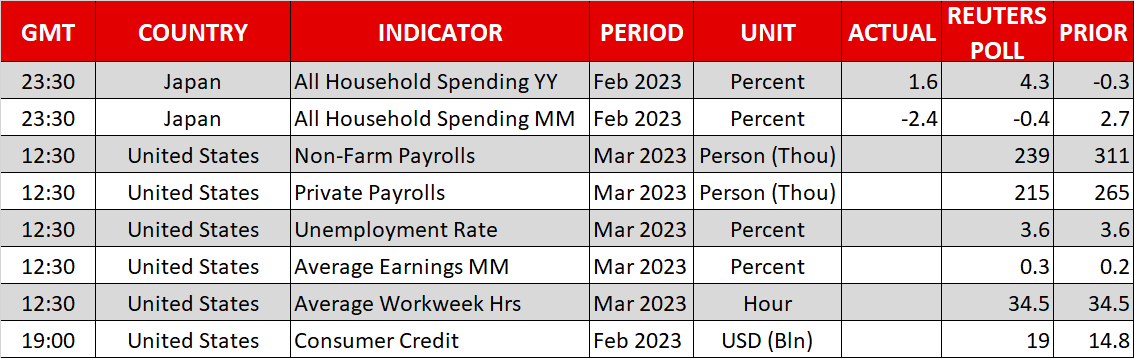
Comments are closed.