


Rangsarit Chaiyakun/iStock via Getty Images
Originally published April 4, 2024
By Paul Wightman
At a glance
- Naphtha futures trading volume increased 40% in 2023 and 2024 as commercial firms turned to futures markets to manage risks amid increased price outlook uncertainty
- European naphtha prices have fallen sharply compared to Asia, resulting in more European naphtha cargoes being shipped east
Futures trading in naphtha, a key raw material for the petrochemical industry that makes a variety of products from tires to detergents to fertilizers, rebounded sharply last year. However, imports to Asia were subdued in part due to weak economic growth in the main consumer country, China.
Exchange data showed that total trading volume of naphtha, which competes with propane as a petrochemical feedstock, rose 40% in 2023 across multiple markets. Hedging by commercially based companies entering the market to manage price risk led to the increase. According to the latest stock market data, futures volumes also got off to a strong start in 2024.
China is an important demand driver
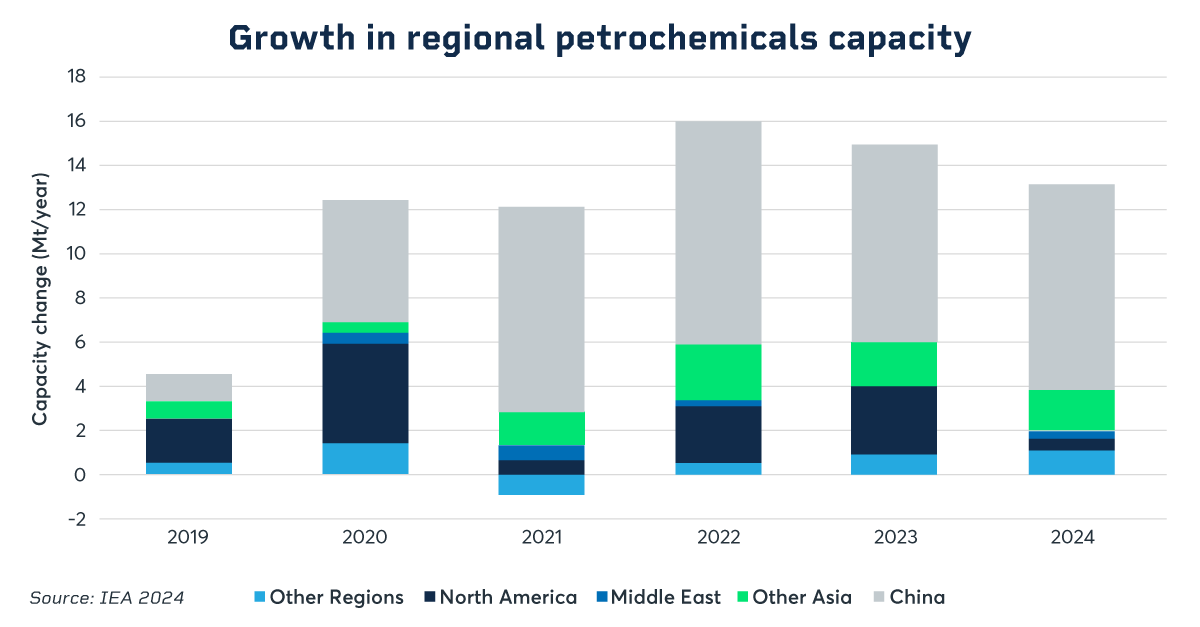
The Asian petrochemical sector is expected to continue to source larger quantities of naphtha, even if overall demand slows. A recent report from the International Energy Agency (IEA) said that China will remain a key driver of the naphtha market in the coming years due to its strong position in global petrochemicals trade.
The IEA estimates that China will build as much production capacity for ethylene and propylene – used in industry, automobiles and construction – as is currently available in Europe, Japan and South Korea. When this capacity comes online, China will require larger imports of products such as naphtha and propane.
Trading activity at some price ranges associated with naphtha, such as B. Propane, increased year-over-year, although U.S. propane exports to Europe fell slightly in 2023. One reason for this could be the widening spread, which brought more commercial paper onto the market for protection.

Weakness in the European market
European naphtha prices have fallen sharply compared to those in Asia, which has resulted in larger quantities of European naphtha cargoes being shipped east. At the same time, imports of naphtha and LPG cargoes from the Middle East and Russia have fallen sharply, partly due to the declining demand situation across Asia.
The latest trade flow data from Vortexa shows that while exports from Europe fluctuated month-on-month, overall volumes increased. Exports to Asia reached around 230,000 tons per month between August 2023 and March 2024. In the eight months up to and including July 2023, total exports to Asia from European ports amounted to around 110,000 tonnes per month.
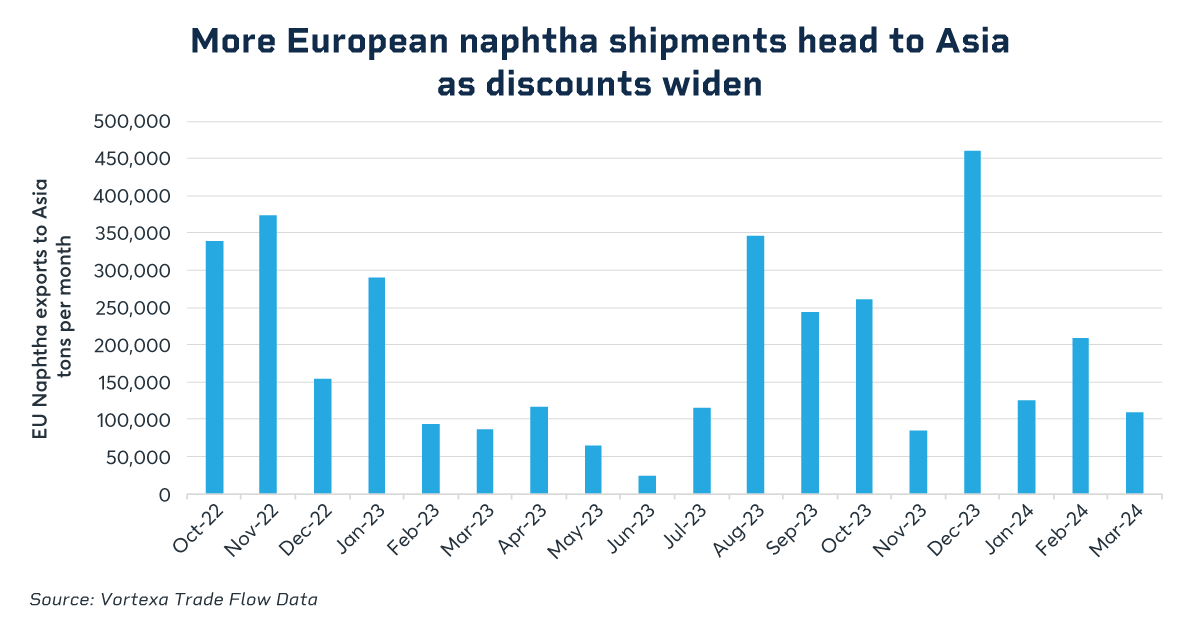
What is behind the increase in higher European freight flows to Asia? The weak oversupply of naphtha in the European market has caused the price to fall sharply compared to prices in Asia.
The difference between European and Japanese naphtha is a closely watched factor and a barometer of trade flows between the Atlantic basin and Asia. With European prices cheaper compared to naphtha in Asia, refiners have an incentive to export to clear some of the excess supply in the market.
European demand for products such as polymers, a key product of the construction industry, is likely to fall further due to expected slower economic growth following a series of interest rate hikes by the European Central Bank and the Bank of England to curb inflation. Argus Media believes that European petrochemical demand is unlikely to see significant growth in 2024.
European naphtha prices have typically traded at a discount to Japanese naphtha prices, and this has been particularly evident since the second half of 2023. One reason for this is, among other things, the relative strength of petrochemical demand in Asian markets. CME Group data shows the price of Asian naphtha was trading at a premium of over $25 a tonne to the European market, the highest in about 15 months.

Asia faces higher naphtha and LPG demand
The latest IEA report estimates that demand for naphtha and other petrochemical feedstocks such as liquefied petroleum gas (LPG) and ethane will be 1.7 million barrels per day above 2019 levels in 2024. The changes in Asia are expected to boost trade in light consumption markets such as propane, naphtha and gasoline elsewhere in Europe to ensure sufficient supplies are exported to the region.
Demand is turning south in Europe
The latest data from Eurostat shows a decline in the volume of European naphtha imports. Total naphtha imports to the EU-27 member states fell to 2.1 million tonnes per month, a significant decrease from the 4.2 million tonnes imported in May 2022. The weaker demand situation in Europe has been a factor in strengthening the East-West futures naphtha spread since the end of the second quarter of 2023. 
Naphtha crack spreads in Europe recovered in the second half of 2023 despite some weakness in underlying product prices. However, crude oil markets have traded between $70 and $80 per barrel for much of the past six months, leaving crack spread levels well supported. NYMEX data shows European naphtha crack spread futures have risen from lows of -$25 per barrel in 2023 to -$5.20 per barrel in March 2024.
An analysis from S&P Global Platts shows that demand for Asian naphtha is expected to increase from 2024 and beyond, in some cases exceeding total production volumes. This means that the supply/demand situation could worsen further in the coming months and may require further hedging of underlying commodity price volatility. Traders are turning to futures markets to manage the risk of a growing amount of export flows. Trading relationships with other products such as propane have also been more volatile, prompting market participants to use futures markets to manage risk for products linked to these alternative commodity markets.
Original post
Editor's note: The summary bullet points for this article were selected by Seeking Alpha editors.
Comments are closed.