
Meltdown in brick-and-mortar retail brings down another retailer: Joann Inc. files for bankruptcy three years after going public


The IPO allowed the PE firm that acquired Joann via an LBO in 2010 to dump the shares into the public's lap in March 2021.
By Wolf Richter for WOLF STREET.
It all came together in one fabulous package in today's bankruptcy filing by Joann Inc., a long-standing fabric and crafts retailer with about 850 stores in the United States.
It's what we've called the “brick-and-mortar meltdown” since 2017, in which hundreds of major retailers, from the largest on down, filed for bankruptcy and most were liquidated. And as icing on the cake, it's the stuff we've seen in our pantheon of imploded stocks since 2021.
Joann Inc. combines it all:
- A PE firm (Leonard Green & Partners) that acquired an established retailer 13 years ago in a $1.6 billion leveraged buyout (LBO), leaving the retailer suffocating under the mountain of debt that was its own had financed the buyout;
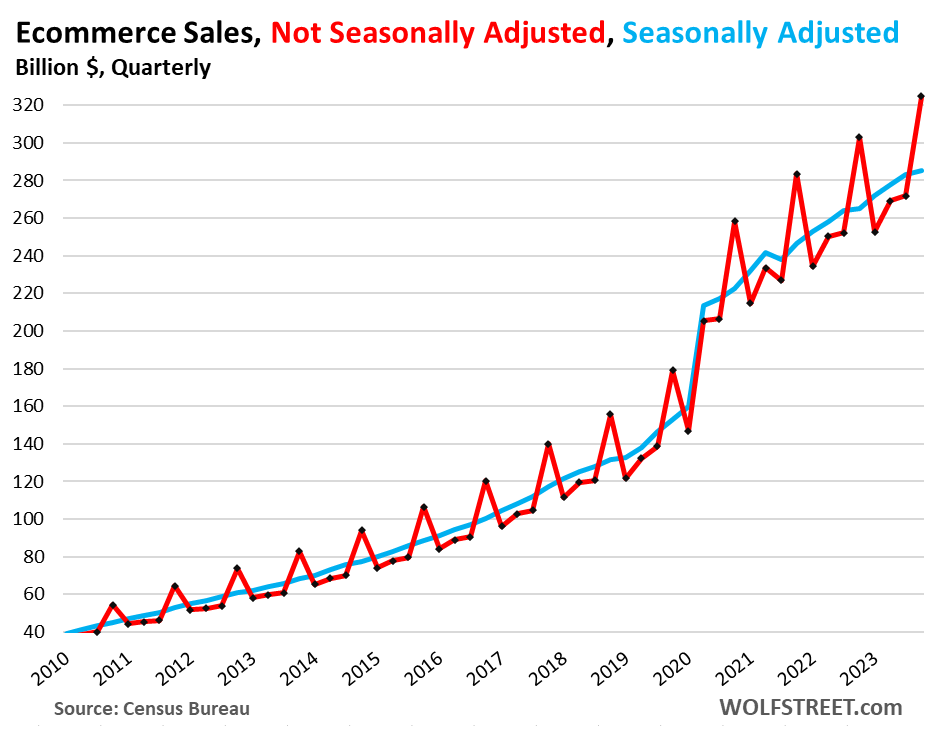
- Americans' shift to e-commerce, which then put pressure on sales in brick-and-mortar stores;
- A PE firm exit via an IPO at the height of the hype in March 2021 that dropped these stocks into the lap of the gullible public;
- Inevitably the stock collapse followed, wiping out those shareholders;
- And today, three years after the IPO, the bankruptcy filing begins the process of transferring ownership of the company from current shareholders to others, with shareholders getting nothing.
Joann Inc. announced today, after weeks of rumors, that it has filed a “prepackaged” Chapter 11 bankruptcy petition and that all outstanding shares will be canceled and that holders of the common stock will lose everything – they have already lost almost everything – and that certain creditors , PE firms and board members will receive the restructured company.
Even today, these worthless shares trade for around 18 cents. Later, the end users of these stocks, when they get tired of looking at the unsaleable item in their brokerage account, will have to ask their broker to remove these canceled stocks.
The company said in an SEC filing today that it entered into a transaction support agreement with the holders of its senior secured loan facility on March 15; and with PE firms Green Equity Investors CF, LP, Green Equity Investors Side CF, LP and LGP Associates CF, LLC; and with “certain current or former members of the Company’s Board of Directors”; and with “certain third-party financing parties who have made arrangements to do so.”
The company said its Chapter 11 bankruptcy filing today would provide for “a court-ordered reorganization pursuant to a pre-packaged joint plan of reorganization.”
The trigger for the bankruptcy filing was the company's default on two loans totaling $1.06 billion plus unpaid interest.
The transactions in the restructuring plan would result in:
- All issued and outstanding shares “will be canceled and destroyed without consideration.”
- The company will become a private company and will no longer report to the SEC.
- Long-term debt will be reduced by $505 million.
Stores would remain open during the restructuring and employees, suppliers, landlords and other trade creditors would be paid in full “in the normal course of business,” it said.
Retention bonuses for managers. Three executives would receive retention bonuses around September 2024, which the board approved on March 15:
- $535,740 to Christopher DiTullio (Executive VP, Chief Customer Officer, Member of the CEO Interim Office)
- $371,250 to Robert Will (Executive VP, Chief Merchandising Officer)
- $135,740 to Scott Sekella (Executive VP, CFO and member of the interim office of the CEO).
The DIP loan. To finance the company during bankruptcy proceedings, it has taken out a debtor-in-possession loan (DIP) of up to $142 million. The DIP Facility is secured by a senior lien on substantially all of the Company's assets.
All holders of the senior secured loan “have been (or will be) offered the opportunity to participate and fund their pro rata share of the DIP facility.” The DIP loans are priced at SOFR (currently 5.3%) plus 9.5% % interest paid per year. So about 14.8%.
The DIP facility consists of $107 million in “new money” loans; Outstanding trade payables of $25 million were converted to term loans; and up to $10 million through an uncommitted “accordion facility” that allows the company to add term loans.
The meltdown in stationary retail. It was tough being a brick-and-mortar retailer for years. Joann sells the kind of goods—yarns, fabrics, crafts, art supplies, sewing machines, etc.—that anyone can find anywhere on the Internet, not just on Joann's own site but from countless vendors, including cheap items straight from Asia on third-party platforms like Amazon and now Temu. The selection is endless online, the prices are easy to compare and it arrives directly at the buyer's home.
E-commerce is a structural shift in the way Americans buy such things. Americans still buy gas, groceries and new vehicles at brick-and-mortar stores, accounting for more than half of all retail sales, but the rest is shifting to e-commerce.
Walmart figured it out years ago and has become the second-largest e-commerce seller in the U.S. after Amazon and the largest grocery seller. But most other products in brick-and-mortar stores are declining at a slow-motion pace.
E-commerce will continue to destroy brick-and-mortar retail chains and retail properties, causing devastating damage to commercial real estate as it has for years.
Do you enjoy reading WOLF STREET and would you like to support it? You can donate. I appreciate it very much. Click on the beer and iced tea mug to find out how:

Would you like to be notified by email when WOLF STREET publishes a new article? Login here.

Comments are closed.