


So 2023 is off to a good start for stock market investors after a terrible 2022
In this podcast, Edmund Shing discusses the connection between the unprecedented events of 2022 and the difficulties in financial markets.
1) What was the main trigger of the annus horribilis for the financial markets?
2) Why does unexpected inflation cause so many problems in financial markets?
3) How bad was last year?
4) What were the challenges for central banks?
5) “Things can only get better”: Is there hope for 2023?
summary
-
Equity and bond markets benefit from weaker inflation data
-
Weaker employment, wage dynamics helping
-
Global equity markets excluding US stocks generally trending up, above the 200-day moving average
-
Focus on emerging markets again: Hong Kong/China, Mexico, Indonesia
-
Sectors with strong momentum: European/UK banks, insurance, gold and copper mining, US and European industrials
How persistent can the post-2022 rally be?
Can this go on? In my view, the key factor right now is inflation and related wage growth in the US
Inflation rates are falling significantly from admittedly very high levels, both in the US, which has been happening for some time, but now also in the eurozone.
Spanish inflation falls quickly following Eurozone
Source: Steno Research Bloomberg
Spanish inflation appears to be two months ahead of euro zone inflation. I can see from the chart h above that Spanish inflation has come down quite a bit over the last few months. This suggests that eurozone inflation should follow in the very short term.
Friday’s good news on the US wages and jobs front
In addition, the second factor associated with inflation is, of course, wage growth. Again, we are seeing progressively better news in the US.
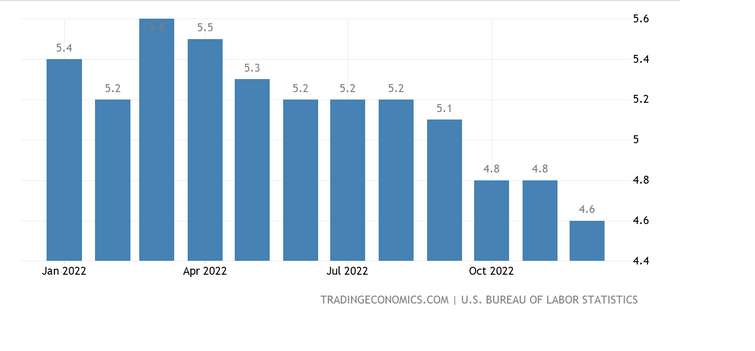
The first data point to note is that average hourly wage growth, which is a measure of wage growth, has been steadily declining from its highs. Yes, just under 5% are still registered. Which is of course uncomfortably high for the US Federal Reserve. But it’s going down, and steadily.
Average hourly wages in the US continue to decline
Comments are closed.