
Hog Outlook: Early Signs Of Bottom In Lean Hog Futures Market, Hog Industry In US & Canada Post Losses


Analyst Jim Wyckoff provides updates on the global swine industry
June 2, 2023

6 minutes reading
Lean hog futures price action this week could be forming a potential “V” bottom reversal on the daily price chart. However, with summer month contracts again trading at premiums to the spot index, the spot market needs to be strengthened to build sustained buyer interest in futures. The latest official listing for the CME Lean Hog Index is $80.08. The recent rise in wholesale pork prices is encouraging bulls amid a likely pick-up in US consumer demand for pork during the barbecue season. The seasonal price increase in wholesale pork lasted until mid-July in the past. It is likely that the cash guzzler and futures markets have hit seasonal price lows and that prices will trend sideways to higher in the coming weeks.
The $54 billion US pork industry is being squeezed by the forces of supply and demand
Years of rapid expansion has left the sector oversupplied as demand slacks, costs rise and new regulations threaten. The Wall Street Journal reports that hog farmers are under pressure and some are even being put out of business as they lose the most money in decades. The impact is cascading down supply chains as companies from pig farms to processors scale back operations and meat processors like Smithfield Foods, Tyson Foods and JBS struggle with falling profits. The turmoil is the result of rapid changes in the markets. Booming foreign demand prompted many producers to expand their operations, particularly after African swine fever devastated pig populations in China. Trade wars have hurt this business, and more recently the strong US dollar has made US pork more expensive abroad.
China’s sow herd declines in April but is larger than last year
According to the country’s Ministry of Agriculture, the sow herd in China fell 0.5% in April to 42.8 million heads. However, it was still 2.6% larger than last year.
Follow-up to California’s Prop 12 and Pork
Following a recent Supreme Court ruling on California’s Prop 12 and pork, the local Massachusetts meat industry is concerned about a potentially significant increase in pork prices due to the possible passage of animal welfare legislation in 2016. That legislation could take effect as early as mid-July and would make it mandatory that all “whole pork” products sold in the state must meet certain animal welfare standards.
Supreme Court Ruling: The Supreme Court upheld a California statute that requires pork products sold in the state to meet certain pigpen size guidelines. A similar law was passed in Massachusetts seven years ago and is now set to go into effect.
Impact on Pork Products: Massachusetts law applies to any uncooked “whole pork” product, such as bacon, ham, chops, ribs, roasts, or chops, that is made entirely of pork. However, combo pork products such as hot dogs are not included. Local pork sellers therefore expect pork prices to rise significantly.
Roots of the law: The Prevention of Farm Animal Cruelty Act was overwhelmingly passed by Massachusetts voters in 2016. It established certain animal welfare standards for eggs, veal, and pork sold in the state. However, the pork regulations have been delayed due to legal challenges to a similar law in California.
Pork Industry Challenge: Industry groups argue that complying with the new standards will increase production costs and thus the price of pork. It is estimated that only 4% of US pork currently meets the new Massachusetts and California standards.
Jim Monroe, a spokesman for Smithfield Foods, which slaughters 30 million hogs annually and is the country’s largest pork producer, said the company spent $360 million to convert its 400 company-owned farms to what it calls a group housing system, sows provides more space, which was first introduced in 2017. While some animal rights groups hailed the Smithfield system as more humane, others contend that gestation crates remain an important part of Smithfield’s operations.
Massachusetts timeline: Local pork vendors await clues on how to proceed. The attorney general’s office said any request for a rehearing on California law must be submitted by June 5. If no request is made, the Supreme Court will make its final judgment in the week of June 12. That would then start a 30-year lawsuit. The deadline for the pork ordinance to come into force is July 12.
A spokeswoman for Attorney General Andrea Campbell said her office is “reviewing the decision and will provide updates when we have more to say about next steps.” So far, the legislators have kept a low profile on any legislative corrections.
State Senator Jason Lewis, who supported the Massachusetts bill, said in a statement that he “strongly urges that this legislation go into effect and be enforced as soon as possible.” But even as restaurants, grocery stores, and food banks wait for clues, they are preparing for the impact.
Impact on low-income households: Implementation of the law could result in pork prices nearly doubling, which could disproportionately affect those near or below the poverty line. Many immigrant groups and food banks rely heavily on pork, raising concerns about accessibility and affordability.
Response from supporters: Supporters of the law argue that it reflects public opinion against the inhumane treatment of farm animals. They acknowledge there could be some price implications but believe voters were aware of this when approving the measure.
Preparing for the Act: Restaurants and food service establishments in Massachusetts are preparing for the potential impact of the law and are considering some price increases and changes to their menus. However, advocates believe pork producers will need to adapt to these changes as consumers increasingly demand ethical food.
The pork sector, particularly in Canada, faces a difficult road to profitability
This is due to several unfavorable conditions, including declining domestic demand, reduced export opportunities and possible animal welfare regulations in the US, which could result in lower prices. In an interview with RealAg Radio host Shaun Haney, Christine McCracken, senior animal protein analyst at Rabobank, says pork producers are currently suffering losses of $40 to $50 per capita. Although feed costs have slightly improved, the high production costs and price pressure may require measures to reduce production.
After experiencing high demand during the Covid-19 pandemic, the industry now faces reduced consumption and oversupply in a post-pandemic environment. McCracken states that supply currently exceeds demand and that this imbalance will take time to correct.
Export markets don’t appear to be offering any significant relief from the pork glut, though McCracken doubts consumers will change their protein preferences significantly. Despite strong exports due to reduced pork production in regions like China and Europe, global economic issues such as inflation and economic slowdown could reduce pork demand.
Additionally, California’s recently approved Prop 12 animal welfare initiative could disrupt domestic markets. The law, which sets out the space requirements for livestock in production systems, requires that all pork sold in California must be produced in compliance with its regulations. Given that a significant portion of current pork production does not comply with these new regulations, the industry could be swamped with excess pork unsuitable for export or shipping to California. This could lead to additional challenges for producers.
Probable high-low price trading ranges for next week:
August Lean Pork Futures – $75.00 to $85.00 and trending sideways higher
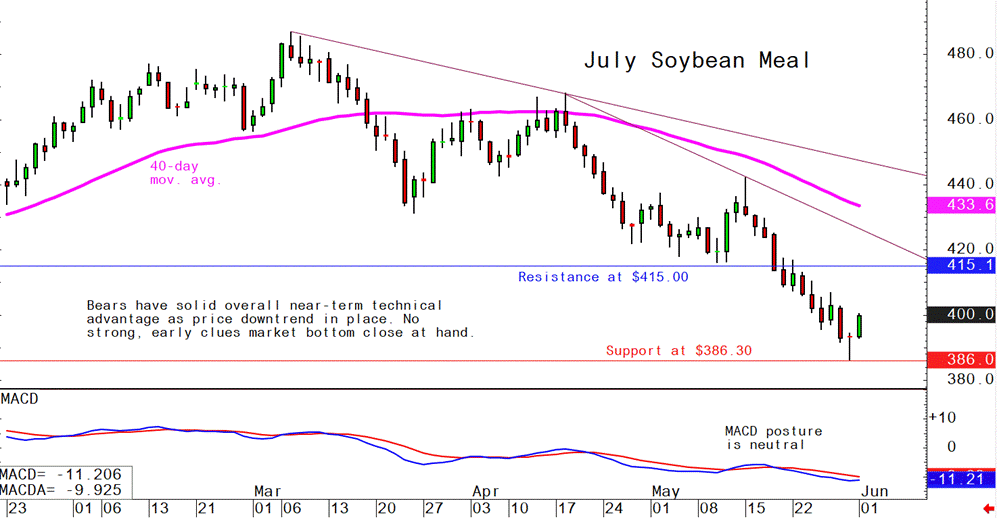
Soybean Meal Futures for July: $386.30-$415.00, trading sideways
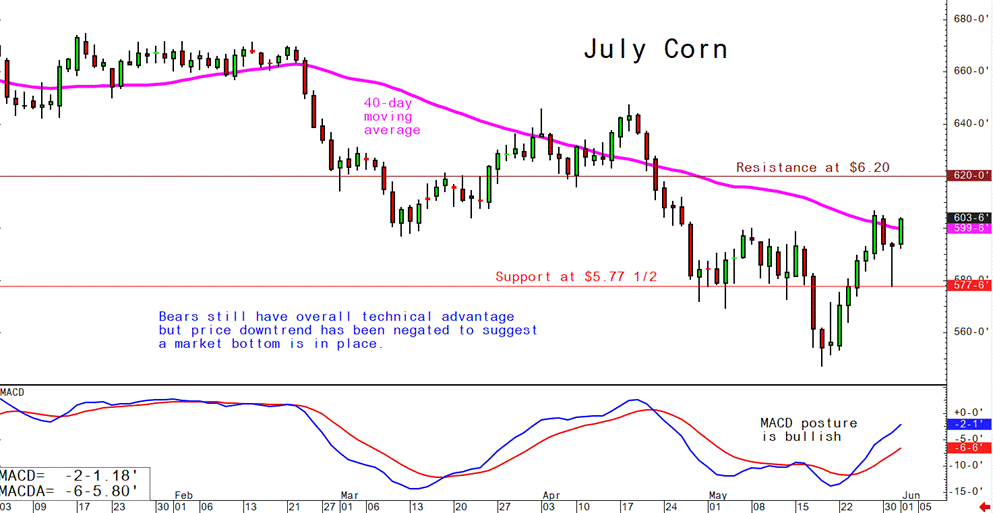
July Corn Futures – $5.85-$6.15 and a sideways bullish bias
Current analytical daily charts for pork, soybean meal and corn futures

Comments are closed.