


Here it is from the horse’s mouth. The RBA is now forecasting 6.25% inflation through June 2023 and more than half of that is the energy cartels!
Additionally, real income losses will continue into 2023 as price increases continue. Check out the shocking real wage forecast:
In other words, if Albo’s cowards don’t do something about the energy cartels, they will bring about the greatest drop in living standards in living memory.
It will make the coalition’s lost decade look like a picnic, as more than double the loss in purchasing power will seep through more than a third of the time.
Why? The RBA makes it very clear with a breakout section of “Special Interest”:
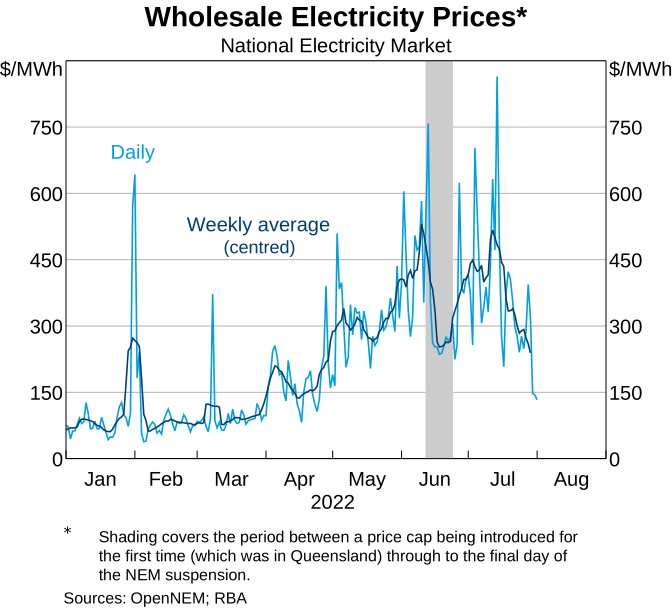
Wholesale electricity prices on the national electricity market (NEM) have risen sharply over the past six months, and in June and July were around four to five times higher than at the beginning of the year (Graph A.1). While futures markets suggest that wholesale electricity prices will fall in the coming quarters, they are likely to remain elevated compared to 2021. Wholesale gas prices are also significantly higher than a year ago.
These higher wholesale prices are passed through to retail electricity and gas prices for households and businesses over time, increasing consumer price index (CPI) inflation. Such price hikes have a direct impact on inflation, as these two items account for about 3½ percent of the CPI basket. They also have an indirect impact on inflation as businesses gradually pass these higher costs on to consumers through higher prices for goods and services.
Diagram A.1
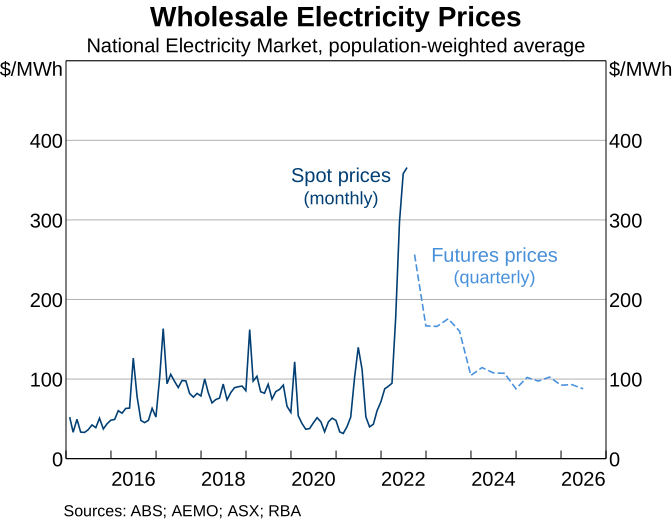
A combination of factors has caused wholesale electricity prices to rise sharply
The NEM is the wholesale market through which producers sell electricity and retailers buy electricity. Power producers place bids in the NEM, signaling how much power they are willing to supply and at what price; The generators with the lowest supply are then selected to generate electricity to meet demand. The wholesale electricity price – or “spot price” – is the offer from the selected producer with the highest bid. NEM operates in Queensland, New South Wales, the ACT, Victoria, South Australia and Tasmania. Western Australia and the Northern Territory each have separate power systems and regulatory regimes.
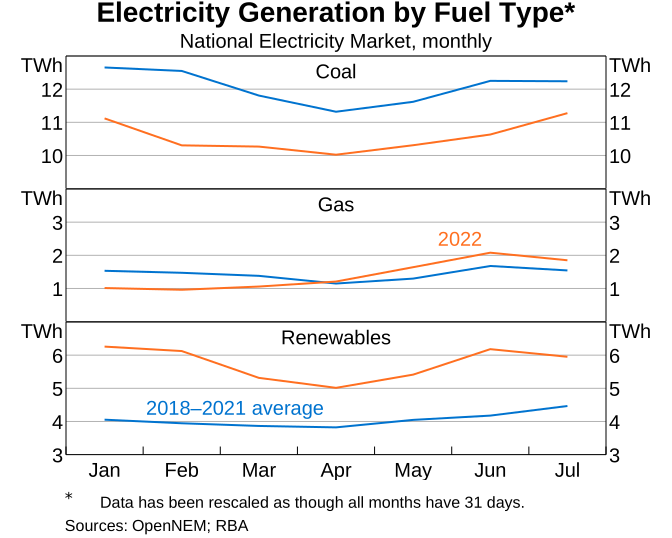
Around 60 percent of the electricity generated in the NEM comes from coal power. For example, disruptions at several large coal-fired power plants have put pressure on the power supply in recent months. A number of plants have been offline for the past few months, with some experiencing unplanned maintenance issues. Other power plants produced less electricity than usual due to a combination of factors, including difficulties in accessing sufficient coal due to supply chain issues and staff absenteeism due to illness, and/or production at some coal mines being disrupted by rainfall and production difficulties. As a result, power generation from coal in 2022 was significantly lower than in recent years (Graph A.2).
Diagram A.2
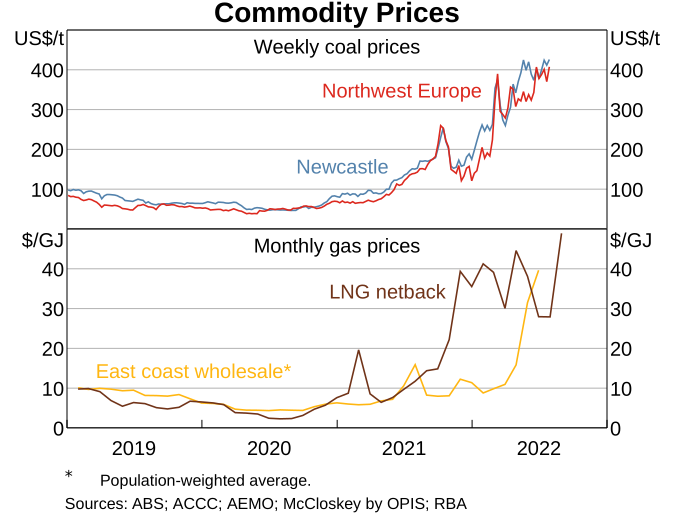
Another factor that has pushed electricity prices higher is the sharp rise in spot prices for domestic and international thermal coal since the beginning of the year from already high levels (Graph A.3). While many coal-fired generators source coal through long-term contracts or from their own mines, some source coal from spot markets. Additionally, producers overall have been sourcing a larger share of coal from the spot market recently due to disruption in usual coal supplies. As a result, producers have increased the price at which they are willing to supply electricity, causing prices in the NEM to rise.
Diagram A.3
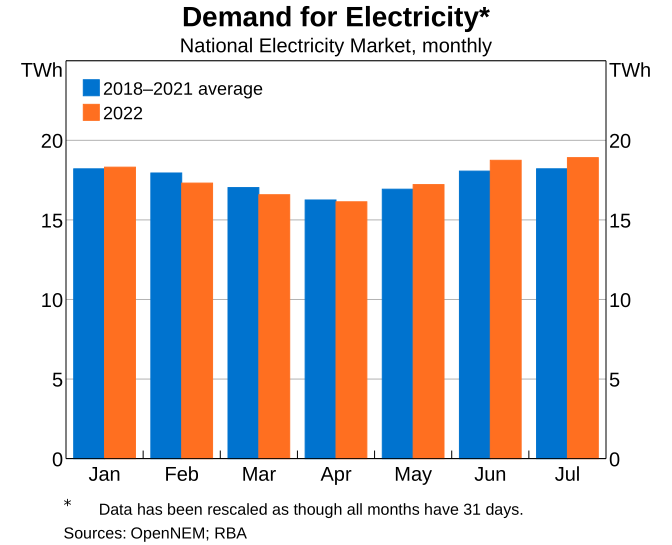
Meanwhile, aggregate demand for electricity from the NEM in May, June and July this year was slightly higher than at the same time in previous years (Graph A.4), coinciding with below-average temperatures on the east coast.
Diagram A.4
Lower coal-fired generation and higher electricity demand in NEMs has led to greater use of more expensive gas-fired power plants to meet demand. The cost of gas-fired power generation in early 2022 was almost double what it was in early 2021, with domestic wholesale gas prices rising from ~$6/GJ to ~$11/GJ over the year (for comparison, export parity prices were around $40/ FY early 2022). However, the most significant price jump occurred in early May, when rising demand for gas-fired power generation led to a sharp rise in domestic wholesale gas prices, which reached $40/GJ in the second week of May and have remained at that level since (Graph A.3). This higher price for wholesale gas input has resulted in even higher generation costs for gas-fired electricity and hence higher wholesale electricity prices.
Temporarily lower than expected renewable capacity could also have contributed to the rise in wholesale electricity prices. Overall, renewable electricity generation has been higher in every month of 2022 than in previous years so far, mainly due to an increase in capacity. However, electricity generation per installed capacity from renewable sources was lower than in previous years, partly due to unfavorable weather on the east coast. This might have put further pressure on wholesale electricity prices if market participants had expected renewable energy producers to supply more electricity to the NEM. The below-expected performance of solar systems on the roof may also have led to households and companies demanding more electricity from the NEM in recent months.
Wholesale electricity prices peaked in mid-June (Graph A.5). This prompted the Australian Energy Market Operator (AEMO), which oversees the NEM, to impose a price cap in some states for a few days. Subsequently, some generators withdrew from supplying electricity until requested to do so by AEMO, with the liaison pointing out that the price cap of $300/MWh for some generation sources was below production costs. As a result, the operation of the NEM became difficult and AEMO suspended the NEM between June 15 and 24. Since then, NEM has been working as usual and wholesale electricity prices are still high.
Diagram A.5
Higher wholesale prices will translate into higher prices for households and businesses
Household electricity and gas prices are expected to rise significantly following the recent rise in wholesale prices in the September quarter. However, most of the impact of these higher prices on the CPI will be delayed until the December quarter as some state governments implemented energy rebates.
Wholesale energy costs account for about a third of household electricity and gas bills as they directly impact retailer costs. The pass-through from wholesale electricity prices to retail prices tends to be gradual, reflecting the fact that most retailers hedge at least part of their exposure to fluctuations in wholesale prices. Additionally, the passing-through of these higher costs to the prices paid by customers is impacted by regulatory decisions on the default rate customers are charged – commonly referred to as a Default Market Offer (DMO) or standing offer – unless they see each other order and get a market offer with a more competitive price. Australia’s energy regulator increased standard electricity bids 7-18 percent in New South Wales, South East Queensland and South Australia from 1 July 2022. The Victorian and Tasmanian regulators also announced increases of 5 and 12 percent respectively in their standard offerings from 1 July 2022. Around 10 percent of private customers in these regions use standard offers, while the remaining 90 percent use standard offers. Market offers were previously valued at a significant discount to standard offers; However, this rebate has recently been at least partially eroded as price increases for Market Offers in the East Coast States and South Australia have generally been greater than increases in Standard Offer prices. Meanwhile, retail electricity prices in Western Australia rose 2½ per cent from 1 July 2022.
Contacts within the Bank’s liaison program generally expect further significant increases in retail electricity prices in 2023. This is mainly because the recently announced regulated price increases for 2022 were decided before the recent increase in wholesale prices and wholesale prices are expected to remain elevated. As such, a further increase may be required to allow retailers to cover their costs.
Electricity and gas prices for companies will also increase. Larger businesses are likely to face heavier electricity and gas bills than smaller businesses and households over the next year, as wholesale prices account for a larger portion of their energy bills (due to higher consumption). However, most large companies have multi-year, fixed-price contracts for electricity and gas, and so higher wholesale prices are passed on incrementally as contracts roll back. These expected price increases are likely to have a further indirect effect on inflation as companies pass energy cost increases through higher prices to their customers.”
The RBA leaves are not falling for nothing. The bank needs and wants help in inflating the energy cartel.
Albo can prevent and reverse all of this with the stroke of a pen. All he has to do is tight domestic restraint or an export levy/super-profit tax measured by pre-Ukraine prices to crush the gas and coal cartels and real labor incomes will recover in the coming year fall back to parity.
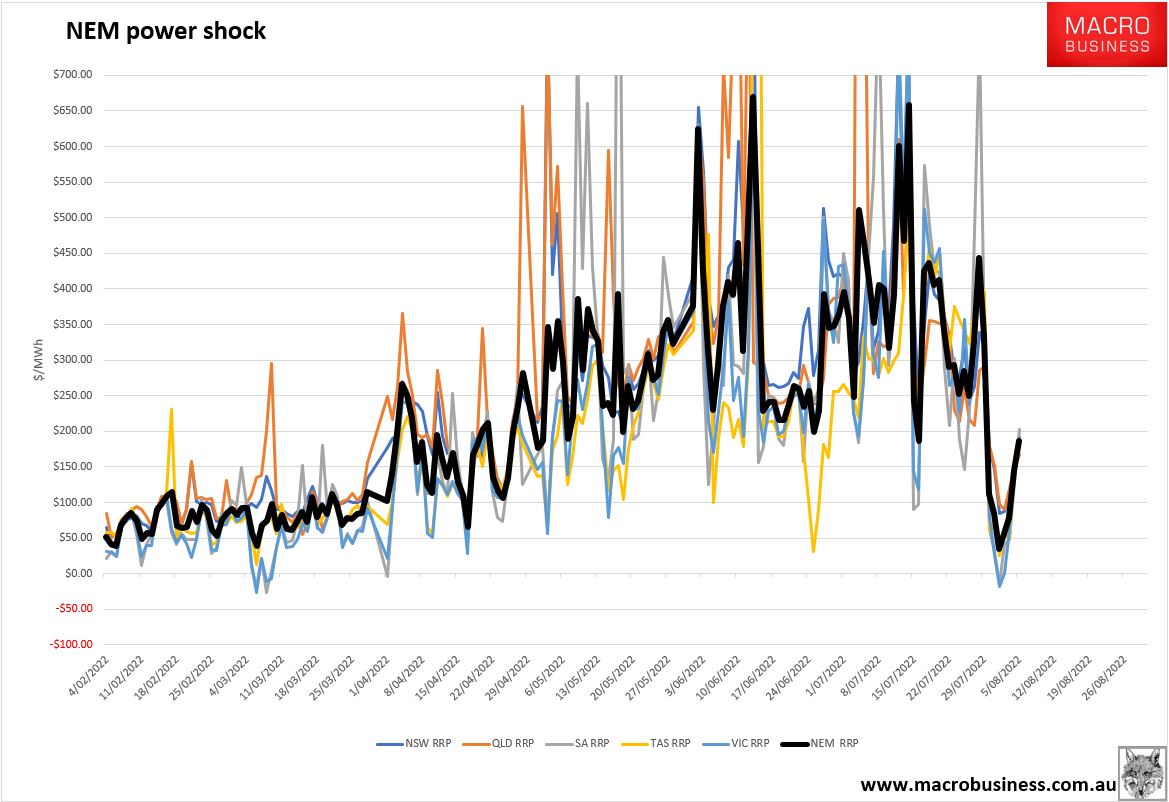
The government must act quickly. Every day it hides out of fear, the gas cartel grows bolder and price spikes translate into more and more retail prices. Last week’s relief in gas prices is now fading as the East Coast average rises to 17 GJ and NEM prices follow like clockwork:
It’s now perfectly clear that the RBA believes it has no choice but to push those price hikes higher, even though it can’t influence them. That means other prices will crash as compensation. Especially asset prices and real incomes.
If the Albanian government cannot act effectively here, it will prove its economic incompetence in the first few months of its term.
In fact, it will illustrate that she is neither “Leftist”, nor “Labour” nor “Australian” in any identifiable way.
 David Llewellyn-Smith is Chief Strategist at MB Fund and MB Super. David is the Founding Editor and Editor of MacroBusiness, and was the Founding Editor and World Economy Editor of The Diplomat, Asia Pacific’s leading geopolitics and business portal.
He is also a former gold trader and economic commentator for The Sydney Morning Herald, The Age, ABC and Business Spectator. He co-authored The Great Crash of 2008 with Ross Garnaut and was editor of the second Garnaut Climate Change Review.
 Latest posts from houses and holes (See everything)
YOU MIGHT ALSO BE INTERESTED
Comments are closed.