


FLASH FRIDAY is a weekly content series covering the past, present and future of capital markets trading and technology. FLASH FRIDAY is sponsored by Instinet, a Nomura company.
The FTX fiasco has rocked the cryptocurrency sector for the past few weeks. The bottom so far was when FTX CEO Sam Bankman-Fried (SBF) said its exchange and some 130 affiliated companies had filed for Chapter 11 bankruptcy protection.
Nigel Green
Binance CEO Changpeng “CZ” Zhao tweeted that his firm could come to the rescue by signing a non-binding deal to buy the non-US portion of FTX, with both SBF and CZ confirming the agreement via Twitter. However, the takeover was not guaranteed and Binance had backed out of the deal. “The sector has been rocked by these recent events,” commented Nigel Green, CEO of deVere, one of the world’s largest independent financial advisory, wealth management and fintech organizations.
Later, Binance CEO CZ said that he plans to create a global industry body for crypto companies. “He has announced his intention to create an industrial recovery fund to help companies that are experiencing a liquidity crisis,” Green commented.
“Crypto doesn’t need saviors in the form of business leaders with their own interests at stake,” he said.
“However, what crypto needs is a strong regulatory framework that needs to be established and approved at the international level,” Green said.
“Cryptocurrencies in any form are here to stay – and the market will only grow. Therefore, cryptocurrencies need to come into the regulatory tent and be subject to the same standards as the rest of the financial system,” he stressed.
 Lionel Rebibo
According to Trakx CEO Lionel Rebibo, the ongoing impact of FTX contagion is not yet fully understood. “Many call the failure of FTX the ‘Lehman moment’ of the crypto world,” he pointed out.
To prevent another fallout, according to Rebibo, exchanges should try to separate their assets from the assets of their users as much as possible.
“While this cannot be achieved with 100 percent accuracy, the commingling should be mitigated as much as possible and oversight of the management of these assets should be rigorous,” he said.
Additionally, Rebibo said that private keys should not be managed by the exchange itself: “On many exchanges, including FTX, these assets are typically invested in omnibus accounts with very lax terms and conditions, making these assets only indirectly owned .”
Using a third-party custodian for user assets and keys provides an additional buffer that would reduce risk for retail investors, he added.
He further commented that proving reserves is unlikely to solve the problem. Exchanges and crypto-asset firms will likely need external scrutiny for the problem to be truly resolved, and it will likely take months or even years for regulations to catch up with the market, Rebibo said.
“We understand that many exchanges that ‘show’ evidence of reserves are not properly reporting it,” he added.
Rebibo also mentioned that transparency should be a key goal for the industry, but “again, this will take time to be implemented”.
 David Wells
Enclave Markets CEO David Wells added that the FTX collapse underscores even more the need for clear and sane regulation, particularly in the US.
“This will be a great time/opportunity for lawmakers to provide the industry with a regulatory framework that promotes consumer safety and protection while preserving the innovative edge that the US has compared to the rest of the world,” he noted .
Wells said trading platforms should be built with transparency and fairness in mind and designed for the many, not the privileged few.
He also said exchanges should be governed by code written specifically to prevent front-running, abuse of user funds, stop-loss hunting and other malicious behavior.
Finally, according to Wells, exchanges should leverage remote attestation so that no individual actors (including trading firms) have preferential access to the flow of orders and that there is no single point of failure.
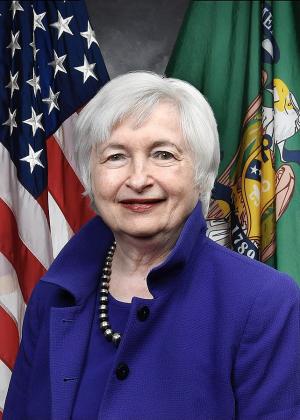 Janet L Yellen
Regarding recent developments in the crypto market, Treasury Secretary Janet L. Yellen said that the recent failure of a major cryptocurrency exchange and the unfortunate impact it has had on crypto asset holders and investors “demonstrates the need for more effective oversight of cryptocurrency markets “.
According to Yellen, the Treasury Department has been working with its regulatory partners over the past year to identify risks in crypto markets through the President’s Working Group on Financial Markets and in response to the President’s Executive Order on Digital Assets.
“Some of the risks we identified in these reports, including the commingling of client assets, lack of transparency and conflicts of interest, were at the heart of the crypto market tensions observed over the past week,” she commented.
“We have very strong investor and consumer protection laws for most of our financial products and markets designed to address these risks,” she added.
Where existing regulations apply, they must be rigorously enforced for the same protections and principles to apply to crypto assets and services, Yellen said.
She added that the federal government, including Congress, must also act quickly to fill the regulatory gaps identified by the Biden administration.
In terms of financial stability, the impact of events on crypto markets has been limited, but a recent report by the Financial Stability Oversight Council, chaired by the Treasury Department, warned that further linkages of the traditional financial system and crypto markets could raise broader financial stability concerns .
“It is important going forward that we do what is necessary to address these worrisome risks and take steps to protect consumers and promote financial stability,” Yellen said.
Enclave Markets’ Wells added that 2023 will be a big year for innovative regulation in the crypto industry.
In the meantime, it is very important to focus on educating policymakers in understanding the benefits of decentralized platforms while addressing the many nuanced issues between Tradfi and Defi, he stressed.
“We may see different reactions from different regulators, but consumer protection is likely to drive the upcoming regulatory agenda,” he concluded.
Comments are closed.