


Welcome to the second part of Czapp’s course on futures markets.
In the first episode We’ve looked at what futures markets are and what goes into a futures contract. In this second installment, we examine how futures markets are being used to facilitate global trading and how they can be used as a tool to speculate on commodity prices.
In the final part of this series, we will look at the futures contracts used to buy and sell sugar.
Use of a futures market to reduce price risk (hedge)
Futures markets are most commonly used by participants only as a price risk mitigation tool, which means that the physical delivery of the commodity outside of the futures market is organized separately. In this way, much global trade is facilitated.
In this case, the futures contract is used to hedge (protect) against adverse price movements of the physical commodity. Since the prices of the commodity in the physical market and in the futures market are correlated (though not perfectly):
The price risk of buying and selling on the physical market can be mitigated by taking the opposite position on the futures market (buy physically, sell futures and vice versa).
Cz works on behalf of both commodity producers and consumers to mitigate this price risk, giving our customers the ability to secure a price they are happy with, at a time that suits them.
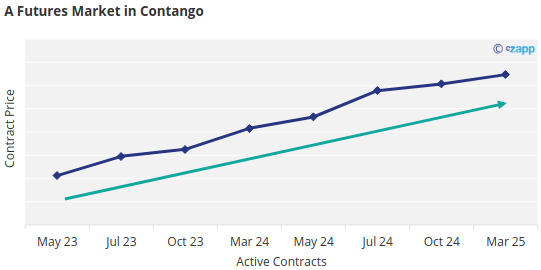
Typically, producers would try to lock in a price when prices are high nearby, or lock in longer-term coverage when the futures market is in contango (when the price is higher for contracts that expire later in the future).
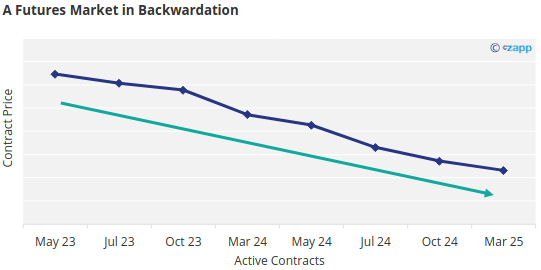
Consumers would typically try to lock in a price when prices are low nearby, or lock in longer-term cover when the futures market is in backwardation (when the price is lower for contracts that are further in the future). expire in the future).
An example of a perfect hedge
To explain how this process works, let’s say You are a sugar producer (the process works the same way for a consumer).
It is currently January and You Have 10,000 tons of physical sugar that you want to sell for shipping in October-November.

Consumers may not want to enter into a contract your Sugar so far into the future as they could lose the potential to buy sugar at a later date at a cheaper price.
Instead of this, You Contact Cz to facilitate the sale of your sugar. Cz will search the futures market for the futures contract closest to the ship date You want, in this case the October futures contract. This contract gives You an opportunity to secure a sale at your desired price.

With this, Cz agrees on a fixed price that works You To buy your 10,000 tons of sugar, let’s say we agree on $400/ton.

Cz has now purchased 10,000 tonnes of sugar which will not be shipped for many months leaving us exposed to market volatility until the October/November shipment date.
To mitigate this price risk, Cz will go to the futures market and sell 200 lots (1 lot equals 50.8 tons) of the October 2022 futures contract, let’s say this was reached at $350/ton.

Fast forward to May, a buyer for the sugar You sold to us has become available. Consumer B would like to buy 10,000 tons of sugar for shipment in October-November.

Again, Cz would go to the futures market to find the most relevant futures contract for an October-November ship date. This would still be the October 2022 futures contract used as the reference price.

Prices have been falling since January, so Cz agrees to sell the 10,000 tons of sugar to Consumer B at $300/ton, a price that works for them.

To mitigate price risk, Cz will enter the futures market as before and buy 200 lots (10,000 tons) of the October 2022 futures contract, as prices have fallen this has been reached at $250/ton.

therefore had You waited until May to sell your sugar because if prices had fallen you would have lost $100/mt for the 10,000 tons of sugar you were trying to sell, that’s $100,000 that hasn’t been reaped since then You would have been exposed to price fluctuations.
For Cz by buying your sugar at You at 400USD/t then sale a few months later consumer B at only $300/ton, we take that loss instead.
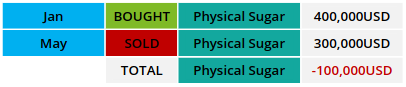
However, since Cz, in addition to the sales that we made on the physical market, also took the opposite positions on the futures market, the situation is quite different, the price risk is mitigated (hedged).
By selling 200 lots of futures contracts at $350/ton and buying 200 lots of futures contracts a few months later at $250/ton, Cz has made a profit of $100/ton, or $100,000 in the futures market.
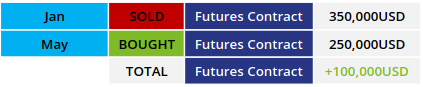
This fully offsets the losses we made on physical sugar delivery, keeping Cz at breakeven, this is an example of a perfect hedge.
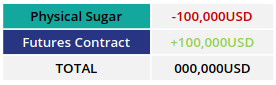
This means that since Cz can use the futures markets to mitigate price risk when buying and selling physical sugar, You you can set a price at a level you are happy with and at a time that suits you.
Of course, by using the futures market in this way, Cz has to remember to close all futures contracts before expiration to avoid having to deliver/receive the commodity through the futures market as well.
Using a futures market to speculate
Futures markets are also used by financial firms to speculate (bet) on the direction of the price movement of the underlying commodity in order to make a profit. This is a risk-seeking strategy.
Speculators will use the futures market like a stock market, this can be observed from the raw sugar futures prices and the number of long positions held by speculators in that contract, they are quite strongly correlated:
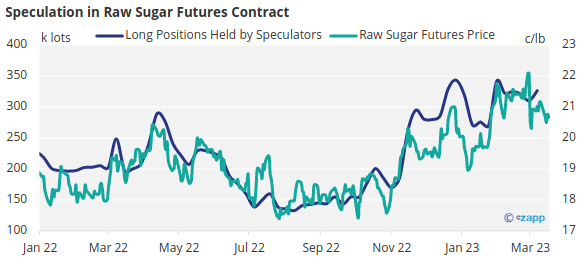
The difference between speculating in a futures market and a stock market is that positions must be closed out or rolled over to the next contract before they expire. A bank or hedge fund definitely doesn’t want to deliver or receive any of the actual goods!
A key benefit of speculative exposure to the futures markets is that it adds additional liquidity to the market. Greater liquidity means it is easier for buyers and sellers to open and close positions as there is a greater likelihood that another participant will be willing to accept the price you want.
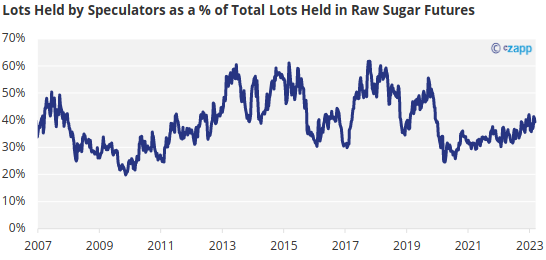
In the #11 raw sugar futures market, speculators generally account for between 20% and 60% of the total lots held in the market.
Using a futures market to deliver/receive a commodity
An exchange-traded futures market was originally developed to allow a match between a pool of buyers and sellers to facilitate the physical delivery of the commodity to the recipient. However, participants using it in this way now only account for a relatively small number of lots per contract.
So it is really a very secondary use of futures markets and only works for physically settled markets, not cash settled markets.
Since the exchange acts as a counterparty, trades are not made bilaterally (directly between a buyer and a seller). This means participants can set the price they are happy with, but not who to trade with.
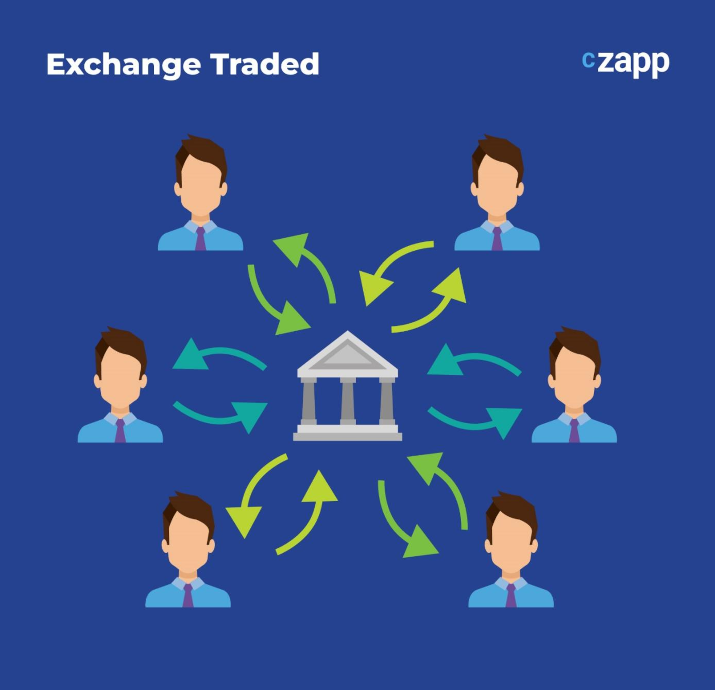
This works because the quality of the goods is standardized under the contract, so a buyer should be independent of who they are receiving from, at least in relation to the product they are receiving.
Since the counterparty is the exchange itself, this is a major benefit of using futures markets to facilitate the physical delivery of the commodity as it significantly reduces counterparty risk. Buyers and sellers don’t have to worry about the reliability of those on the other side of the trade.
Once the futures contract expires, the exchange will match buyers and sellers based on a process called novation, and the details of the futures contract determine how that commodity is to be transferred from seller to buyer.
Comments are closed.