
White House touts Arizona’s ‘robust’ economy; Critics Call That Half the Picture – Cronkite News


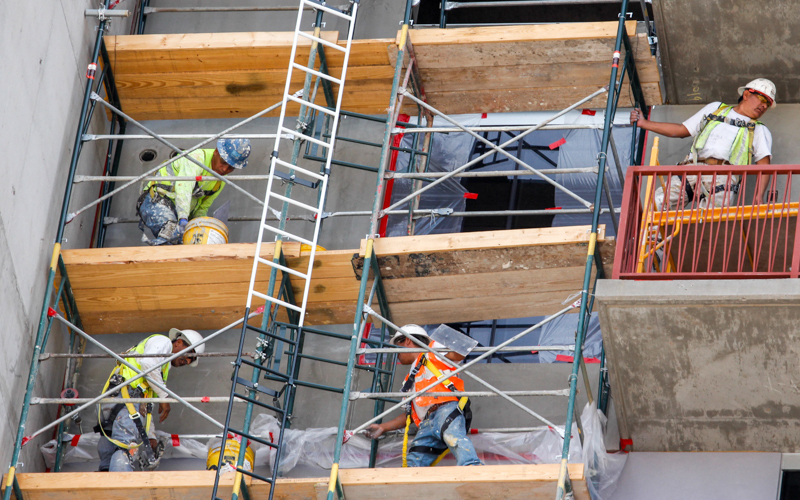
The Biden administration said this week that Arizona and the rest of the US are benefiting from a resilient economy with low unemployment and rising wages. Critics say that may be true, but it ignores record-high gas prices and soaring inflation, which is hitting people when they buy groceries, clothes, or just about anything else. (Archive photo by Molly Bilker/Cronkite News)
WASHINGTON – Despite rising inflation and high gas prices, White House officials this week insisted Arizona is participating in the country’s “robust” economic recovery, with low unemployment and rising wages in the state.
The call Monday with reporters by White House economic advisers Heather Boushey and Jared Bernstein was part of a government messaging effort to highlight gains in all 50 states. Not only did they point to several positive indicators, but they also said that the economy under the Biden administration is well suited to absorbing “shocks and crises.”
“We came out of this recession so quickly and so resiliently,” Boushey said. “We’ve been able to create a lot of resilience in the US economy in the last year or so.”
Critics questioned the government’s claims, saying consumers could not share this view of a thriving economy.
“I don’t think Arizonans will feel like the economy is doing well if they’re paying $5 a gallon for gas and if the cost of groceries is going up every time you go to the grocery store,” said TW Arrighi, a national spokesman for the Senate Republican Committee.
The Bureau of Labor Statistics said the Phoenix-Mesa-Scottsdale area recorded a year-on-year inflation rate of 11% in April, well above the national rate of 8.3% for that month. Arizona gas prices hit the highest average price on record Wednesday at $5,181, according to AAA.
related story

Bernstein said that while we “fully recognize the pricing pressures that families face and are doing everything we can, we should not lose sight of the strong background that is helping families meet this challenge.”
“Imagine trying to cover that price of the pump problem with an unemployment rate many times that,” he said.
A Arizona White House fact sheet released Monday showed the state has added 152,500 jobs since January 2021. The biggest growth came in the trade, transport and utilities sectors, which added more than 38,000 jobs last year, the report said.
According to the White House, Arizona’s real gross domestic product for the fourth quarter of 2021 was 6.2% higher than the same period in 2020. In the state’s largest economic sectors, financial services and real estate, real GDP grew by 7, 5 percent % year-on-year, compared to 3.0% in 2020 and 4.9% in 2019.
But job gains in Arizona may not paint the full picture, said George Hammond, director of the Economic and Business Research Center at the University of Arizona. He noted that so far the state has only been able to replace jobs lost in the first two months of the COVID-19 pandemic.
Hammond said Arizona still needs 134,000 additional jobs to catch up with pre-pandemic strength in the job market.
“We need to see much faster labor force growth going forward if we’re going to return to that earlier trend,” Hammond said. “We need to see more people enter the labor market or move to the state. Without that, we’re going to have real trouble going back to that trend.”
Arizona unemployment is currently at an all-time low of 3.2%, creating a labor shortage that is causing businesses to scramble to find workers and vacancies.
related story
But Arrighi said it’s not unemployment, it’s things like inflation and gas prices “that haunt people as to whether or not they’re comfortable about the economy. And none of that is good right now.”
White House advisers attributed the soaring prices to the war in Ukraine and supply chain problems caused by the pandemic, an opinion shared by Garrick Taylor, a spokesman for the Arizona Chamber of Commerce and Industry.
“The thing is, oil and natural gas are world commodities, and Arizona doesn’t pump or refine oil,” Taylor said. “So we’re paying the transportation and distribution costs on top of the production costs, which have skyrocketed.”
Bernstein said the Biden administration is trying to ease the pressure on consumers by, among other things, reducing the “dwell time” of ships in key ports and working to reduce the federal deficit, which the Congressional Budget Office forecasts will grow this year will drop by $1.7 trillion.
But Bernstein said the administration also respects the independence of the Federal Reserve as the nation’s primary anti-inflationary agency.
Hammond said Arizona’s economic recovery is indeed strong but uneven, with some parts of the state doing better than others. He remains uncertain of what the future might bring.
“While job growth will be strong this year, we will see a significant de-escalation in income growth as pandemic-related government income support is now removed,” he said.
But Taylor is confident that Arizona is equipped to deal with the uncertainties of the current economic climate.
“The fact that the economy is doing well should hopefully result in a softer landing in Arizona’s economy than, say, some other states that are already struggling,” he said.
Comments are closed.