


LONDON – The UK economy grew better than expected in the second quarter of the year, mainly on the back of a strong rebound in June, when many businesses, particularly in the leisure sector, benefited from warm and calm weather, official figures showed on Friday.
The Office for National Statistics said the economy grew 0.2% in the April-June period compared to the previous three-month period. That was up from the 0.1% recorded in the first quarter and beating economists’ expectations that there would be no change.
Despite the surge, the UK economy is the only leading industrial economy in the Group of Seven not yet to regain ground lost during the coronavirus pandemic. Many economists blame the UK’s exit from the European Union, which hampered trade and caused additional costs for businesses.
“The bigger picture is that the UK economy has grown just 0.4% since the start of 2022, the weakest growth in 65 years without a full-blown recession,” said James Smith, director of research at think tank Resolution Foundation.
The positive second quarter result was largely due to a monthly increase of 0.5% in June as pubs and restaurants benefited from warm temperatures. June in the UK was the warmest on record.
Given that July was one of the wettest on record, there are widespread expectations that the companies that benefited in June will see a reversal.
In recent months, the UK economy has proved slightly more resilient than expected amid rising interest rates and multiple strikes in many sectors, including early career doctors in England, who began their latest four-day strike on Friday.
Despite avoiding a widely expected recession, UK growth has been modest and is unlikely to pick up any time soon.
The economy is not expected to receive support from the Bank of England any time soon. When the bank raised interest rates to a new 15-year high of 5.25% earlier this month, it hinted that borrowing costs would remain elevated for some time to stem persistently high inflation.
Higher interest rates help dampen inflation by making it more expensive for consumers and businesses to borrow money to buy a home, car, or equipment. That too is weighing on economic growth, but the bank seems confident that the UK economy will not slide into recession in the coming years, despite rising unemployment.
Central banks around the world have raised borrowing costs to fight inflation fueled by higher energy prices following Russia’s invasion of Ukraine and by securing the supply chain as the global economy recovers from the coronavirus pandemic.
FILE – People enjoy the sunny weather in a park in London, May 27, 2023. Britain’s economy grew unexpectedly in the second quarter of the year, largely on the back of a strong rebound in June, which benefited many businesses, particularly in the leisure sector, due to the warm and calm weather, official figures showed Friday, August 11, 2023. (` Photo/Kin Cheung, file)
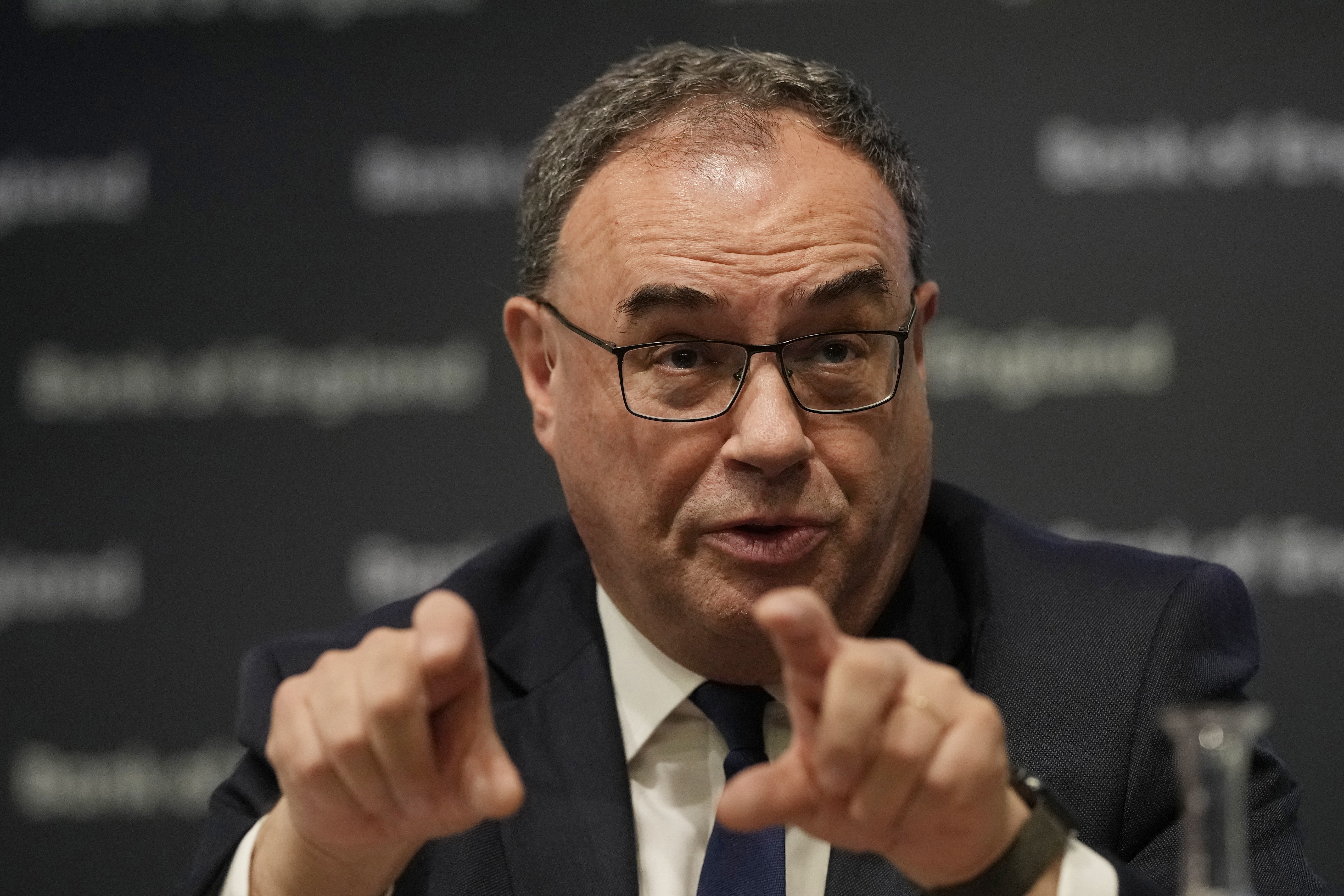 FILE – Bank of England Governor Andrew Bailey speaks while attending a news conference on the August 2023 Monetry Policy Report at the Bank of England in London on August 3, 2023. The UK economy grew unexpectedly in the second quarter Official figures showed on Friday 11th August that this was largely due to a strong rebound in June as many businesses, particularly in the leisure sector, benefited from warm and calm weather. (` Photo/Alastair Grant, Pool, File)
Comments are closed.