


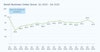
This quarter, a deteriorating economy contributed to a decline in the MetLife and U.S. Chamber of Commerce Small Business Index. Only a quarter (25%) of small businesses say the U.S. economy is in good shape and 30% say their local economy is doing well, down eight percentage points since last quarter.
At the same time, small businesses' views on the health of their own business remain positive. About two-thirds (64%) of small businesses say the health of their business is very or somewhat good. Additionally, two-thirds (67%) of small businesses say they are somewhat or very satisfied with their cash flow. This is a slight decrease from last quarter (72%), but in line with levels this time last year (67%).
The index value for the third quarter of 2023 fell from 69.2 to 61.3 – a return to the values at the beginning of the year and at the end of 2022.
Most people see a labor shortage…
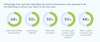
In recent quarters, small businesses have expressed ever-increasing concern about finding the right workers. In fact, more than half of those who searched for talent in 2023 say it was difficult to find candidates with the experience (54%) or skills (52%) their company needs.
Additionally, most small businesses say they see a labor shortage: A majority (53%) of small businesses agree that there is a labor shortage in their area.
Nearly half of small businesses say they will be looking for, recruiting or interviewing new talent in 2023 – a significant increase from mid-2021. 45% of small businesses say they have looked for new talent this year, compared to 2021 36% who said this in fall 2021.
…And we are struggling to keep up with workers’ wage demands
Not surprisingly, in this atmosphere of increasing competition for workers, employers must pull out all the stops to find and retain talent.
Nearly half of those who say they will be looking for new workers in 2023 say it is difficult to offer competitive wages and benefits. And 60% of small businesses agree that it is difficult to keep up with the salary expectations of existing employees.
They also offer new and unique benefits. The most popular strategy is offering flexible work hours: 68% of small businesses say they plan to offer this in the next year. Additionally, half (50%) of small businesses say they will offer higher wages, paid sick leave, or an hourly wage/salary range for every open position they advertise.
Related
To combat labor shortages, small businesses are considering unique talent pools
In their effort to find more workers, small businesses are also open to considering workers from often overlooked talent pools.
Nearly three in four (71%) small businesses believe employers should more often consider hiring from talent pools such as formerly incarcerated people, veterans, military spouses or immigrants. Additionally, a majority (54%) of small businesses believe the U.S. should issue more skilled visas annually so companies can hire the workers they need.
Inflation is still the biggest concern
Despite growing concerns about hiring, inflation is still high on the list of challenges for small business owners.
For the sixth quarter in a row, at least 50% of small businesses cite inflation as one of their biggest challenges. However, this concern may be easing: inflation worries have remained stable at 52% to 54% over the past year.
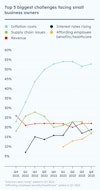
The second biggest concern for small businesses is revenue, with 22% citing this as a top concern.
Meanwhile, small business concerns about supply chain issues are easing slightly. Supply chain issues ranked fourth as the top issue reported by small businesses this quarter (17%), along with providing employee benefits or healthcare.
The overall index score fell to 61.3 from 69.2 last quarter. This is roughly in line with the overall sentiment this time last year.
The SBI survey for Q4 2023 was conducted from October 5 to October 24, 2023. For more results from this quarter and to explore and review years of small business data, visit: https://www.uschamber.com/sbindex/.
Further insights into small businesses
About the authors

Thaddeus Swanek
Thaddeus is a senior writer and editor on the strategic communications team at the U.S. Chamber of Commerce.
Read more
Comments are closed.