


Islamabad/London
CNN
—
Muhammad Radaqat, a 27-year-old greengrocer, is concerned. He doesn’t know how much an onion will cost next week, let alone how he can afford the fuel he needs to heat his house and keep his family warm.
“All we’re being told by the government is that things are going to get worse,” Radaqat told CNN.
His fear reflects the mood of a nation struggling to stave off economic meltdown. Faced with a lack of US dollars, Pakistan only has enough foreign exchange in its reserves to pay for imports for three weeks.
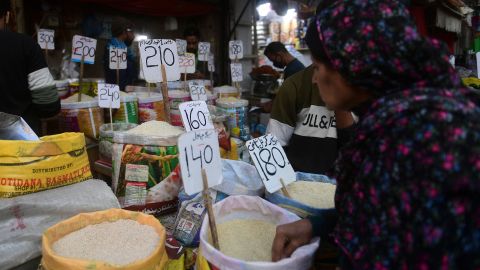
Thousands of shipping containers are piling up in ports, and the cost of basic necessities like food and energy is skyrocketing. Long lines form at gas stations as prices fluctuate wildly in the country of 220 million people.
A nationwide power outage last month made people even more alarmed. It brought Pakistan to a standstill, plunging residents into darkness, crippling transit networks and forcing hospitals to rely on backup generators. Officials have not identified the cause of the blackout.
Pressure is mounting on Prime Minister Shehbaz Sharif’s government to release billions of dollars in emergency funding from the International Monetary Fund, which sent a delegation to the country for talks this week.
Pakistan’s currency, the rupee, has fallen recently hit new lows against the US dollar after authorities eased exchange controls to meet one of the IMF’s lending conditions. The government had resisted the changes demanded by the IMF, such as easing fuel subsidies, as these would lead to new price spikes in the short term.
“We need the IMF deal as soon as possible so we can save the ship,” said Maha Rehman, an economist and former head of analytics at the Center for Economic Research in Pakistan.
Pakistan is experiencing what economists call a balance of payments crisis. The country has spent more on trade than it has taken in, draining its foreign exchange holdings and hurting the value of the rupee. This dynamic makes interest payments on debts from foreign lenders more expensive and drive up the cost of importing commodities even further, necessitating even greater withdrawals of reserves that add to the distress.
The country is also struggling with galloping price increases. The country’s central bank has raised interest rates to 17% in a bid to stem annual consumer inflation of nearly 28%.
Some Issues faced by the country are specific to Pakistan. For example, political instability and efforts to shore up the currency have weighed on investment and exports, according to Tahir Abbas, head of investment research at Arif Habib, the country’s largest securities broker.
Historic flooding last summer has also resulted in huge reconstruction and aid bills, putting an additional strain on the state budget. The World Bank has estimated that at least $16 billion will be needed to deal with damage and losses.

But global factors are making the situation worse. The economic slowdown has weighed on demand for Pakistan’s exports, while a sharp rebound in the US dollar over the past year has put pressure on countries that import significant amounts of food and fuel. Prices for these commodities had already skyrocketed due to the pandemic and Russia’s war in Ukraine, requiring greater spending.
The IMF has repeatedly warned that this could weigh on vulnerable economies. While he predicts that emerging and developing economies will experience a modest growth spurt this year as the dollar falls peaks, global inflation is falling and China’s reopening is boosting demand, the ability to manage the debt burden remains an issue.
This week it was estimated that 15% of low-income countries are already in a debt crisis, while another 45% are at high risk of struggling to meet their commitments. Another 25% of emerging markets are also at high risk. Tunisia, Egypt and Ghana have sought billions in IMF bailout packages in recent months.
“The combination of high debt from the pandemic, slower growth and higher borrowing costs exacerbates the vulnerability of these economies, especially those with significant short-term dollar financing needs,” the IMF wrote in its World Economic Outlook this week.
For Pakistan to avoid a default, investors and economists say talks with the IMF about resuming its stalled aid program must be successful. The IMF delegation arrived on Tuesday and is expected to stay until February 9th.
“The availability of the IMF loan is critical,” said Ammar Habib Khan, a senior non-resident fellow at the Atlantic Council.
But Farooq Tirmizi, the CEO of Elphinstone, a startup targeting Pakistani investors, said that even if the IMF program resumes, it won’t solve all the problems because the main problems plaguing Pakistan are “not economic , but politically, with a government unwilling to make structural changes.”
Pakistan’s economic crisis was the focus of a political showdown between Sharif and his predecessor Imran Khan last year. Khan was ousted by a no-confidence vote in April after Sharif accused him of economic mismanagement.
Since then, the situation has remained turbulent. Pakistan has gone through three finance ministers in less than a year. The last two were part of the current government and raise questions about Sharif’s ability to remain in power. The country is expected to hold general elections in the summer.
The commotion comes as Pakistan faces a new wave of militant attacks. Earlier this week, a suicide bombing smashed through a mosque in the city of Peshawar, killing at least 100 people. It was one of the deadliest attacks in the country in years.
In the meantime, people suffer. Farmers who lost cotton, dates, sugar and rice to floods still need help. The World Bank even forecast nine million in October Pakistanis could be pushed into poverty without “determined relief and reconstruction efforts to help the poor”.
High inflation only adds to the pain for households struggling to make ends meet. Food prices rose 43% year-on-year in January, according to data released this week.
Attention recently focused on a man in southern Sindh province who lost his life trying to get a bag of subsidized flour distributed by local authorities. He was crushed to death by the crowd next to him.
Comments are closed.