
It's really the economy, stupid. According to a survey, 39% of middle-class Americans say “money” is their biggest concern, while only 4% cite political and social issues


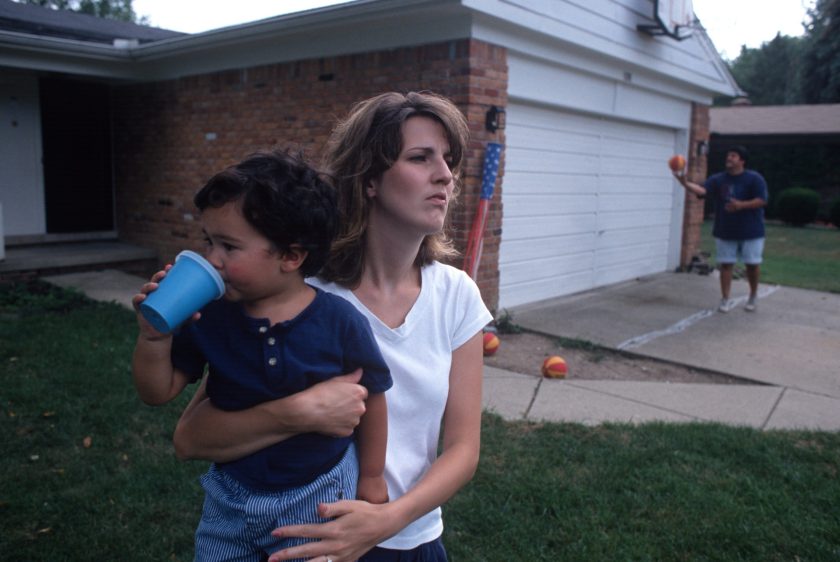
According to a survey by the financial app Stash, the middle class is more concerned about their own financial situation than any other issue. Andrew Lichtenstein
As 2023 comes to a close and the election year begins, the American middle class is preparing for one thing above all else: the economy. More specifically, their own personal finances.
Money was the top concern for 39% of Americans earning $50,000 to $150,000, more than their families, work pressures, health care costs or politics, according to a survey released Tuesday by investment app Stash. Survey participants had to work at least 30 hours per week and describe themselves as either “hardworking,” “hardworking,” “ambitious,” or “self-made.”
The idea that people put their own financial situation above all other political or social issues was immortalized in the famous saying of former political strategist James Carville, who said, “It's the economy, stupid.” The phrase he uttered during his Work on President Bill Clinton's first presidential campaign in 1992, he said, became a staple of American politics and should remind political candidates to focus on the financial well-being of voters above all else.
Only 4% of respondents said political and social issues were their biggest concern. The survey was conducted over two weeks in October, when the country was hit by various political crises. The ouster of Kevin McCarthy left the House without a speaker at the time, and a war broke out between Israel and Hamas, threatening to plunge the United States into yet another foreign policy quagmire.

The apparent strength of the U.S. economy after the Fed reduced runaway inflation in 2022 without increasing unemployment did little to allay the fears of many respondents. 61 percent said they were very worried about the economy. But the growing number of positive economic signals provided some optimism. 35 percent said they expected the economy to improve in the next few months.
“People are currently concerned about the economy, even though consumer sentiment has improved this month, while also being optimistic about the future for themselves and their families,” Sarah Spagnolo, editor-in-chief and brand chief at Stash, told Fortune. “Although the data does not support this, one could conclude that stabilizing prices and inflation, and potentially lower interest rates in the future, are helping to shift consumer sentiment. Prices have risen so quickly that it’s also possible that people simply need time to adjust and recalibrate.”
After a year and a half of fears that a recession was imminent, this sentiment is becoming increasingly widespread among major financial institutions. In October, the U.S. economy grew at its fastest pace in two years, signaling not exactly strength but at least significant resilience.
Even these rosy forecasts did little to dampen the concerns of middle-class Americans. Millennials and the Generation “Both groups are likely burdened with enormous family and personal responsibilities,” Spagnolo said.
Generation X reported that their finances were drained by credit card debt and the need to save for retirement. Millennials, on the other hand, faced the same financial challenges, but added that they also had to care for aging relatives and save for the elusive dream of buying a home.
The question of why Americans are so concerned about the economy despite evidence to the contrary has preoccupied countless economists, pollsters and policy consultants in recent months.
While middle-class Americans worry about their own finances, they are aware of those who are better off than they are. Overwhelmingly, middle-class Americans thought of the rich. 89 percent of respondents said they spend some time thinking about how rich people make a living. For younger generations like Millennials and Generation Z, that number was even higher – virtually unanimously, 95% said they had thought about the topic. This trend may not be entirely surprising, as the median income of middle-class households has grown more slowly than that of higher-income households over the past 50 years. As a result of these trends, the income gap between the two is larger than it has been in decades. Today, a household in the top 1% earns at least $650,000 per year, four to 13 times what the people surveyed earn per year.
Spagnolo argues that people engage with the rich because they hope to emulate them. “We know that people are very afraid of money, and they are looking for ways to alleviate that fear and achieve the success that they see in other people,” she said.
Comments are closed.