


Since 2021, several landmark climate initiatives have passed, pouring trillions into the US economy. Even though it has been less than a month since the anti-inflation law was signed, we are already seeing some of the powerful impact on the economy.
President Biden ran with the idea that climate change is “one of the greatest threats facing our country.”
After winning the presidency, Biden acted immediately, reinstating several Trump-era ecological rollbacks and laying out his plans for a sustainable American future. Indeed, on his first day in office, Biden signed Executive Order 13990 (EO 13990) entitled “Protecting Public Health and the Environment and Restoring Science to Tackle the Climate Crisis”.
Since then, a key theme of the government’s plan has been to re-establish the United States as a leader in sustainability while investing in new technologies to create jobs and bring back manufacturing lost abroad.
Biden is particularly focused on mass adoption of electric vehicles and promoting renewable energy projects. The government is aggressively targeting a 50% EV share of all vehicle sales in the United States by 2030.
Solar PV System Source: First Solar
Although many automakers are currently facing EV production delays, recent initiatives should help alleviate supply chain bottlenecks. For example, one of the biggest challenges preventing automakers from scaling production of electric vehicles is a semiconductor shortage that the government is trying to alleviate.
Recent climate initiatives have been passed to boost the US economy
The CHIPS and Science Act, passed in August, provides $52.7 billion for semiconductor R&D and manufacturing to build a domestic supply chain while spurring manufacturing growth. Other recently adopted climate initiatives designed to boost the economy:
- Infrastructure Investment and Jobs Act (IIJA) – Signed into law in November 2021, the IIJA will provide $89.9 billion to improve public transportation with zero-emission vehicles. The bill also invests $7.5 billion in building a national EV network.
- Inflation Reduction Act (IRA) – Biden signed the IRA into legislation Aug. 16 investing $369 billion in promoting a clean, sustainable energy economy. The IRA bill includes tax credits for buyers of electric vehicles and solar panels, rebates for energy-efficient appliances, and additional clean energy incentives for businesses.
These bills were signed less than a year (or less than a month) ago and are already showing promise. Here are some recent examples showing that these climate initiatives are doing what they were designed to do: create jobs and bring manufacturing back to the United States while accelerating clean energy efforts.
Manufacture of electric vehicles and batteries
Car manufacturers expect demand for electric vehicles to continue to rise. In particular, the Inflation Reduction Act provides tax credits for buyers of electric vehicles to make sustainable mobility affordable for everyone.
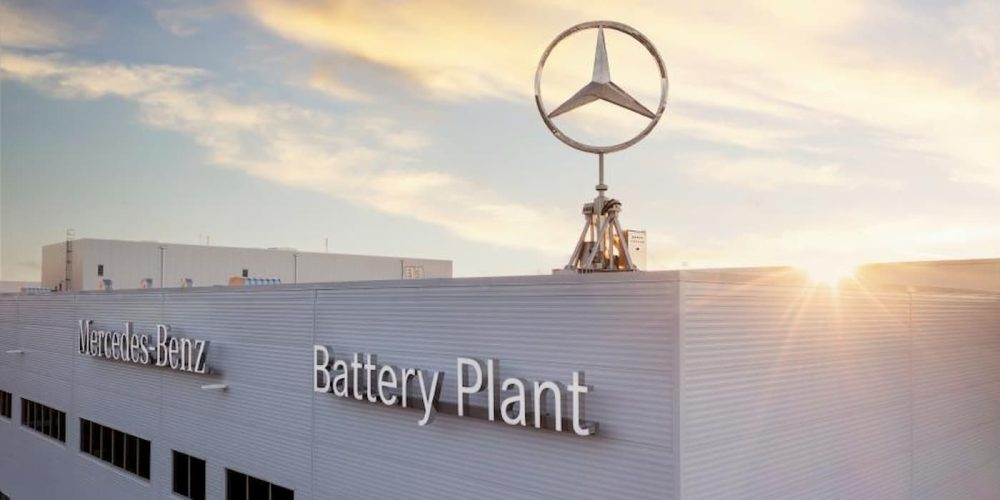 Mercedes-Benz battery plant in Georgia Source: Mercedes
However, for an electric vehicle to be registered, its parts must be sourced from the United States or its free trade partners with final assembly in North America. This requirement excludes several foreign car manufacturers from participating. As a result, several automakers announced plans to accelerate or establish new investments in electric vehicles and battery assemblies in the United States.
- Hyundai is considering accelerating its EV build schedule in the United States. Although Hyundai already has plans for its own electric vehicle plant in Georgia, they want to start construction by the end of this year.
- Volkswagen has signed a memorandum of understanding with Canada to source battery components such as nickel and lithium for electric vehicles. VW says the deal will shorten its supply chain and boost US sales.
- Mercedes-Benz already has its own battery plant in the USA in Georgia. Still, the luxury automaker says it will source 10,000 tons of battery-grade lithium from Rock Tech to meet its goal of an all-electric portfolio after 2025.
- Honda partners with LG Energy to invest $4.4 billion annually in a new US battery plant with a capacity of 40 GWh.
- Panasonic announced that its second battery cell factory will be located in Kansas, where the company plans to manufacture new 4680 cells for Tesla, and is considering a third large battery cell factory.
- Tesla is planning a lithium refining plant in Texas, which the EV market leader has already applied for.
And that’s just in the automotive industry. Let’s look at the progress made in renewable energy since the climate initiatives came into force.
Renewable Energy Projects
Another focus of the recently passed climate laws is the promotion of renewable energy projects. As the United States moves towards a zero-carbon electricity sector by 2035, renewable energy will play a significant role. As fossil fuel and electricity costs soar, renewable energy is more important than ever to energy security and conservation of natural resources.
- First Solar, the largest solar panel manufacturer in the United States, announced its intention to invest $1.2 billion to accelerate solar panel production. The solar module manufacturer is also planning to modernize three of its plants. First Solar’s CEO says recent climate initiatives have prompted the company to redouble its efforts.
- SPI Energy, a California-based global clean energy company, announced today that it has signed a new lease for additional assets to expand its solar panel manufacturing capacity to 2.4 GW in 2023 to meet growing demand for solar panels in America to satisfy manufactured solar modules.
Renewable energies will take off in the next few years. The United States added 13.2 GW of utility-scale solar capacity in 2021, a new annual record. Imagine what will be achieved this year.
Electrek’s take
The developments listed above are made possible by the recently adopted climate initiatives. With more funds available for clean energy projects and incentives to buy sustainable options, the bills are working as planned – creating jobs and bringing manufacturing back to the United States while building a resilient energy sector for the future.
So far, the US economy’s new guidelines have created around 642,000 manufacturing jobs. Global automakers are racing to build electric vehicles in the United States, and renewable energy producers are expanding their production capacities. The new investments also make sustainable, clean energy options available to a broader buyer market.
FTC: We use income earning auto affiliate links. More.

Subscribe to Electrek on YouTube for exclusive videos and subscribe to the podcast.
Comments are closed.