


For years Headwaters Economics has been at the forefront of charting—and touting—a profound shift in the American West.
Happening for decades, the transition has involved a move away from traditional natural resource extraction industries which have been pre-eminent economic pillars—logging, mining, energy development and agriculture—toward a different set of drivers presumed to be more sustainable, less consumptive and better suited to conservation.
The latter has come to be known as the New West amenity-based lifestyle economy.
In the Rockies the pivot has been fueled by the rising might of the outdoor recreation industry, millions of dollars being pumped annually into tourism promotion, an inundation of upwardly mobile Baby Boomers and Generation Xers living on retirement and investment income, and a corresponding tidal wave of real estate speculation and land development.
Huge numbers of job losses have occurred in the natural resource extraction sectors. Much of the reductions in staff rolls has come not from environmental laws but by technological advancements that have reduced the amount of human laborers companies need to get resources out of the ground.
While the environmental movement still remains fixated on battling those industries of old on public land, it has largely given those involved with the amenity economy, specifically the outdoor recreation and real estate industries, a pass from intense scrutiny.
When it comes to environmental protection and maintaining rural communities, the New West may be less vulnerable to boom-and-bust cycles that left many states reeling, but is what’s replaced it really more benign from a conservation perspective?
Forests generally grow back, hardrock mines and energy drilling sites eventually reach a terminus of operation and need clean up, and ranching and farming are constantly improving their stewardship practices. But the impacts of subdivisions, especially those that negatively impair nature or its function, are permanent fixtures that almost never go away. In addition, amid aggressive pushes being made by the outdoor recreation industry to markedly expand the infrastructure of access and use levels on public lands or order to keep growing its profits, seldom, if ever, are user groups that gain excess ever willing to give it up, even if it is demonstrated conclusively that recreation is having negative impacts on wildlife.
On its website, Headwaters describes itself as “an independent, nonprofit research group that works to improve community development and land management decisions.” By “amenities” Headwaters generally means aesthetically pleasing natural attributes such as healthy rivers, pretty unblighted scenery, public lands conducive to outdoor exercise, and places that are counterpoints to the stresses of urban civilization.
The Headwaters report is intended to apply more broadly to a national audience and isn’t directed only at its home region, the Greater Yellowstone Ecosystem. But if it did, the organization would have to acknowledge that the premier natural amenity in Greater Yellowstone—the thing that sets it apart in the world—is its full complement of large mammals still able to move across landscapes, along with a number of once imperiled bird species and, of course, its globally-famous cold-water trout streams.
Although Headwaters’ authors don’t mention this either, Greater Yellowstone is the only ecosystem in the Lower 48 with such a high caliber of ecological function involving biodiversity and large native species. As a high value natural amenity, it is counted among the rarest of the rare and it is renewable as long as it isn’t messed up.
Although Headwaters’ authors don’t mention this either, Greater Yellowstone is the only ecosystem in the Lower 48 with such a high caliber of ecological function involving biodiversity and large native species. As a high value natural amenity, it is counted among the rarest of the rare and it is renewable as long as it isn’t messed up.
In earlier studies, Headwaters has noted that places in the West with healthy natural landscapes serve as powerful magnets for people. “Amenity destinations can benefit greatly from tourism and economic growth, but those benefits can also lead to painful challenges, particularly in housing, infrastructure, fiscal policy, and disaster resiliency,” the new Headwaters report states. “The benefits of amenity communities are enjoyed by both residents and visitors but all too often, it is residents who bear the costs of amenity-related growth. When those costs are borne equitably by residents and visitors, a community is more likely to avoid the consequences of rapid growth or overbearing waves of tourism.”
Noting how tourism promotion feeds growing pressure, and demands for more services, the report’s authors go on, “While the feedback loop described here can bring economic diversification and prosperity to which many communities aspire, it can also bring unwanted changes and challenges. The natural resources that first attracted people like clean water and abundant wildlife, can become impaired. Trails and waterways, and parking lots to access them, can become overcrowded. Housing becomes less affordable to more residents, leading to more residents living in substandard or crowded housing and increased homelessness. Long-time residents often find themselves forced to leave the community. Small, rural places are faced with the challenge of providing adequate public services, like drinking water and wastewater treatment, to millions of visitors. And the perennial question of how to pay for programs to mitigate these impacts looms over many amenity communities.”
Of course, none of the above is new. Mountain towns in Colorado and Utah have been wrestling with these issues for years and they are fast manifesting themselves in the Northern Rockies. Is there any example of a high natural amenity ecosystem that has outlasted human pressures and what are people in Greater Yellowstone willing to do to avoid the pitfalls of other states and which are driving residents from there to move here?

but in its graphics, wildlife is nowhere to be seen. What message does that send?
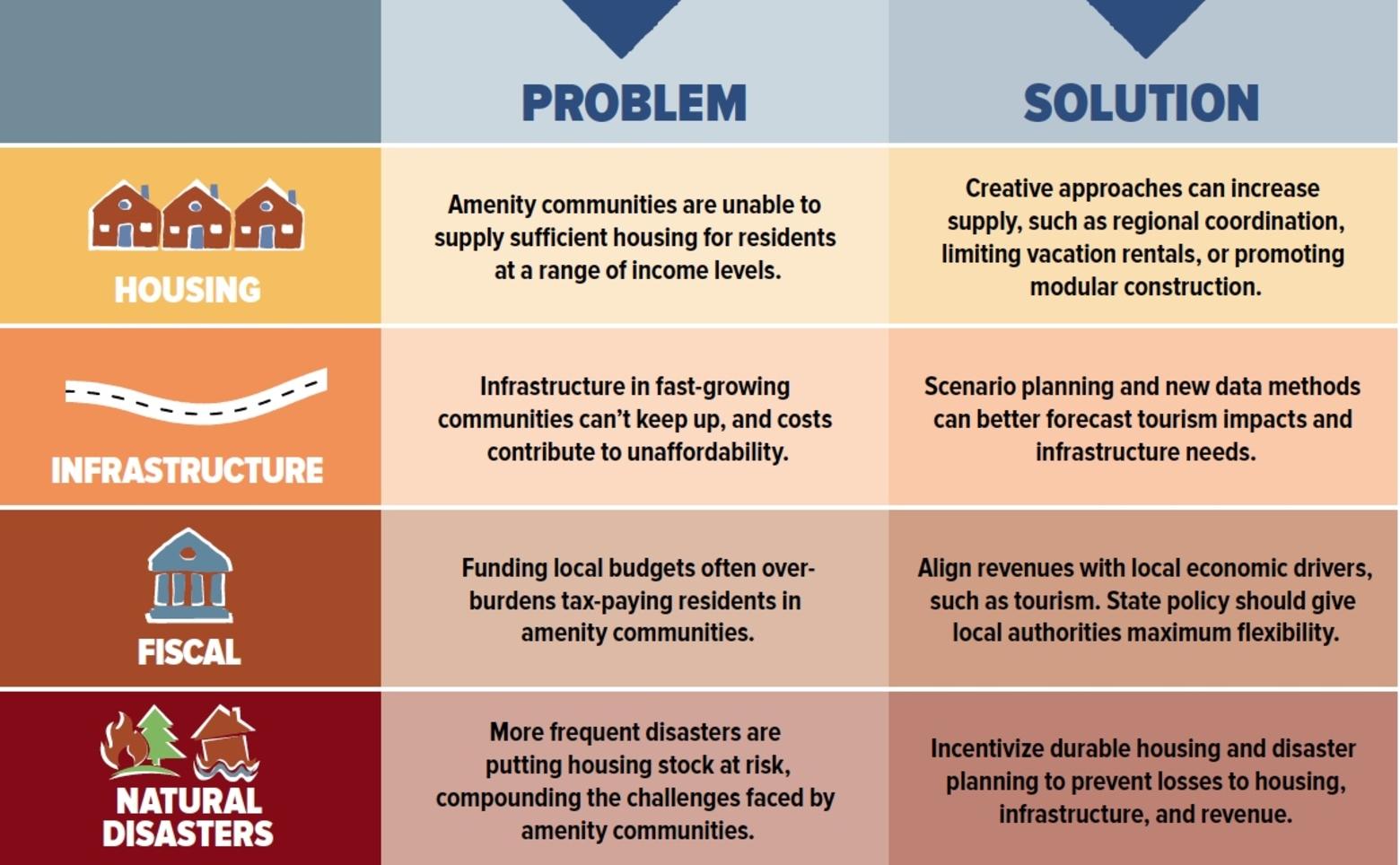
The Headwaters report, which was written to advise elected officials and policy makers, is about protecting high natural amenity values in the West. But in its graphics wildlife is nowhere to be seen nor mentioned in the list of priorities. What message does that send? One can only conclude that high wildlife values like those in Greater Yellowstone don’t matter or that in pursuit of pursuing those other goals, it doesn’t matter if it disappears as a consequence of pursuing those goals.
Among many studies and analyses Headwaters have completed in recent years, two of the most crucial insights it has divined are these: First, for rural counties with 100,000 acres of “protected” public lands inside them, annual per capita income is $4360 higher—meaning protected public lands with high conservation values are not a liability to local economies. All of this was spelled out in the peer-reviewed study titled “The Effect of Protected Federal Lands on Economic Prosperity in the Non-metropolitan West,” authored by Headwaters co-founders Ray Rasker and Patricia Hernandez and Mark Delorey.
“The study finds that, on average, counties with national parks, wilderness, and other forms of protected public lands benefit through increased economic performance,” it stated.
Second is that communities which have nearby airports with ready jet service connections to major hubs, and other essentials such as great, secure internet service are more attractive to “footloose” entrepreneurs who resettle there, creating companies and jobs.
As Covid affirmed with an exclamation point, air service and internet have hastened the ability of people to work remotely from home and commute to the office via services such as Zoom.
Decades ago, when current Montana Gov. Greg Gianforte was then growing his technological services company in Bozeman, part of the strategy for convincing tech workers to pull up stakes from Silicon Valley and resettle in the Gallatin Valley was the abundance of outdoor leisure activities on public land, Gianforte told me in a 2013 interview for a story I wrote for The Christian Science Monitor. Today, Bozeman has a vibrant mix of small and mid-sized tech start-ups and outdoor gear manufacturers.
How much growth is enough? A looming issue—and a source of fear for those who care about nature—is what would happen to the character of Bozeman/Gallatin Valley and nearby environs were a major tech company to relocate or establish a regional headquarters here? How would that contribute to a sprawl problem that many experts say is already out of control and destroying the very natural amenities people are coming here to experience?
Are elected officials and the city/county planning staffs ready? What would be the cost of new infrastructure needed to support more growth? Who would pay? What would be the consequences for the pastoral Gallatin Valley and the wildlands that rim it, some of which are already dealing with crowding issues?
There is much information contained in the new Headwaters report but curiously lacking is any in-depth analysis of how the continued push underway to monetize and capitalize on the natural amenity economy is harming the natural amenity ecology that supports it.
There is much information contained in the new Headwaters report but curiously lacking is any in-depth analysis of how the continued push underway to monetize and capitalize on the natural amenity economy is harming the natural amenity ecology that supports it
In 2013, when Rasker, Hernandez and Delorey released their study, it proved to be remarkably prescient in identifying emerging issues that are now writ large after Covid and which fed an onslaught of new settlement and growth of tourism in the region.
The authors noted a decade ago that “…some of the literature on the role of protected public lands has pointed to negative effects resulting from amenity migration. Some of the land-related consequences of people moving to the countryside include urban sprawl, encroachment of residential areas onto fire-prone lands, also known as the wildland-urban interface, a disruption of wildlife migration patterns and habitat, and loss of biodiversity. In addition, there are potential negative economic and social consequences, including income inequality and tensions between long-time residents and newcomers. In other words, economic growth itself is not without its challenges.”
Time has proved that observation to be an understatement. The irony of the new Headwaters study is that it highlights the lack of affordable housing, and fits it within the theme of providing advice on how high amenity communities can avoid being loved to death.
While Headwaters implies that the affordable housing gap is an allegedly fixable issue and that other challenges can be addressed by pouring a lot more money into further expanding infrastructure, there is little reflection on what it means for nature. How does adding more infrastructure, which brings more people and more stresses to more places on the land serve as an antidote for dealing with sprawl in high-growth valleys?
Is its emphasis on expanding infrastructure a prescription for addressing the de-wilding of Greater Yellowstone or an accelerant for losing things even faster?
Out of thousands of words in the Headwaters report, “wildlife” is mentioned just three times and only as a passing reference. How would Greater Yellowstone be perceived as a region proclaimed for its natural amenities if the wildlife abundance and diversity here did not exist?
Also pertinent: why are most of the well-funded national and regional environmental groups, which have fought the natural extraction industries, not involved with planning and zoning, or being more vocal about the downsides of the amenity/recreation economy— or weighing in on issues like proposed expansion of Grand Targhee Resort or residential subdivisions sprouting in Sublette County, Wyoming, constricting corridors crucial to long-distance migrations of mule deer and pronghorn?
The new Headwaters report makes only oblique references to the need for better local planning but doesn’t mention the only things that are going to prevent Greater Yellowstone’s most distinctive natural amenities from being loved to death. First is limiting the consumption of natural land and amount of wildlife habitat being rapidly usurped to thoughtless private land development. It is not going to happen without some kind of zoning. Second is establishing carrying capacities on the number/volume of human users on public lands—as well as infrastructure— so that wildlife are not displaced or habitat impaired.
By clicking here, a reader will find an entire page on the Headwaters’ website devoted to promoting outdoor recreation and advising public land managers and others on how networks of trails and facilities should be expanded. But in each document there’s almost no substantive mention made about the implications for wildlife.
The lack of attention paid to wildlife in the new report is disappointing because Headwaters’ executive director Patricia Hernandez, prior to her joining the organization, was the co-author of several important peer-reviewed analyses that predicted how sprawl, related to the amenity economy, was erasing ag lands, open space and threatening the survival of species ranging from grizzly bears to big game animals. In one of the journal articles she contributed to, Big Sky was specifically identified as a natural amenity community whose development was harming the nature of place. She was lead author on another paper with noted Montana State University ecologist Andrew Hansen and co-author Danielle Jones in a 2007 paper for the journal Ecological Applications titled “Biodiversity Consequences of Alternative Future Land Scenarios in Greater Yellowstone.”There’s long been a contention that wealthier communities are more environmentally conscious, more supportive of conservation and stewardship minded But is that really the case? Is it true for Jackson Hole and Teton Valley, for Big Sky, Bozeman and Paradise Valley?
In any document trying to inform the public, language matters in how issues are framed. The new Headwaters report invokes the term “natural disasters” (which paints nature almost as an adversary) and highlights the fact such disasters are becoming increasingly common. Yet issues like wildfire danger and flooding would not exist, or would be dramatically reduced as threats, if humans did not continue to build in fire-prone areas or flood plains which are themselves a part of nature. The very forested landscapes and healthy rivers human savor in the Rockies are products of fires and floods that do not destroy nature but leave it rejuvenated. And forests and river corridors rank among the highest value wildlife habitat.
At least in the natural resource extraction economies of old, working-class people felt valued and the industries they worked for were monitored.
One of the vexing paradoxes of the natural amenity economy is that the more attractive communities become, the more they appeal to people of means who have the flexibility to live or build their second, third or fourth vacation homes anywhere. Their presence and buying power drives up real estate values and makes homes and rents unaffordable for essential working professionals, young people and low-income residents who grew up in those communities. A seldom discussed downside is how families with multiple generations of history in communities, and who invested their lives in making those places better, are being erased.
There’s long been a contention that wealthier communities are more environmentally conscious, more supportive of conservation and stewardship minded But is that really the case? Is it true for Jackson Hole and Teton Valley, for Big Sky, Bozeman and Paradise Valley?
This also gets at a point related to one of many problems with those who claim that free market forces alone should guide decision-making. Remaining natural private lands, the leader of the Gallatin Valley Land Trust recently said, are being lost at twice the acreage rate they are being protected. And that’s on top of sprawl that’s already present.
The free market is failing to protect the natural amenities of Greater Yellowstone. The argument its proponents now make—that loosening regulations further and rolling back impact fees will fix the affordable housing crisis, is, at best unproven. If precedent elsewhere is any indication it is destined to fail.
Moreover, such thinking also neglects to mention the significant toll that lack of regulation, championed by free market thinktanks, has already taken on the wild nature of Greater Yellowstone. There is no better example than the dismal record of planning at Big Sky, which has no municipal government, no real oversight from Gallatin and Madison counties and an ongoing record of wildlife displacement and increasing wildfire danger.

Cartoon by John Potter
The Headwaters report states: “Above all, proactive action is required for amenity communities to maintain the qualities that make them great. These places have a vibrancy that depends on protecting the very things that attract people to live and play there. Once amenities begin to erode it can be very difficult to get them back.”
Headwaters makes multiple recommendations for how to generate more revenue to pay for expanded infrastructure, which includes such things as affordable housing, public transportation and bicycle paths. One of its recommendations is convincing state legislatures to allow for local sales taxes to be implemented and targeted at millions of visitors which would help alleviate the burden of rising property taxes imposed on local residents to pay for the infrastructure.
However, there’s another aspect unaddressed in the Headwaters report. Sprawl, directly related to the natural amenity economy Headwaters has long championed, is rapidly overtaking farms and ranches, destroying not only the fabric of rural communities but it is leaving wildlife that depends on those lands homeless.
Out of thousands of words in the Headwaters report, “wildlife” is mentioned just three times and only as a passing reference. The word “recreation” is mentioned 33 times. “development” 59 times, and “housing” 246 times. That would give any reader an impression that wildlife doesn’t matter—or at least it doesn’t matter to authors of the report who choose to make their home in Bozeman.
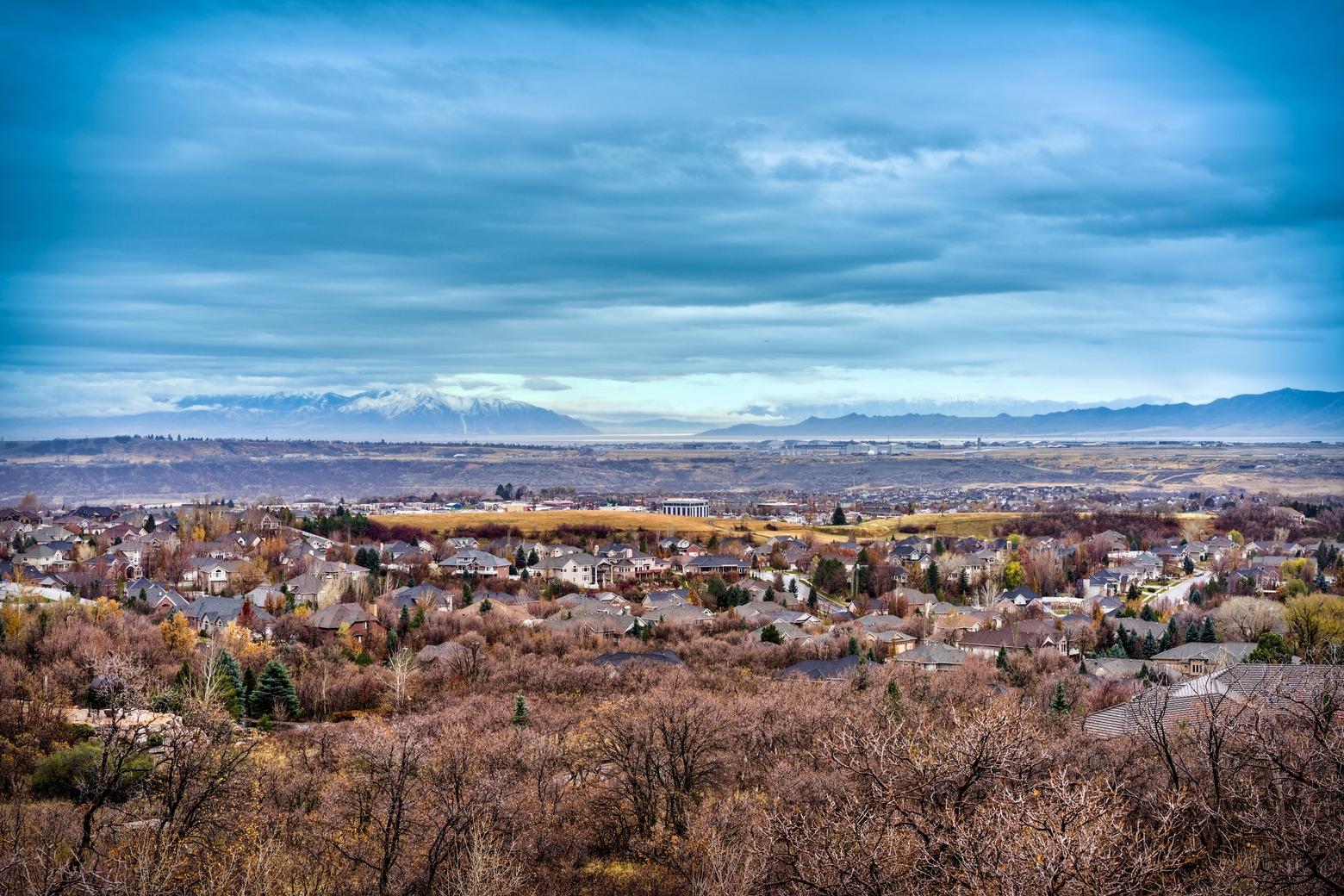
Here’s a “what if”: what if Bozeman or Jackson Hole or other communities in the Rockies went on a development binge that resolved the affordable housing crisis for humans but left wildlife homeless and resulted in a loss of Greater Yellowstone’s world-renowned biodiversity because of the impacts from sprawl. Would that be a conservation victory in a region known worldwide as “the cradle of American conservation”? Photo of Ogden, Utah courtesy Shutterstock ID 537009970/ Paul W. Thompson
Maybe it’s only when wildlife begins to vanish, when it’s no longer abundant and turns rare before economists pay attention to it as a prized natural amenity. In nature-starved southern California, 5,000 individual citizens, businesses, foundations and government agencies came together and raised upwards of $90 million to build a wildlife overpass to accommodate a dozen imperiled mountain lions so they could move across a freeway.
What role does wildlife play in a “high amenity” region like that of Greater Yellowstone and how do healthy wildlife populations serve as barometers for gauging the health of ecosystems, thus helping to prevent them from being loved to death? Indeed, what does it mean to love a place to death? And how would Greater Yellowstone be perceived as a region proclaimed for its natural amenities if the wildlife abundance and diversity here did not exist?
The Headwaters report would be more impactful if it addressed and answered any of those questions.
As an alternative to logging, mining and energy development, the natural amenity economy has become indistinguishable from the outdoor recreation and real estate industries, which are not inherently guided by conservation principles. Like any industry, this economy also operates on a mythical model of pursuing endless growth and achieving more profitability by selling more product to more people—be it land, stuff or outdoor experiences. It exists, however, at direct cross purposes to the needs of wildlife that have finite thresholds of tolerance in the face of intensifying human pressure.
Outdoor recreation and real estate may be the final frontiers where humans have yet to fully accept limits on personal behavior in order to protect wildlife living in the places where people want to transplant themselves and/or have fun.
Weirdly, among the last to fully embrace this fact are many environmental groups which de-emphasizes “wildlife conservation” and safeguarding biological diversity in favor of claiming that more affordable housing and allowing a lot more recreationists to use public lands or live on their edge enhances “conservation.”
The most cogent part of the Headwaters report (see it excerpted at the bottom of this story) is its section that says “communities have a choice” and it discusses how they fall into the “amenity trap.”
One thing we know: in regions where the ostensible goal is “sustaining” a special place filled with extraordinary natural amenities, declining ecological health is not good for the long-term economy. As has been posed here many times before, what does conservation mean in a place like Greater Yellowstone (known as the cradle of American conservation) if “wildlife conservation” is not held up as a priority? Answer: it gets mentioned just three times in a major report that is thousands of words long. More perplexing is that in a report about how not to love natural places to death, the term “wildlife conservation” isn’t mentioned, not even once.
Am I being too tough on Headwaters? For years, I have closely followed its research as a journalist, written thousands of words about its findings and believe it has an important voice. I wouldn’t offer this critique if I thought Headwaters doesn’t play a vital role but as an organization it needs to admit its own biases, one of which is that its outspoken promotion of outdoor recreation has left it with a blind spot for wildlife conservation. It must do better.
EDITOR’S NOTE: Do you have thoughts you’d like to share? Pass them along by clicking here and we may publish them below. Please be civil, thoughtful and on point with your comments.
For further reading:
Below is a screenshot section of the Headwaters report that provides a useful perspective for rural Western counties everywhere contending with growth issues.

Comments are closed.