


Not long ago, Garberville could have held the title of California’s busiest city without a traffic light. Thousands of tourists filled this small town’s restaurants and bars after spending the day craning their necks in front of the towering redwood trees of nearby Avenue of the Giants. And hundreds of cannabis farms in the surrounding Humboldt County hills brought in millions of dollars to the local economy.
But today the city is on life support. The legalization of cannabis in California destroyed many of these pot farms, leaving empty storefronts and a cratered Garberville economy. Overproduction has reduced the wholesale price of cannabis in California by up to 95%. This has made weed cheaper for consumers, but it has also made it impossible for many farms to stay alive.
“The economy here has collapsed,” said Laura Lasseter, operations manager for the Southern Humboldt Business and Visitors Bureau. “… The economy in South Humboldt is in crisis mode and 90% of this crisis mode is due to the cannabis industry.”
Garberville is the most obvious sign of an economic meltdown affecting the surrounding “Emerald Triangle,” a three-county region that includes Humboldt, Mendocino, and Trinity counties. For decades this area was the entire country’s cannabis growing capital, but now the pot farms are going bust, taking the local economy with them.
County Supervisor Michelle Bushnell, representing Garberville, said sales tax collections are declining and storefronts across the city are empty. She has lived in the city since the 1970s and said she has never seen the local economy so depressed.
“I’ve been here my whole life and I don’t know if I’ve ever seen it this bad,” Bushnell told SFGATE. “…I’d really like to say, hold on and try, and things will get better. But I’ve been saying that for a year. I said a year ago that we’ll get through this in a year, but it’s been a year now and it’s no better. In fact, it’s even worse.”
Cannabis is trimmed at Huckleberry Hill Farms, located just outside of Garberville in southern Humboldt County.
Courtesy of Huckleberry Hill Farms
Meghan Joyce, the chief executive of local grocery store Chautauqua Natural Foods, said the business has declined 12% over the past year and the store is considering reducing its hours.
“We’ve relied on so many cannabis growers and people in the cannabis industry to keep our storefronts full and business in town,” Joyce told SFGATE. “It’s hard to see where we’re supposed to get that from.”
The New Yorker once described Garberville as “the rough edges of a gold-mining town, but with peace flags and hemp flats.” Now the gold has left town, leaving rough edges and no one who can afford a hemp latte.
“No one makes money”
The first wave of cannabis growers came to Garberville and the greater Emerald Triangle in the 1960s and 1970s, as people following the “back to the land” movement took advantage of the area’s affordable real estate to build their own farms. The cool nights, consistent sun, and plentiful water of California’s North Coast Ranges made it an ideal environment for growing cannabis. Pot quickly became a source of income for many of these early settlers.
In the 1980s, the federal government waged a brutal war against illegal cannabis cultivation in the Emerald Triangle, but the industry continued to grow. And then California legalized medical marijuana in 1996, sparking a green rush of new cannabis farms. Soon, Humboldt’s farms were shipping cannabis to dispensaries across the state and even supplying the illicit market nationwide. By some estimates, the Emerald Triangle grew 60% of the pot across the United States.
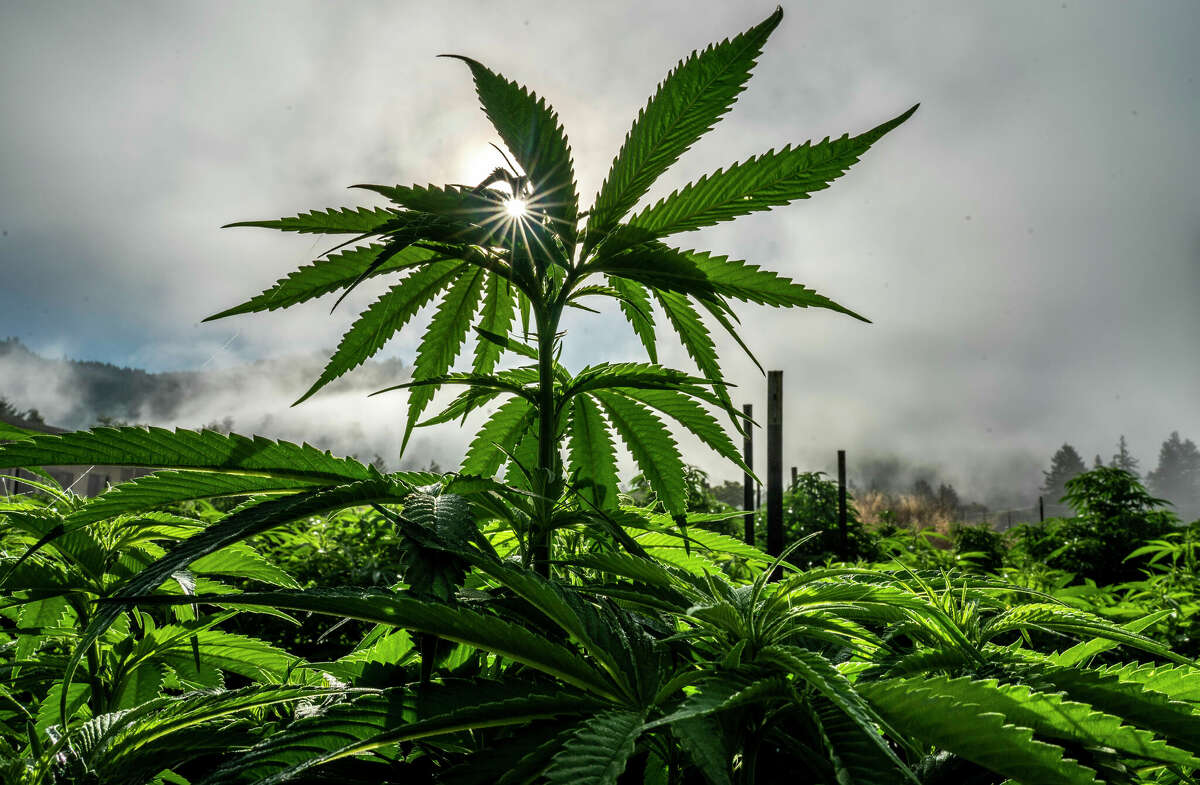
A cannabis plant grows at a pot farm in Humboldt County.
The Washington Post/The Washington Post via Getty Im
But the same things that made Southern Humboldt County one of the best places in the country to grow cannabis before legalization are now working against it. After voters legalized recreational cannabis in 2016, the region’s dense forests and long, winding dirt roads, well-placed for avoiding law enforcement, became costly expenses when it came to running a legal business .
Wendy Kornberg, the owner of Sunnabis, a small cannabis farm 20 minutes down a dirt road from Garberville, said all of the surrounding pot farmers have either given up or are on the verge of bankruptcy. “Everyone fights. We’ve all had to plunder our kids’ college funds,” she told SFGATE. She said these farm failures drained the city’s economy.
“Growing up in Garberville from 1977 until I graduated from high school in 1995, I’ve never seen so many empty storefronts. The whole side of one of the streets is just empty shop fronts. It’s a bit scary when you look at it from that perspective,” she said.
Lasseter of the Visitors Bureau estimates that Humboldt County is on track to lose 50% to 70% of its cannabis farms. She said the biggest problem for the region’s farmers has been the state government’s approval of giant pot farms. Initially, California voters approved a legalization plan that limited cannabis farms to just 1 acre for the first five years of legalization. But in 2017, the state created a loophole for companies to “stack” smaller licenses indefinitely so they could expand their pot farms beyond a million square feet.
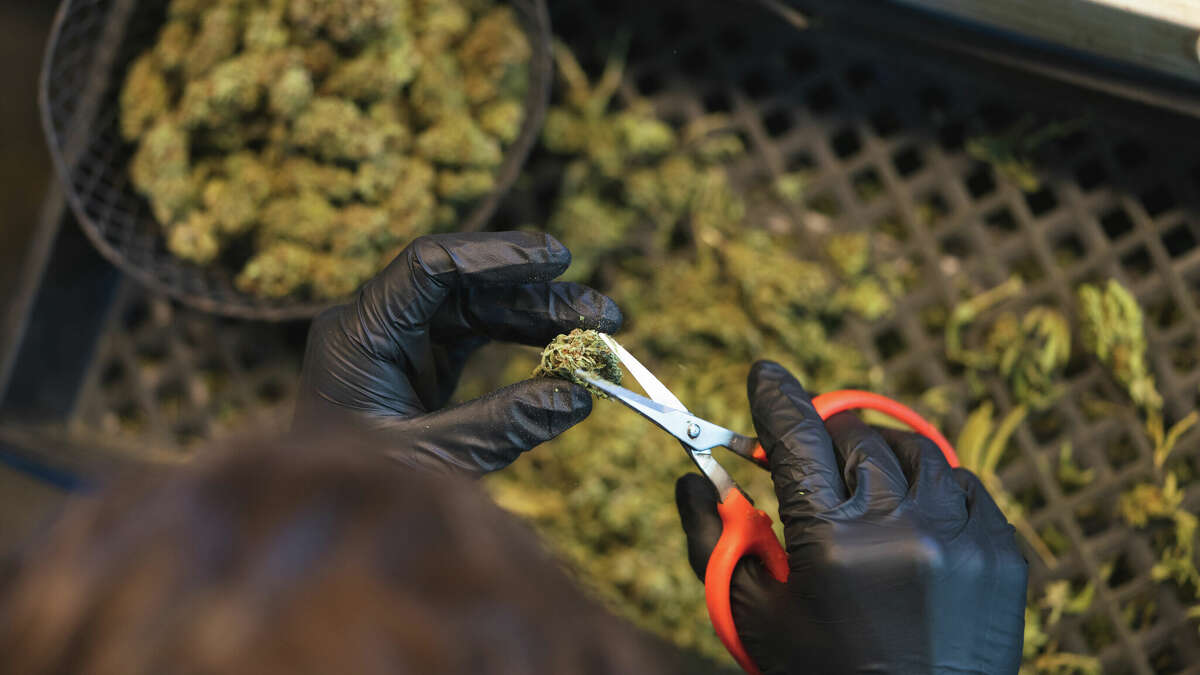
Cannabis being trimmed at a pot farm in Garberville, California.
Marcos Borsatto/EyeEm/Getty Images/EyeEm
Expensive government regulations have added additional costs to growing cannabis that many smallholders cannot afford. Joshua Sweet, who owns several buildings in Garberville and two pot farms, blamed over-regulation for the cannabis industry’s crash. He is currently being sued by the state over an irrigation pond that the state says was built illegally.
“Before regulation, this community was left to its own devices and safe [and] alive socially, culturally and economically. It completely collapsed within five years of regulation,” he told SFGATE. “No one makes money”
“It’s oozing down on everyone”
Bushnell, the county commissioner, acknowledged that the county government could have done more to support the local cannabis industry.
“Could we have done better? Yes. Could the state have done better? Absolutely,” Bushnell told SFGATE.
One of the county’s more controversial actions was levying a cultivation tax on legal farms in 2017, which charged farmers based on their square footage, not the amount of weed they actually sold. This added tens of thousands of dollars in costs to small farms. Eventually, the county cut the tax rate by 85% and then suspended the tax entirely last November.
Kornberg, the cannabis farmer, said she has always opposed the cultivation tax but has defended the county’s work in assisting with the licensing of cannabis farms.
“People want to blame someone, and it’s easy to blame your local representatives, but Humboldt has done some amazing things to help us find an easier path to legalization,” Kornberg said.
Sequoyah Hudson, a farm owner and CEO of the Humboldt Sun Growers Guild, said business owners and many of the county’s political leaders never appreciated the cannabis industry, even though it injected millions of dollars into the local economy.
“[It was] absolutely natural,” said Hudson. “It’s been such a supporter of our local economy in the background and behind closed doors. The people who were naysayers to the cannabis industry just weren’t aware of it.”
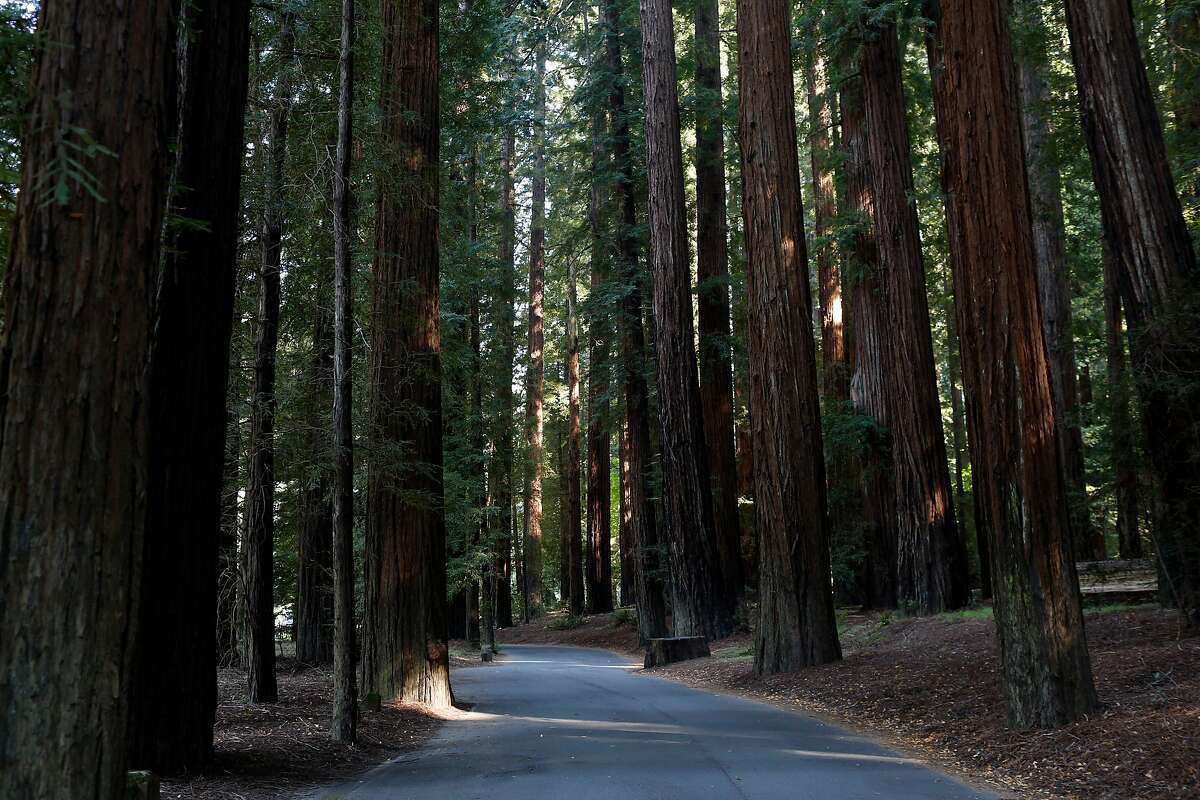
Redwood trees are seen at Richardson Grove State Park on August 12, 2013 in Garberville, California. As the local cannabis industry declines, some hope the area’s natural beauty can attract tourists to boost the economy.
Ian C. Bates/The Chronicle
Mary Halstead, the owner of Paper Mill, a stationery and art supply store in Garberville, said her business was down 40%. She agreed that the local economy was dominated by cannabis.
“Everyone either worked for a farmer, was a farmer or trimmed seasonally. That’s all anyone here has done,” Halstead told SFGATE. “My husband does tree work and even he has very little work now because nobody has money to hire him to do tree work. It permeates to everyone, to every local business.”
City leaders have largely abandoned the notion that the cannabis industry will ever return to its pre-legalization dimensions. Instead, they are trying to bring more tourists to the city. Lasseter said Garberville’s best hope for economic recovery is to bring more tourism to the area’s natural beauty.
“We are working to stay positive and educate the community on how to transition to tourism. Mother Nature is not building another Avenue of the Giants or Lost Coast. That’s here, and the case of cannabis can’t take that away,” Lasseter said.
Comments are closed.