


A customer buys fish at a market in Athens, Greece, on July 8, 2022. (Xinhua/Marios Lolos)
Kenourgios stressed that the Greek economy is on a growth path and warned that this growth is now threatened by high inflation and the global energy crisis.
ATHENS, Aug. 20 (Xinhua) — Greece officially exited so-called “enhanced surveillance” status in the European Union (EU) on Saturday, a move Athens has described as a “return to normalcy.” Greek economic developments and policies have been monitored under the framework since 2018.
The postponement signals the end of the EU institutions’ tight surveillance of the Greek economy and brought Greece into the “European Semester” surveillance mechanism, with a traditional inspection by European authorities every six months.
It also concludes over 12 years of fiscal tightening that began in 2010, including three international bailouts from the EU and the International Monetary Fund (IMF) totaling over 260 billion euros ($260 billion).

Photo taken on June 1, 2022 shows the Euro sculpture in Frankfurt, Germany. (Xinhua/Lu Yang)
“A 12-year cycle that has brought suffering to citizens is now coming to an end. It brought stagnation in the economy and division in society. Now a new, clear horizon is emerging, one of development, unity and prosperity for all,” Greek Prime Minister Kyriakos Mitsotakis said in a statement on Saturday.
Greece’s exit from the enhanced surveillance mechanism was confirmed by the EU earlier this month in a formal letter to Greek Finance Minister Christos Staikouras.
“Greece is returning to European normality and is no longer an exception in the eurozone,” Staikouras said in a statement published on the ministry’s website.
The European Commission underlined in its letter that Athens has implemented most of the political commitments made, efficiently implemented reforms despite the adverse conditions of the health and geopolitical crises and significantly strengthened the resilience of its economy, Staikouras said.
“This development, together with the early repayment of loans from the International Monetary Fund and the lifting of capital controls, end – after 12 years – a difficult time for our country,” he said, attributing the development to the “great sacrifices of Greek society”. , the government’s economic policies and generally its reform efforts.”
It was a difficult time for Greece and its people, said Dimitris Kenourgios, professor of finance at the University of Athens. But it also led to major reforms that put Greece on a more sustainable budget and back on the growth path, he added.
Greece’s entry into the bailout mechanism in 2010 “was a solution to carry out the necessary reforms that the country badly needed. In fact, since 2014, the budget deficit has disappeared and the current account gap has narrowed significantly,” he told Xinhua.
“Unfortunately, the price to pay was the dramatic 25 percent drop in GDP compared to 2008. This drop in GDP led to a significant increase in the debt ratio,” Kenourgios said.
Thanks to the “difficult but necessary reforms” since the end of the bailout packages in 2018, the country is strengthened institutionally, in the labor market, in public administration and with prospects for high and sustainable growth, Kenourgios added.
Greece’s exit from extended surveillance status has several benefits, Staikouras said.
“It strengthens the position of Greece on the international markets, it gives an additional boost to its growth dynamics and attraction for investments, there are degrees of freedom for the exercise of economic policies within the existing rules applicable to all member states of the European Union and bring us the We are closer to achieving the ultimate goal we have set, namely regaining the investment grade rating,” said the minister.
Kenourgios stressed that the Greek economy is on a growth path and warned that this growth is now threatened by high inflation and the global energy crisis.
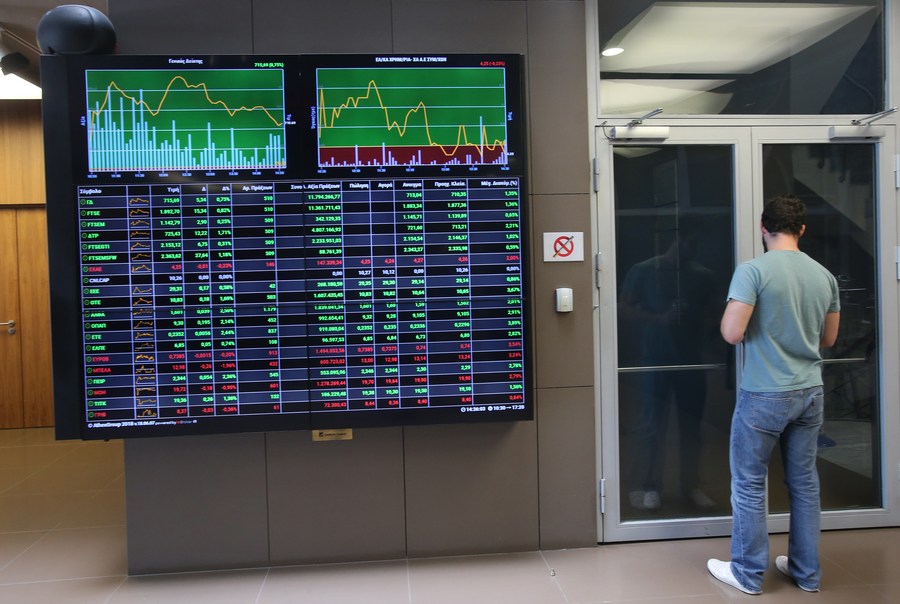
A man stands next to a stock ticker at the Athens Stock Exchange building in Athens, Greece, on August 20, 2018. (Source: Xinhua/Marios Lolos)
“The (European Union’s) Recovery Fund, which is an important tool for changing the country’s growth model by boosting investment, exports and innovation, will be the main drivers of growth in the coming years, along with tourism and other reforms,” he said . (1 euro = 1 US dollar) ■
Comments are closed.